
CREATIVITY IN LANDSCAPE PHOTOGRAPHY
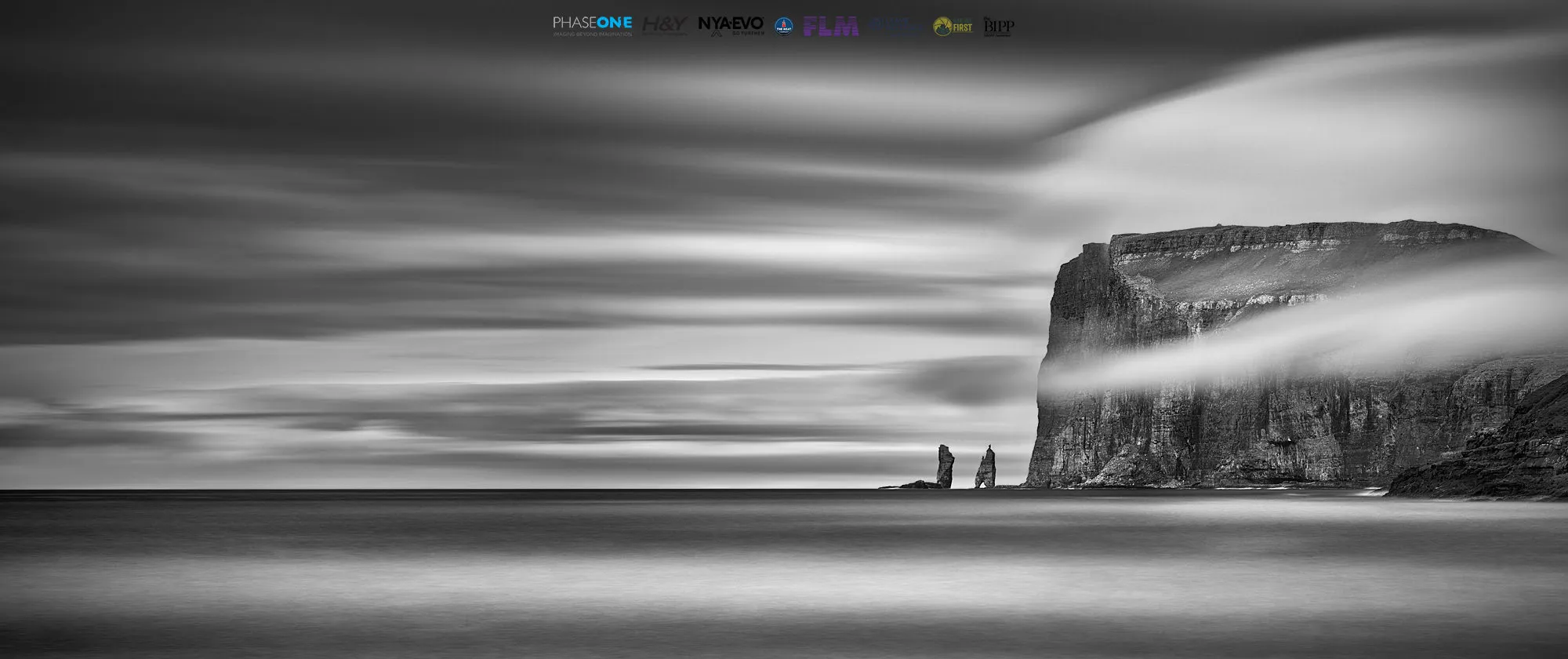
WHAT IS CREATIVITY, HOW TO DEVELOP IT AND HOW TO PUT IT TO A GOOD USE
Understanding where our creativity comes from, how to develop it and how to best apply it to what we do, regardless of what our field is, is not easy. To begin with, we all approach the act of creating our work in different ways, and what works for someone might not work for someone else. That said, I thought it would be interesting to share my thoughts about creativity in landscape photography and see if they resonated with you.

According to various dictionaries, possible definitions of creativity are “the use of imagination or original ideas to create something”, or “the use of skill and imagination to produce something new or to produce art”, or “the ability to produce or use original and unusual ideas”.
IS CREATIVITY INNATE? | Let me start with a classic dichotomy, that of talent versus practice. After a 30-year long artistic career in different fields, working both as an artist living of my work and as a tutor, I saw time and again that having talent – whatever that means, but this is the topic for another time – is all well and good, but talent only gets us so far.
To become exceptionally good at whichever artistic endeavour we pursue, to be truly creative, no matter how much talent we have we need to work. And, to work hard.

I do not know how much visual talent and how much innate creativity I might or might not have. I am not even sure whether creativity could actually be innate and artistic talent – as people understand it – did actually exist, or whether creativity and talent were something we picked up and developed starting as infants, the result of a lifelong series of events that influenced the way we think today. Probably, as it often happens, the answer lies in the middle, and our creativity is the result of both the way our brains are wired and what we fed to it during our life, starting from day one.
While I do not know how my photographic imagination and my ideas came to be, nor where they came from, I have a pretty good idea about how I nurture my creativity today and how I apply it to the photography I do.
APPLYING CREATIVITY | When I approach a location, either familiar or new, I do not start photographing it immediately. I explore it first. I look around, examining it. I isolate in my mind the elements that strike me as the fundamental ones to include in my photographs of it. I move around them, thinking about how to organise them to make them tell the story I want them to tell. I look at the weather to decide if it works right there and then, or if I need to come back with different conditions to enhance whatever mood I am after.
I did this literally thousands of times, over the last 15 years. The more I do it, the faster I become in making sense of a new location, or in getting reacquainted with a familiar one. The more I do it, the more the whole process comes natural to me, and the less I need to think about it. In short, the more I do what I do, the more creative I become at it.
Ironically, I can say that the more I practice, the more talented I become.
This is my definition of applied creativity in landscape photography:
Applied creativity in landscape photography is the result of the constant practice of (visual) problem solving and of the constant developing of (visual) artistic culture, both working together and reinforcing one another.
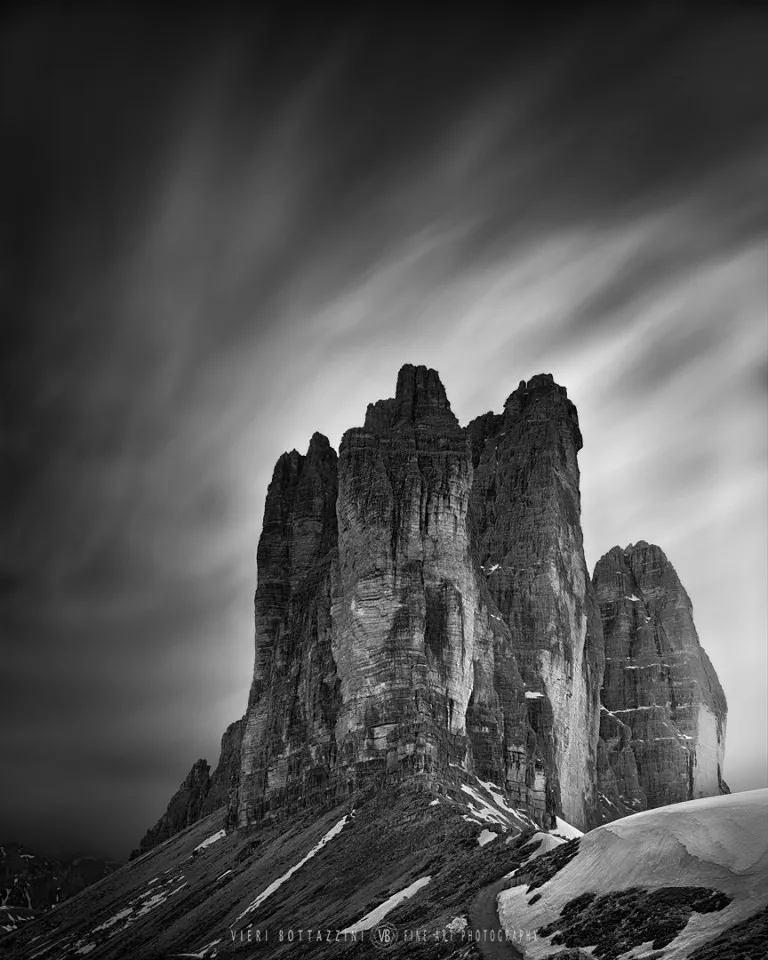
The beauty of this definition is that creativity, once so defined, can be practised, nurtured and developed. No matter where we start from, working hard at developing our creativity can make a huge difference in the work we create.
Let us see now what I mean by (visual) problem solving and (visual) artistic culture, and how we can develop them and use them in our landscape photography work.

(VISUAL) PROBLEM SOLVING | When we get to a location, we have several elements available to us to create a photograph:
– An empty canvas for us to fill, be it a piece of film or a digital sensor.
– A combination of physical, non-moving natural or man-made elements for us to organise within our frame.
– A combination of more evanescent, moving elements such as clouds, fog, water, moving grass or trees, for us to use as compositional and mood-creating tools, possibly after transforming them via shutter speed control.
– Whatever light is available.
To turn all the above into a photograph, we have at our disposal:
– Cameras, coming with different image ratios (1:1, 5:4, 4:3, 3:2, 16:9, panoramic, etc) and with different image supports (digital, film).
– Lenses, which we can use to change things such as our overall framing, our point of view, perspective, the visual relationship between the objects in the frame, as well as their relative dimensions.
– Filters, which we can use to change the reflectivity of objects (polariser), to balance exposure (Grad NDs) and to control shutter speed (NDs). If we are shooting in black & white, the use of colour filters can also help us control the mood of the image.
And of course:
– Aperture, which we can use to control depth of field in our photographs, from isolating a single object to getting everything in focus.
– Shutter speed, which we can use to control movement in our photographs.
All we need to do then is using the expressive opportunities offered by the scene in front of us, combined with the technical and expressive possibilities the equipment we have with us enables, to create our work.
Doing so is what I call (visual) problem solving, and this is my definition of it:
(Visual) problem solving is the ability to arrange and combine all the elements of a scene so that they work together to create a successful photograph out of the nearly infinite number of possible ones that can be shot with the tools we have at any given locations and moment in time.
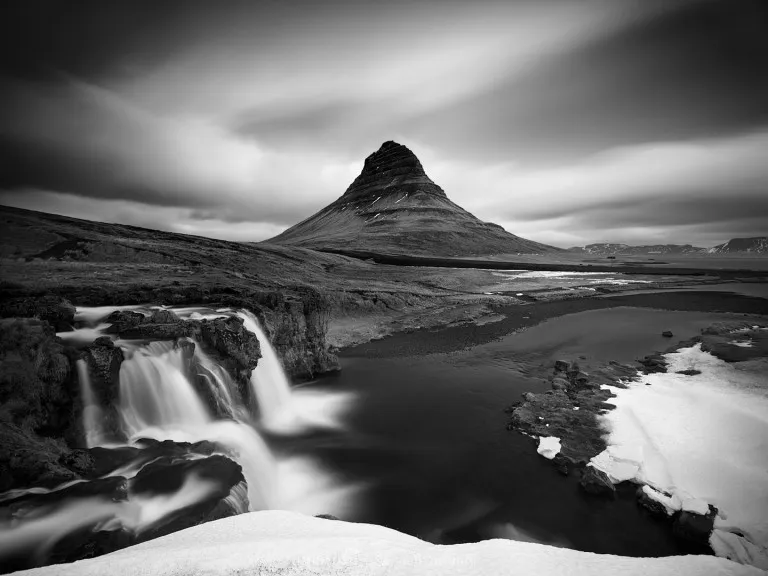
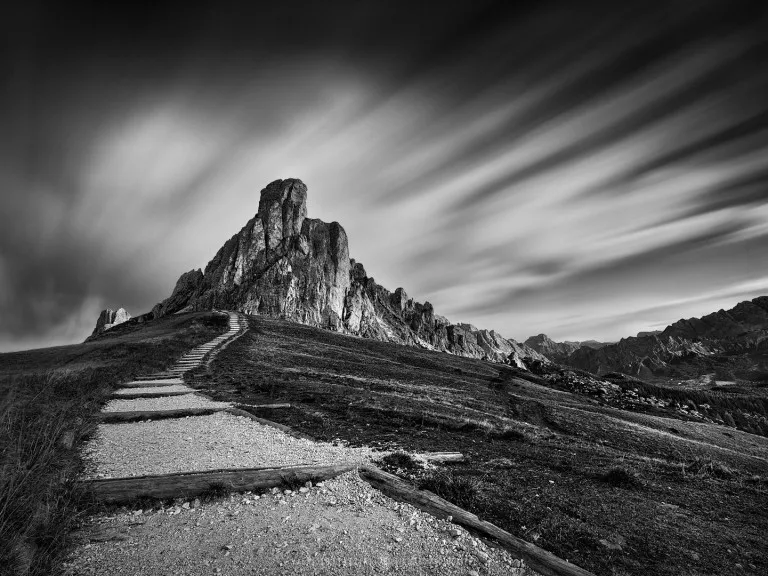
A successful photograph, for me, is one based on all the elements in a frame working together in harmony to transmit to the viewer the emotions and feeling that a place and a moment in time awoke in me.

(VISUAL) ARTISTIC CULTURE | To understand how (visual) problem solving works in practice to create a successful photograph, we need to introduce the concept of (visual) artistic culture. Here’s my definition of it:
Our (visual) artistic culture is our personal mental database of imagery and image-related aesthetic and artistic knowledge, together with the ability to make the connections that allow us to use such knowledge to analyse images, understand their founding principles, their aesthetic value, and so on.
While our (visual) artistic culture is perhaps our most fundamental creative tool of all, it is also the one that takes the longest time and the most work to develop. Sadly, this in turn makes it also one of the most neglected.
Working subconsciously in the back of our brains, it is our (visual) artistic culture – or lack thereof, of course – that guides us and helps us making all the artistic decisions we need to make when we are in the field creating a photograph. Our (visual) artistic culture is the engine powering our (visual) problem solving abilities, which in turn is what enables us to create the best work we can. The deeper our (visual) artistic culture is, the better our work will be.
For me, the best way to develop our (visual) artistic culture starts by relying on works, thoughts and words that passed the scrutiny of time, history, expert curators and editors.
In times such as the ones we live in, our first instinct when we are looking for information is often to go online. While the internet is potentially a great source of information, whatever information we find there is also mostly not curated and unchecked. We need a lot of discerning acumen and knowledge to separate whatever good is out there from the huge amount of noise, marketing-speak and self-referentiality plaguing the web. To be able to do that, however, we would need to apply that very same (visual) artistic culture we went to the internet to build in the first place. It’s one of those chicken and egg situation, which makes the internet not the best place to go to at the beginning of our artistic journey.
Therefore, to strengthen the foundations upon which building our own aesthetics and artistic understanding, I would recommend starting by turning to the tried-and-true printed page instead. After nearly 20 years of professional photography, I still find books to be the best way to study the work of the visual masters, learn from the words of thinkers, philosophers and critics, and build a strong intellectual compass to steer clear of as much nonsense as possible when diving into the ocean of imagery and words we face every day online.
Once we are sure of our foundations, the internet is an amazing source of information to keep building upon. Applying the tools learned from our studies to the million images we face online every day, we can then become our own tutor, adding our own ideas, creativity and philosophy to our (visual) artistic culture, developing it in the direction that best works for us as artists and eventually becoming references for others down the line.
CREATIVITY AND ORIGINALITY: SOME CONSIDERATIONS | The first human being who invented the wheel, whoever that was, changed the history of mankind. The next people building wheels following that blueprint, on the other hand, did not invent anything and did not make history. So much so, that “reinventing the wheel” stands for wasting a lot of time and energy to create something that already existed.
However, while the wheel’s concept might not be original anymore, throughout history its implementation improved thanks to all the people who applied their own original thinking, genius and creativity to it, regardless of it being someone else’s original invention and concept rather than their own. As a result, the wheels we use today are better performing, lighter, more resistant, more comfortable, and so on, than that first, proverbial one.

We can apply our creativity to create something completely new, or to further develop something that already exists. Both are necessary and worthy endeavours.
Coming to creativity in landscape photography, pursuing originality, exploring as many new avenues and experimenting with as much as we can, is great. It can lead to incredible work, powerful breakthroughs and possibly to changing the history of our art and craft. However, it is also important to remember that all we create is – one way or the other – a direct consequence of what came before us, since we generally either build on the shoulders of those who came before us or as a reaction to what those coming before us did.
Last, it is worth remembering that while someone can be creative, innovative and an artistic trailblazer, it might be the people following on that trail that end up creating something truly memorable, that end up truly leaving a mark building on the original idea and concept and bringing them to fruition.
CREATIVITY, TOOLS AND TECHNOLOGICAL PROGRESS | Photography is the language we use to transmit to our viewers the concepts and ideas we aim to express with our work. The photographic tools we use to express these ideas and concepts influence what we can say and how we can say it. As such, selecting the right tools can have a big role in developing creativity in landscape photography.
As technology progresses, we can count on more and better tools, which in turn results in a broader array of creative possibilities available to us. Just to give you a few examples along the history of photography, think about the developments in film technology, the advent of colour film, the dramatic improvements in lens and camera design, the digital revolution, and so on.
However, progress is moving at such a speed nowadays that it is all too easy to get entangled in the increasingly faster pace of technological changes and advancements, while forgetting why we are photographing in the first place.
Ansel Adams, one of the most important landscape photographers in history, famously said that “there is nothing worse than a sharp image of a fuzzy concept”. Arnold Schonberg, the inventor of the revolutionary twelve-tone system for composing music, later in his life famously said that “there is still plenty of good music to be written in C major”.
Both these quotes are as valid today as when they have been written, if not more. Applying their lesson to creativity in landscape photography, we can say that being creative has very little to do with which tools we use; it has everything to do with why we use them, and how.
That said, there are a few things to keep in mind. First, each of us find some tools more inspiring than others to use, and that in turn stimulates our creativity. Second, there are things that we did not know were possible doing until we found a tool enabling us to do them, thus helping us unleash new creative potential. This is often true with new technologies, which is why I recommend to always keep an eye out for them. Interestingly, however, this is also true with tools and technologies that have been out there forever but we either personally didn’t know of, or didn’t experiment with, before.
To give you an example, personally I work in black & white. I use both cutting-edge, state-of-the art technology, such as my Phase One IQ4 Achromatic digital back on an Alpa camera with Rodenstock lenses, together with 4×5”, medium format and 35mm film cameras with lenses made decades ago, because they offer me a different approach and different aesthetics.
This is what gets my creativity going, but of course what works for me does not necessarily work for others.
CREATIVITY, LANDSCAPE PHOTOGRAPHY AND THE SOCIAL MEDIA SOCIETY | I believe that as artists we must live in our times, we should strive for our work to be the strongest it can be, and we need our work to thrive purely on its artistic merit. I believe that whatever fame and success we achieve should be a consequence of our work’s merit, not the other way round where someone’s work is considered to be great just because they are famous. In a world split between the online and the traditional, ideally, I believe that we should aim at being as comfortable showing our Portfolio to any curator, gallerist or critic, as we are proficient with social media. Pursuing only the one or the other would either be detrimental to our artistic growth, or to our ability to make our work known to the largest possible audience.

However, nowadays we are living in a society where having our work evaluated and approved by our peers and betters has been replaced in way too many cases, and in the eyes of way too many people, by social media success. People who studied art and dedicated their life to it such as curators, editors and critics have long been named “gatekeepers” and dismissed by those who find it much easier to get thousands of likes online rather than presenting a Portfolio for review to people who know what they are talking about.
While I am the first to say that the academia / gallery / museum / curators / auction houses / etc system is far from being perfect and from giving everyone a fair chance, and that it should undergo drastic changes, I am not sure that the social-media-heavy online alternative developed in recent years is necessarily much better. At some point during that development, the equation between number of likes and artistic merit somehow got accepted. Once that happened, a multitude of self-appointed “artists” got validated as such, more thanks to their networking abilities than due to their artistic merits.
With that, came the era of superlatives, resulting in us being constantly attacked by “visionary this”, “original that”, “lifechanging this”, “trailblazing that”, “unique this”, “epic that”, and so on. In a most self-referential turn of event, rather than seeking approval from the masters or the institutions to make their way in the world, it became as if those using the most bombastic words to describe their own work could increase the artistic merit of their landscape photography the most.
It should be that a photograph speaks a thousand words. Happily, sometimes it still does. Oftentimes, however, the sad truth is that when we look at the work hiding behind those thousand, bombastic words, we do not find anything much worth seeing.
If we are only after that kind of ephemeral, self-referential online success, then a course in social media management is all we need. However, if we are truly interested in developing as artists – rather than in the number of likes we get – it is hard to do so while ignoring the history of our art and craft and while avoiding expert opinion about our work.
CONCLUSIONS | In conclusion, for me personally developing creativity in landscape photography means developing my (visual) problem-solving skills, together with developing my (visual) artistic culture and finding the tools most inspiring for me, the tools enabling me achieving the look and emotions I seek to express.
As well, developing as large a (visual) artistic culture as possible helps me knowing where I stand in the hundred-plus years old creative flow of artists working with landscape photography. It helps me knowing how far along I progressed with the mastering of the photographic techniques and of the artistic skills I need to express what I aim to say with my photographs in the clearest, cleanest and strongest possible way. It helps me navigate the ocean of online photography in the most fruitful and aware way, distilling as much information and inspiration as I can from the noise.
More, the combination of (visual) problem solving and (visual) artistic culture helps me finding my compass to keep walking along the path opened by others before me, both to build upon their work and to find new avenues worth exploring, since I believe that the one does not exclude the other. Hopefully, those avenues will in turn be considered interesting enough by others to be used to build something new upon.
As always, your answer to the all-important question of defining and developing creativity in landscape photography might be different from mine. What counts is that we all keep asking the questions and keep working on refining the answers, both individually and collectively.

Thank you for reading this post, I hope you enjoyed it! Why don’t you share it with your friends, or drop me a comment to let me know your thoughts about this?