
REALITY AND REALISM IN LANDSCAPE PHOTOGRAPHY
MY TAKE ON THE TOPIC OF REALITY AND REALISM IN LANDSCAPE PHOTOGRAPHY AND ON THE AESTHETICS OF WHAT I DO
The topic of reality and realism in photography at large, and in landscape photography in particular, is one that has been discussed since the advent of our art and craft and one that pops up in online discussions from time to time. Unfortunately, and somehow unsurprisingly in today’s ultra-polarised online world, what could be an interesting discussion on the aesthetics of photography often turns into a fight, with people dismissing and denigrating other people’s work and ideas rather than arguing their own.

Let’s see if we can bring some order back into this very interesting, fundamental debate, while debunking some serious misconceptions as well.
REALITY: HUMAN PERCEPTION VS PHOTOGRAPHIC RENDITION
As humans, we perceive the reality of a landscape as three-dimensional, through the flow of time, and via all five of our senses. When we create a photograph of a landscape, on the other hand, we are forced by the photographic medium to compress the scene in front of us into a bi-dimensional image, one where the flow of time is stopped, and one we enjoy mostly through one sense only – sight.

Therefore, it is evident to me that no landscape photograph can be “real” in the sense of accurately representing the full reality of any given scene in front of us in the same exact way we would experience it were we there. How successful a landscape photograph can be in going beyond being just a somehow realistic, frozen in time, bi-dimensional representation of the reality the photographer experienced when they created their photograph depends entirely on the photographer’s ability.
So, criticising a landscape photograph saying that “it doesn’t look real” makes very little sense to me. A landscape photograph looks unreal because, well, it is. It is by design, so to speak – it’s simply the nature of the medium.
Happily, when doing Fine Art landscape photography, creating accurate representations of reality is often not the point in the first place.
ABANDONING REALITY ALTOGETHER? | On the other hand, with today’s abundance of digital ways to manipulate a photograph, it is also way too easy to depart dramatically from the reality of the scene in front of us.
Perspective blending composites showing huge daisies taken with a wider lens pasted in front of huge mountains photographed with a longer lens (see my MANAGING DEPTH: WIDE-ANGLES, STITCHING & PERSPECTIVE BLENDING article), scenes lit in such a way that they look they have been shot on a different planet where two suns are shining opposite to one other and at the same time, colour palettes that look straight out of a 1960s acid dream, just to give you some examples, all pass as “real” photographs of a “real” scene in today’s social-media-fuelled world.
It might just sound as a matter of labelling things, but to me the truth of it is, what should be called either AI generated imagery, digital art, or lens-based digital art at best, passes way too often as photography. Whether this is done in good faith or in bad faith, whether people post digital art passing it for photography expressly, maintaining that what they put out there is a real photograph, or by omission, with people simply failing to mention all the manipulations their landscape images went through before being made public, makes very little difference for the purpose of this article.
Whatever the reason, when so many clearly unreal images are passed out as photographs, the risk is twofold.
On one hand, people can start losing the ability to recognise actual photographs from heavily manipulated, or even AI generated, images. On the other hand, people can start doubting any photograph they see, even very real, pure photographs. They can start assuming that all “photographs” they see online are not just unreal in the way each photograph by definition is, but unreal as in not based on any reality that actually exists and that they themselves could actually have photographed – in whatever way – had they been there.
Is this bad? Not necessarily, of course. We all have our definitions of what we are ready to accept, in terms of departure to reality and degree of interpretation in our photographs. Personally, for me any form of artistic creation is great, as long as the premises are clear and the result consistent with them. At the same time, my way of expressing myself is through pure photography, and that’s where I draw my line.

CONTROLLING THE OUTCOME | Just like everything we experience in life, looking at any photograph awakes emotions and feelings in the viewer. From inspiring things such as awe, beauty, melancholy, the power of nature, just to name a few, to negative things such as indifference, boredom and even disgust, photography can be used to convey a full spectrum of emotions and feelings.
If an artist is successful at what they do, a landscape photograph can awake in the viewer not just any set of emotions and feelings, but one as close as possible to what the artist wanted the viewer to feel. Crucially, that is often various degrees removed from the careless, “snapshot”, straight-up smartphone rendition of a scene.
When we create a landscape photograph, we go through three main steps. First, we capture an image of a given scene. Second, we develop and edit our captured image. Third, we present it to our viewers.

During each of these three steps, through the photographic medium and the tools it provides us with, we can decide how much our representation of that scene will depart from a straight-up realist snapshot of the scene we saw and experienced.
At the time of capture | Starting at the time of capture, the first tool available to us to control the degree of “realism” in our landscape image is lens choice. If we aim at creating a more realistic-looking image, we can do that by choosing a “normal” lens, offering a field of view closer to that of the human eye. The more we move away from our system’s “normal” lens, either on the wide-angle side or towards telephoto, the less similar to reality our images will look.
The second element we can use to modulate realism in our landscape images at the time of capture is shutter speed.
While most people might find long exposures less “realistic” than shorter ones, that is not actually accurate. Since as humans we perceive reality as flowing through time, and since photography freezes time into a single frame instead, the degree of correspondence to reality of any photograph is exactly the same, regardless of the subject matter.
Neither a long exposure photograph making water and clouds silky nor a short exposure one freezing a child playing, birds in flight or a waterfall’s water drops, let alone a bullet popping a balloon, can be seen with the naked eye or experienced by our brains as we see it frozen forever in time as they appear when photographed.
The third element we can use to decide how realistic an image we want to create at the time of capture is filters. Solid ND filters allow us to control shutter speed, creating exposure-control based effects. Graduated ND filters affect the dynamic range of a scene, allowing us to bring back into our images shadow details that our cameras could not see without burning highlights.
Polariser filters offer us control over a very unrealistic effect, because by polarising the light they do something to the reality of a scene that the naked eye could never replicate.
Last, colour filters. With digital landscape photography their obviously “unrealistic” effects pushed them out of fashion; yet they were much used back in the day of film photography to compensate for the “unrealism” of film emulsions under different kinds of light, and to control the response to light of black & white film.
During post-processing | Before digital photography, different emulsions rendered reality differently by rendering colours, saturation, contrast and so on in ways that could be considered more or less beautiful, but certainly not particularly accurate over the whole spectrum.
Film photographers would remember the debates between people who swore by Velvia versus people preferring Provia, people favouring Kodak emulsions against Fuji supporters, and so on.
Coming to black & white film stock, which are all by definition a departure from a colourful reality to begin with, orthochromatic films simply do not represent certain parts of the spectrum, and even panchromatic films aren’t necessarily 100% panchromatic. More, some films are more contrasty, some less so, and so on.
Today, for a vast majority of photographers the so-called lightroom replaced the darkroom of old, giving us unprecedented opportunities and flexibility in the development of our images.
If colour accuracy is what one is interested in, the lightroom allows us to use a grey card at the time of capture and subsequently set a perfect white balance when we develop our photographs. While incredibly useful for some kinds of photography, such as product or studio work, this can be ruinous for landscape photography. If used in the wrong way, a grey card can end up cooling sunset colours to destruction, or warming the blue hour to oblivion, and so on.
Image capturing technology might have changed, but the force moving us as artists and photographer is – or should be – still the same: we go out there in the field every day striving to create images that would bring our vision to life, using any tool at our disposal. Including, of course, playing with colours to taste.
How close we will keep our images to some idea of “realistic” post-processing is, of course, up to each of us.

Image presentation | As humans, we perceive the landscape – and more in general, the world surrounding us – as something lit by an external source of light, be it the sun or an artificial one. Back in the day, we looked at landscape photographs in print, which in terms of lighting is consistent with the way we see the world.
When television came about, we started experiencing a backlit reality, for a part of our day at least, but photography was still mostly experienced on prints lit by incident light. Nowadays, on the other hand, we enjoy most of the images we see daily by looking at them on backlit screens, which is yet another departure from the “reality” of the scene these images aim at representing.
MY TAKE AND CONCLUSIONS | As demonstrated above, a landscape photograph can be many things, but it is never “reality”, and hardly even “realistic”. Most importantly, for me, that is not the point: more fundamental questions when looking at a photograph would be whether it transmits emotions, whether it elicits feelings, whether it tells a story, whether it shows originality, whether it has any artistic merit, whether it is worth looking at more than once, and so on.
Where to stop with departing from reality with our work is for each of us to decide, and for each of us alone. Most importantly, it is always worth remembering that there is no universal truth when it comes to art and that what works for me and my landscape work doesn’t necessarily work for different photographers and / or for different kinds of work.
My work revolves around the concept of time, and on the effect of time on matter and ultimately on us. It aims at investigating human emotions, expressing them through abstraction from the reality of the landscapes in front of me and oftentimes through the conceptualisation of that same landscape.
With my work I invite viewers not just to look beyond the glitter, the “wow” sunrises and sunsets of “pop” landscape photography, but also to look beyond the mere surface of the landscape itself and to focus on the emotions and feelings my photographs are awaking in them. With my photography, I strive to tell viewers universal stories of humanity and, through that, giving them glimpses into my own soul.
To do so, I use all the techniques available to me, both at the time of shooting and in post-processing. At the same time, I set limits to the level of departure from reality that I am ready to accept myself, first and foremost, and that I am ready to offer viewers of my work.
Adding various levels of abstraction over the reality in front of me is fundamental to my aesthetics and to strengthen the conceptual aspect of my photography.
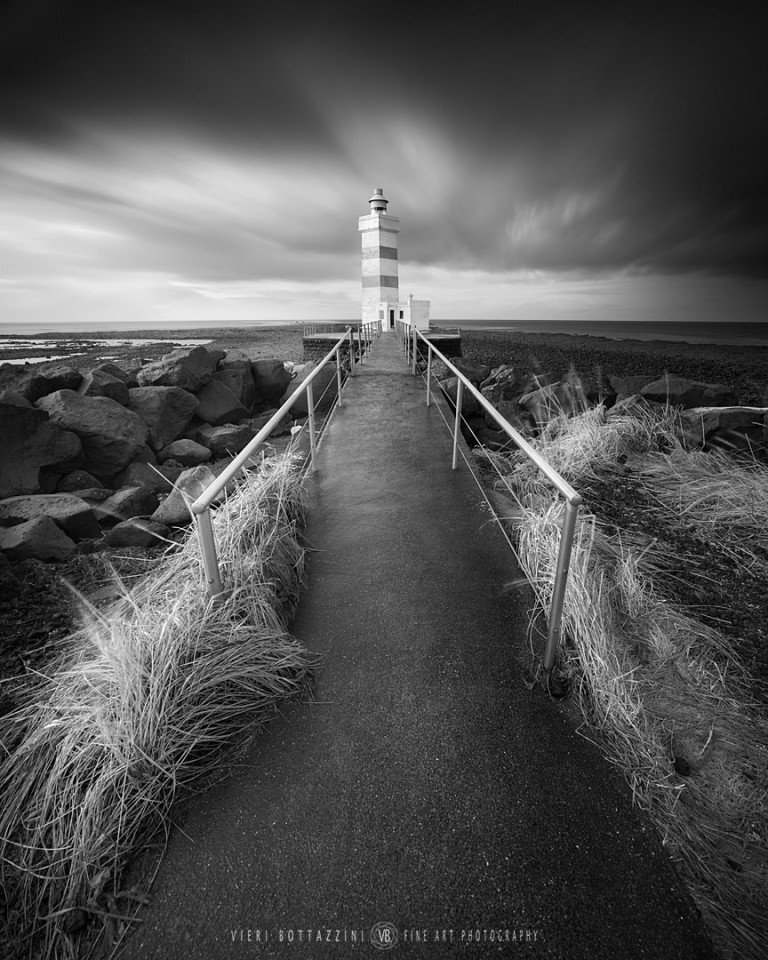
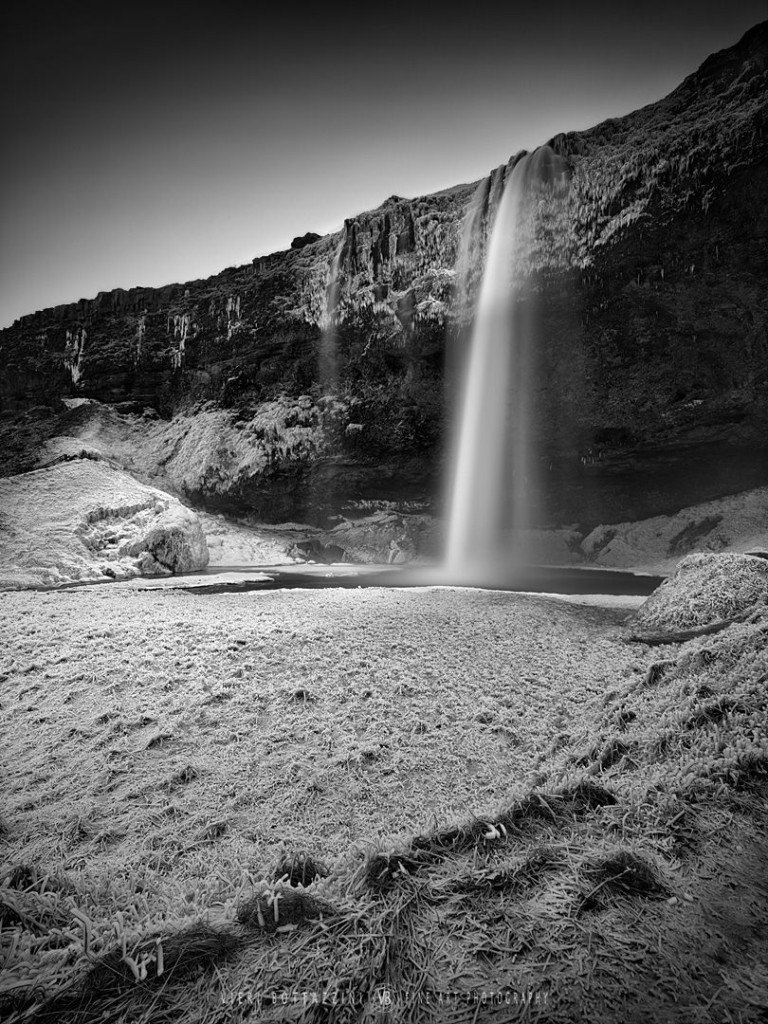
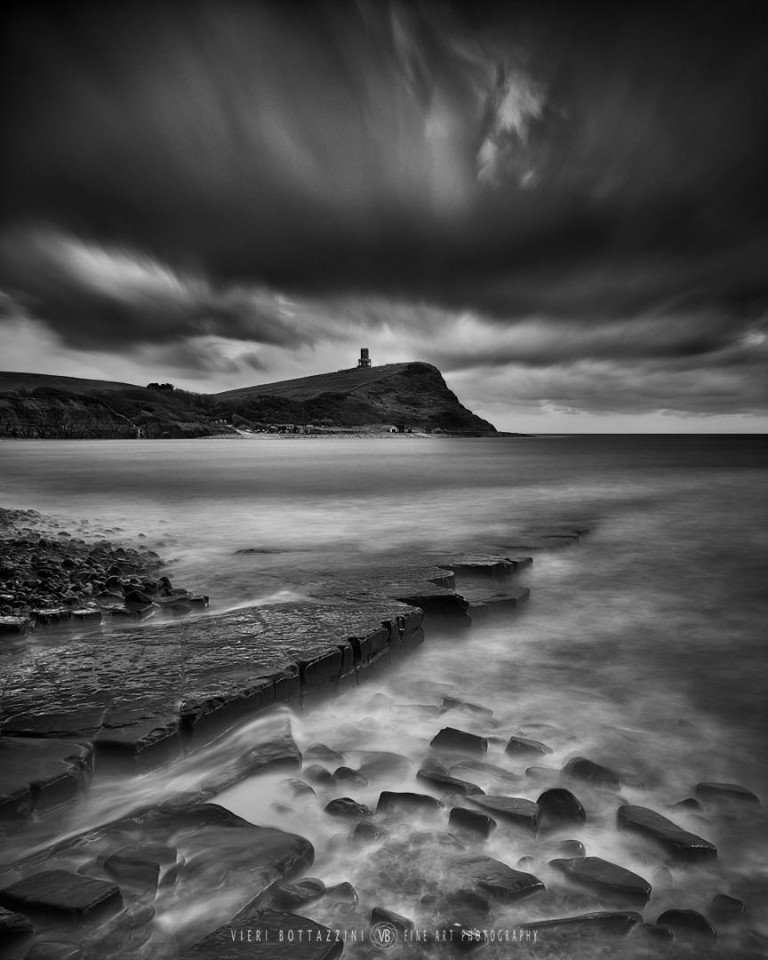
The first level of abstraction lies in the choice of using black & white to represent in my photograph a world that we perceive in colour with our eyes. By removing the overlay of colour, photographing in black & white forces me to see the world as lines, masses, greyscale and light levels, thus allowing me to see “deeper” into the scene in front of me.
I believe that using black & white on the one hand offers the viewer a starker, cleaner view into the soul of the landscape. On the other hand, it allows the viewer to “fill in” the scene with their own colours, and with the emotions and feelings coming with them. Rather than forcing them to see my colours, I invite them to mentally use colours and emotions drawn from their own experience of the world, and to participate in the viewing experience in a deeply more personal, intimate way than any colour photograph would.
The second level of abstraction lies in the use of long exposures – or to better put it, in the control of shutter speed – to explore and express the feeling of time passing. By deciding how much or how little of the time I experienced the scene for I will pass on to the viewer, I can gently nudge them into imagining themselves in front of a scene for different amounts of time.
In particular, the use of long exposures, which are much less easy to gauge precisely when looking at a photograph, again invites them to bring their own experience in and decide, each according to their own experience, for how long to stay and look at the scene. The ability to control long exposures, in turn, gives me more control on what kind of feelings and emotions to awake in viewers of my work.
The third level of abstraction lies in the control of composition, starting with lens selection, which I use to create spatial and dimensional relationships between elements in the frame that wouldn’t have been visible as such to the naked eye. Controlling the relative size and position of my compositional elements this way, in turn, helps me elicit emotions in the viewers that are both a direct expression of reality – in the sense that are elicited by elements that were truly in the scene – and the result of an abstractions of that reality at the same time, in the sense that they have been elicited by things they wouldn’t be able to see as such by just looking at the scene in reality.
The limits I impose to myself are simple: pure black & white photography only. The only tricks I use are changing lenses and controlling exposures – that’s it.
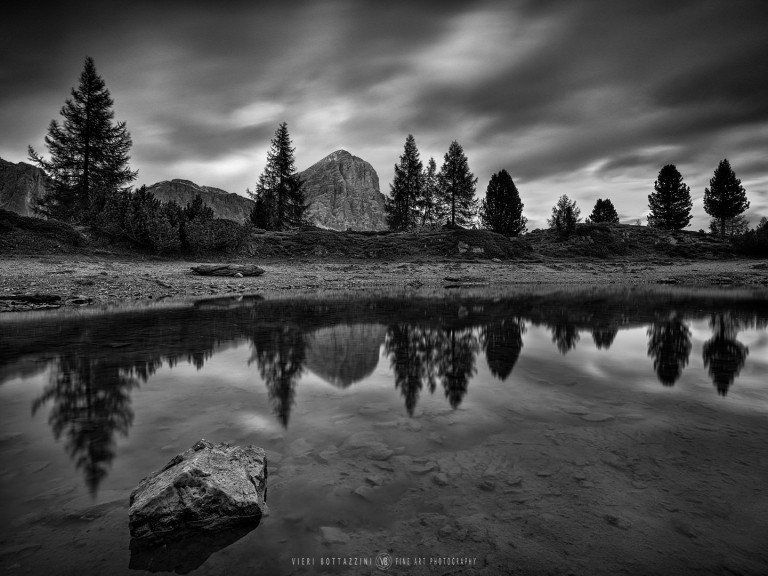
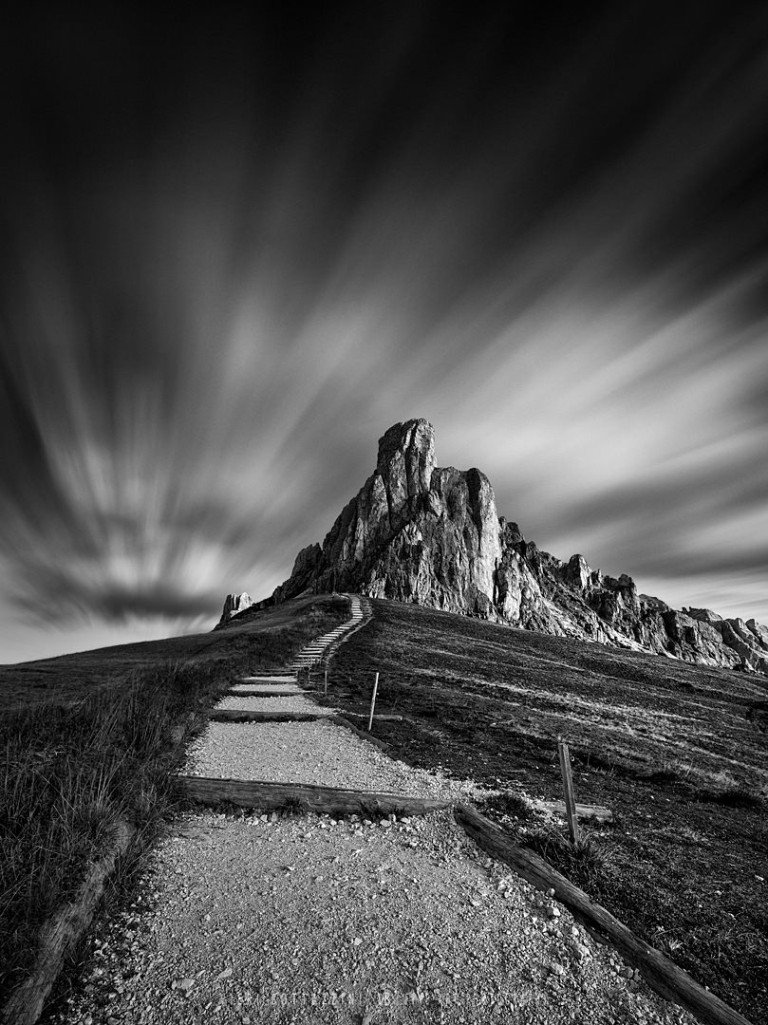
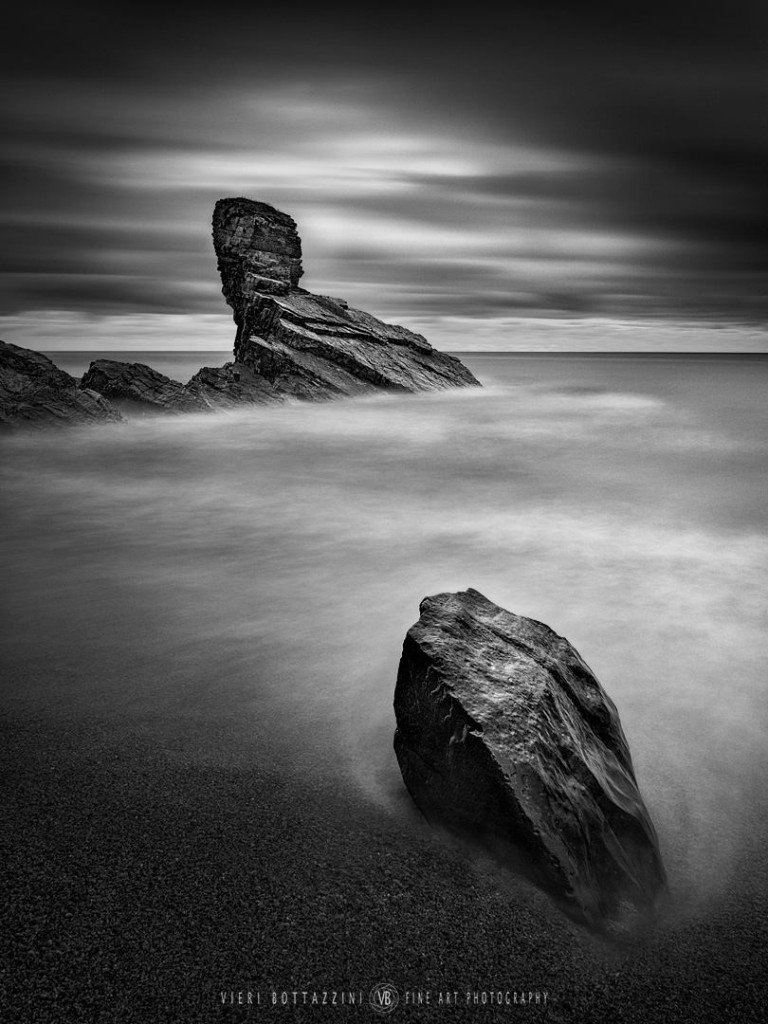
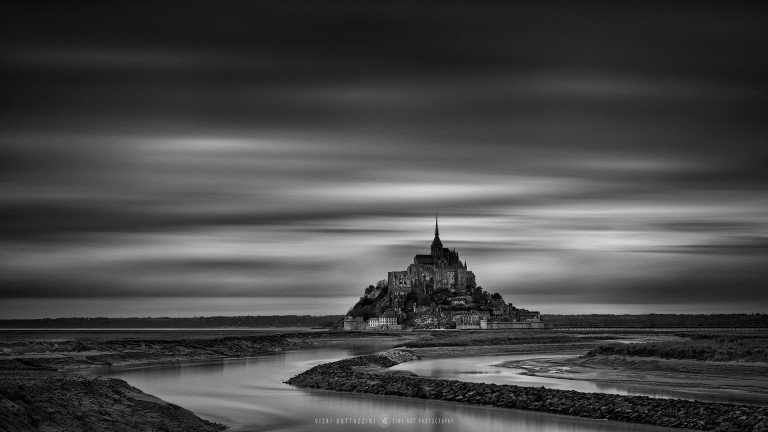
All my photographs, film or digital, are single shots and all the effects that you see are created in camera. No focus stacking, no sky replacements, no composites, no stitching, and so on. Again, this is just what works for me, there is no single truth, and your solution can and will likely be different.
Finding our own way to represent reality according to our personal vision and elicit in our viewers those emotions and feelings we want to elicit in them is what counts. It might need a lot of study and work, and it might not be as easy as dismissing – or elevating – images because of their degree of realism or lack thereof, but I believe it is not only infinitely more rewarding, but also way more helpful in our growth as artists and photographers.

Thank you for reading this post, I hope you enjoyed it! Why don’t you share it with your friends, or drop me a comment to let me know your thoughts about this?
2 thoughts on “REALITY AND REALISM IN LANDSCAPE PHOTOGRAPHY”
I value your thoughts as an artist. They are honest, thought-provoking, raw and most importantly very real and believable. I find the ‘rawness’ is the emotion that keeps me thinking and moving forward as a photographer.
Hello Ian,
thank you for your comment and kind words, much appreciated. Fully agree with you, rawness – together with openness – is fundamental for us to grow. For me, keep our eyes and mind fully open to the world, to any kind of input, to other people’s work and thoughts (and I am not just talking photography, of course) is what fuels our tanks with ideas and creativity; rawness of thoughts and feelings when we ourselves create is what allows us to best express ourselves with and through our work while escaping (or trying to, at least) being derivative, mannerisms, and keeping it from becoming tired and weak.
Best regards,
Vieri