
THE BENEFITS OF THINKING IN TERMS OF PORTFOLIOS
THERE ARE MANY WAYS TO WORK DELIBERATELY AND WITH PURPOSE. THINKING IN TERMS OF PORTFOLIOS IS A POWERFUL ONE
What does “thinking in terms of Portfolios” mean, and why is it important?
Landscape photography underwent a big surge in popularity, in recent years, and I believe that is wonderful. The more people dedicate their time and efforts towards this glorious application of the art and craft of photography, the happier I am.
Loosely in the same timeframe – and likely as an igniting factor for the above – digital photography came to prominence, replacing analogue photography as the medium of choice for a large majority of photographers, amateurs and professionals alike.

The advent of digital photography brought along the ability to shoot and store an endless number of images on a small memory card, images that can be reviewed instantly. While this can be an amazing learning tool, it can also result in ending up with too many images too similar to one other. This is true both at the single photographer’s level, with each of us bringing home hundreds of photographs of any given location we tackle, and at the photographic movement’s level, where we see hundreds of photographers all creating the same images of the same places.
To prevent and avoid that, you often hear people talking about the benefits of working with intent, about focusing our attention rather than go for the spray-and-pray approach, about working slowly, and so on.
At the same time, though, browsing photographers’ websites and social media one often finds galleries featuring a huge number of images, and galleries with repetitions of multiple images of the same subject with just minor differences between them. One can find inconsistencies in level, with galleries showing some great images together with mundane, much weak ones, together with inconsistencies in look, with images that look like they have been created by completely different people.
EDITING OUR OWN WORK | In short, browsing photographer’s websites and social media galleries I often feel like many would benefit from the work of an editor. Someone who would cull and rearrange some of these galleries to strengthen them and make them into a more cohesive body of work. Someone who would suggest how to strengthen the photographs inside these galleries, guiding the photographers towards making them more original and personal rather than following the fad of the moment, and so on.
The problem is that being the editor of our own work is one of the most difficult things to do, in pretty much any human creative expression – hence the existence of the figure of professional editors, be it for photography, writing or music, of visual arts’ curators, and so on.
This is a problem I know far too well myself, and I know how extremely lucky I am to be able to count on my wife’s keen eye, visual culture and sharp mind as my editor and harshest critic. Without her and her help, my galleries would very likely be much less cohesive and compact than they are today.
While not everyone is either interested in finding an editor, or could afford one, there is something we all can do and which I think can help us getting around this, something I try and do with my own work all the time: thinking in terms of Portfolios while working in the field.
THINKING IN TERMS OF PORTFOLIOS | As we know, a Portfolio is a collection of photographs connected by a theme that bring them together in a harmonious, cohesive way. Photographs in a Portfolio need to be strong to begin with, of course, but their strength is in turn enhanced by the other photographs they share the Portfolio with.
Portfolios can be of any size you like. However, I personally believe that when organising a Portfolio often less is more. If a photograph doesn’t add anything, I am always for removing it. Crucially, it is fundamental to try and avoid repetitions, redundancy, and inconsistencies.
Portfolios can be built around any theme you feel strong about, but the clearer and more defined the theme, the better.
The simplest way of putting a Portfolio together, and one often found online, is grouping photographs sharing the same destinations, e.g. “Iceland”. While this can make for a good theme for a photography Portfolio, the risk is to make it too large and dispersive.
Let’s say that all you have out of your trip to Iceland are 12 very strong photographs of Iceland’s coastal scenes, taken in similar light and in the same season. They share a common subject matter, and they are consistent in look and mood. Turning them into an “Iceland” Portfolio would be the perfect choice.
Let’s say, on the other hand, that you have 100 strong images of Iceland featuring the coast, the interior, some waterfalls, geothermal fields, volcanic activity and so on, taken in different seasons and under different light.
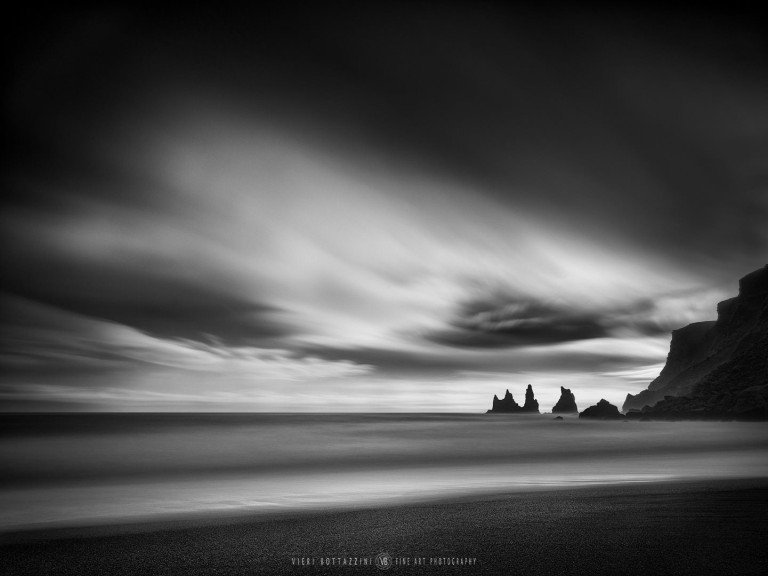

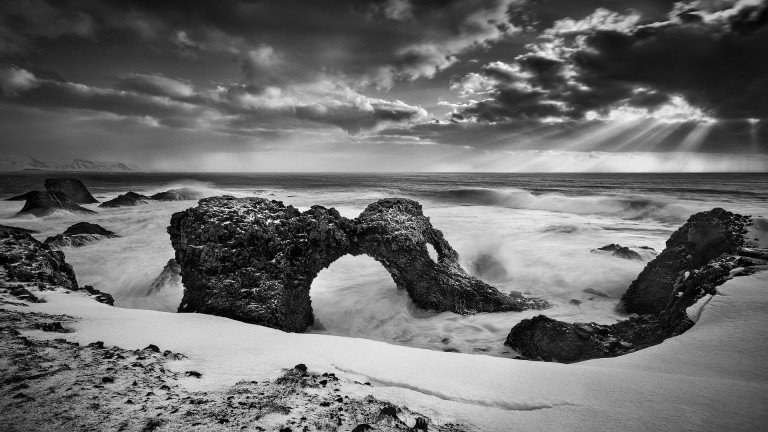
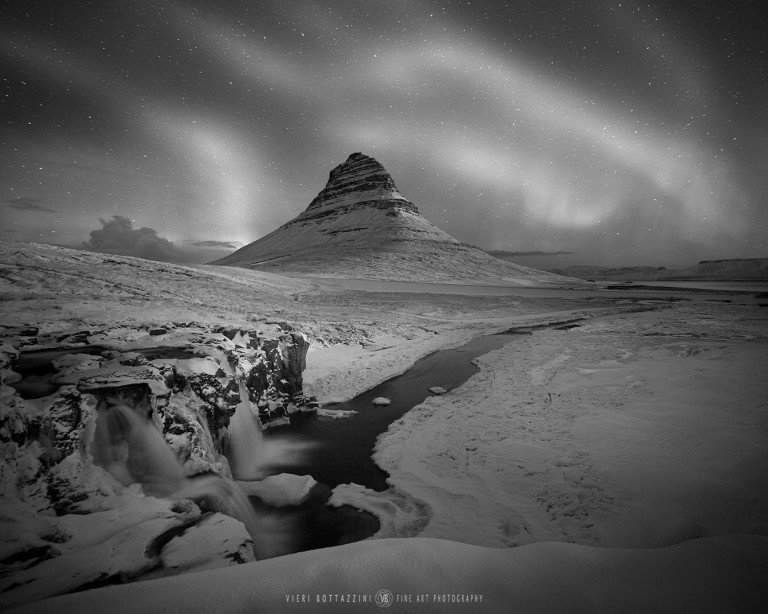
In this case, cramming them all into a single Portfolio wouldn’t be the ideal solution for me. Instead, I would recommend dividing them by subcategories and create more Portfolios, each strongly focused on a theme, perhaps all going under the umbrella of an “Iceland” main gallery.
A second, and for me better way of going about building Portfolios is to do that around a concept. While this is much harder to do than just creating galleries organised by destinations, if we succeed the result is much stronger. Let me offer you my “Solitude” Portfolio as an example.
SOLITUDE | Imagine you are in Iceland and find yourself at Jokulsarlon, the famous Diamond Beach. There are a million photographs taken on that beach in pretty much any light. Right there and then, you have a choice.
You can either stop where you first landed, take out your camera and tripod and start creating images like the million you saw online. Or, you can leave the camera in your bag for a while, take a walk around and start thinking about what feelings, emotions, ideas this beach inspires in you.
On a cold day in the winter of 2021, I took the second path. I looked at the icebergs and started thinking about their very short lifespan. I thought about how I would feel if I were one of them, and knew I was going to disappear into nothingness much too soon. I felt alone and hopeless, and I felt I would have loved for someone to document my life, or at least the very last moments of it. I would have loved to be remembered.
Right there and then, a Portfolio materialised in my mind at once. Thanks to this newly found clarity, after dozens of visits to Jokulsarlon I finally knew exactly what I had to do to make this place truly mine. “Solitude” was born.
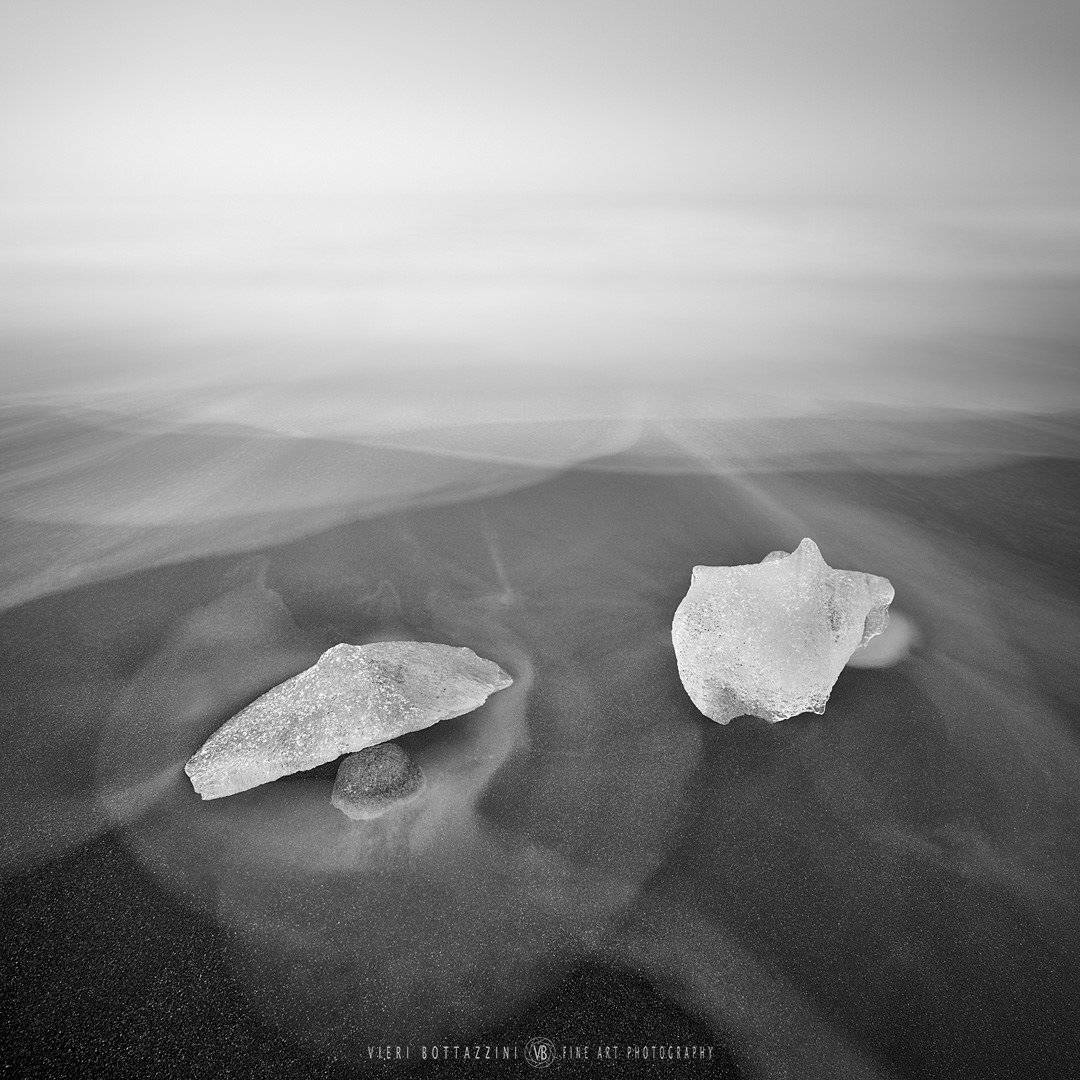

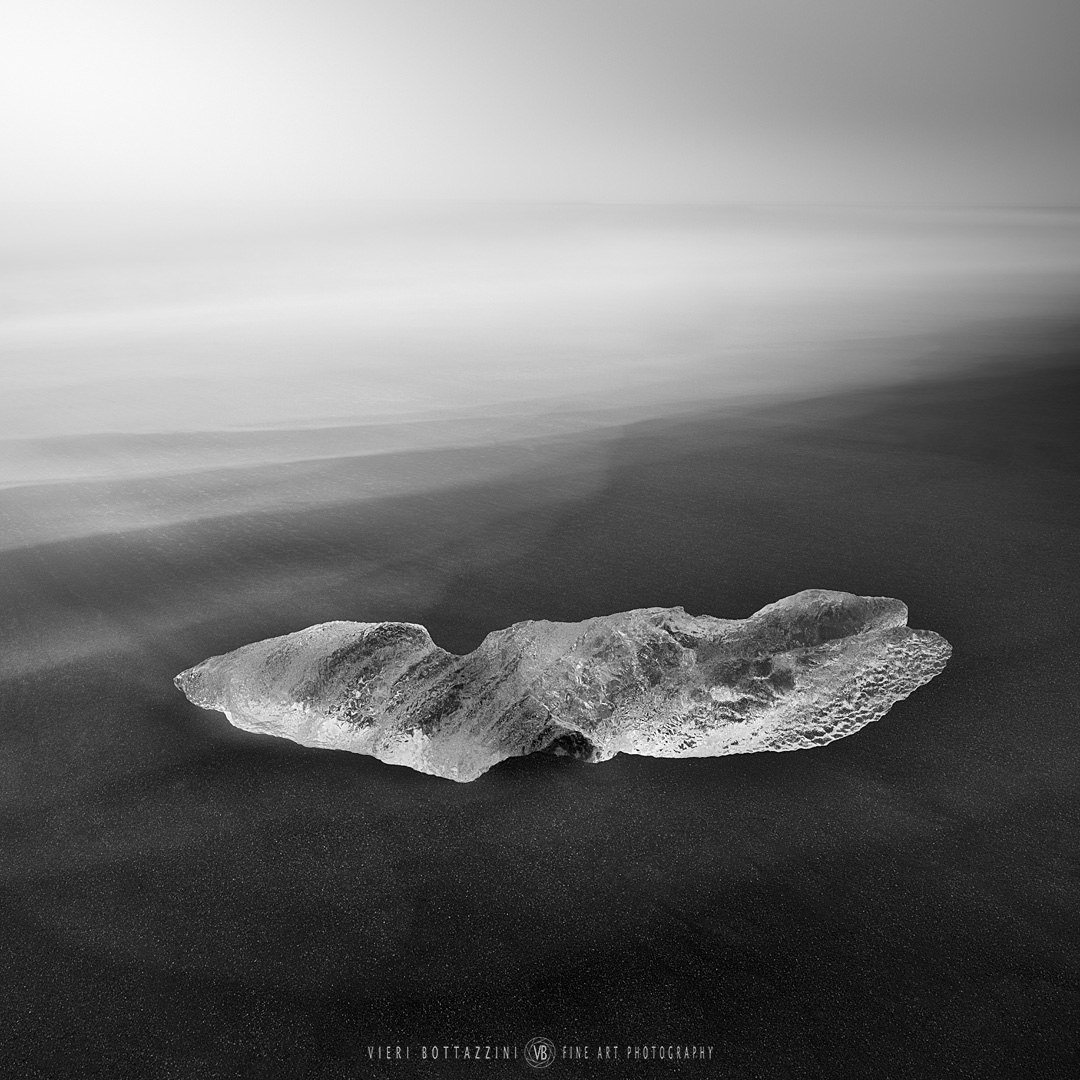
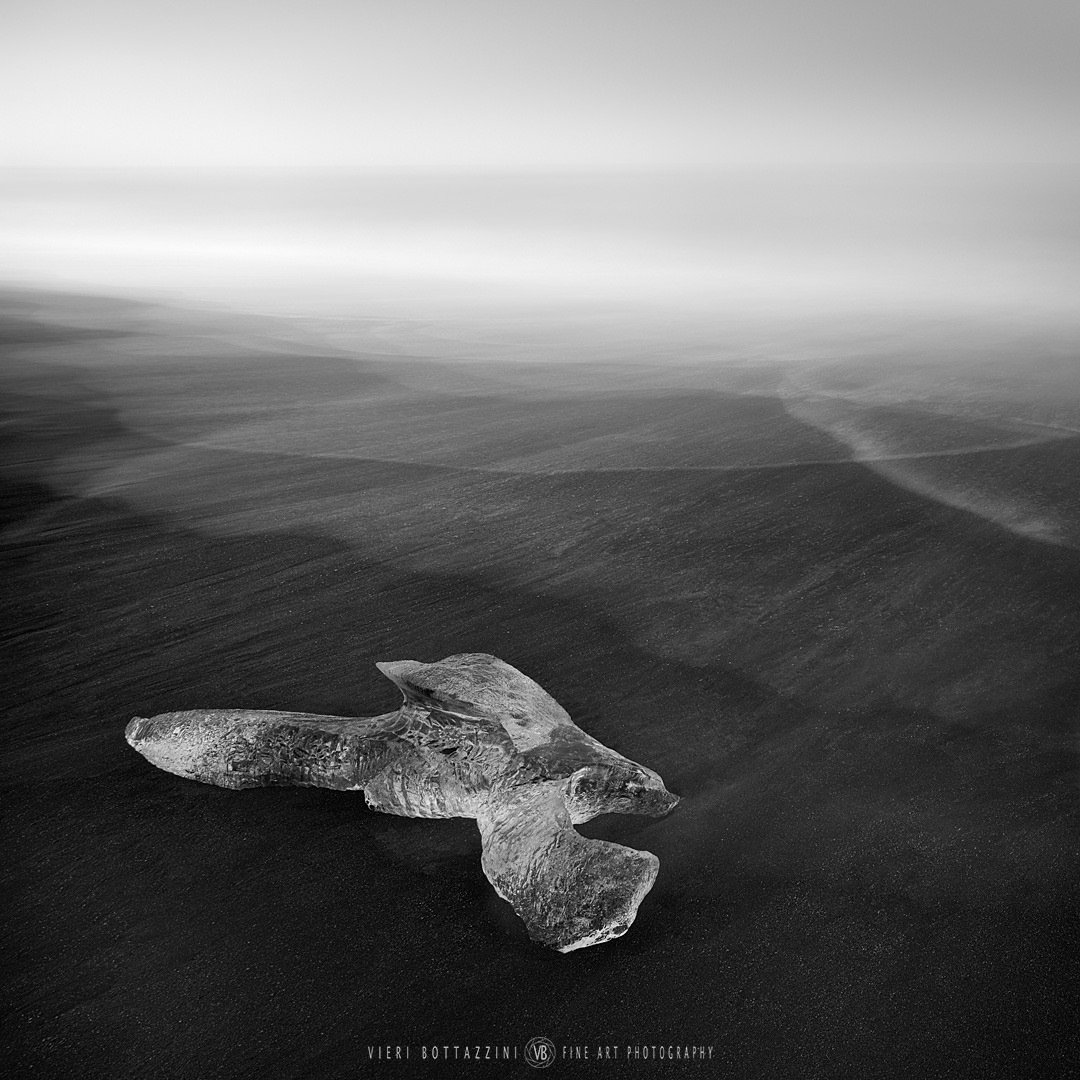
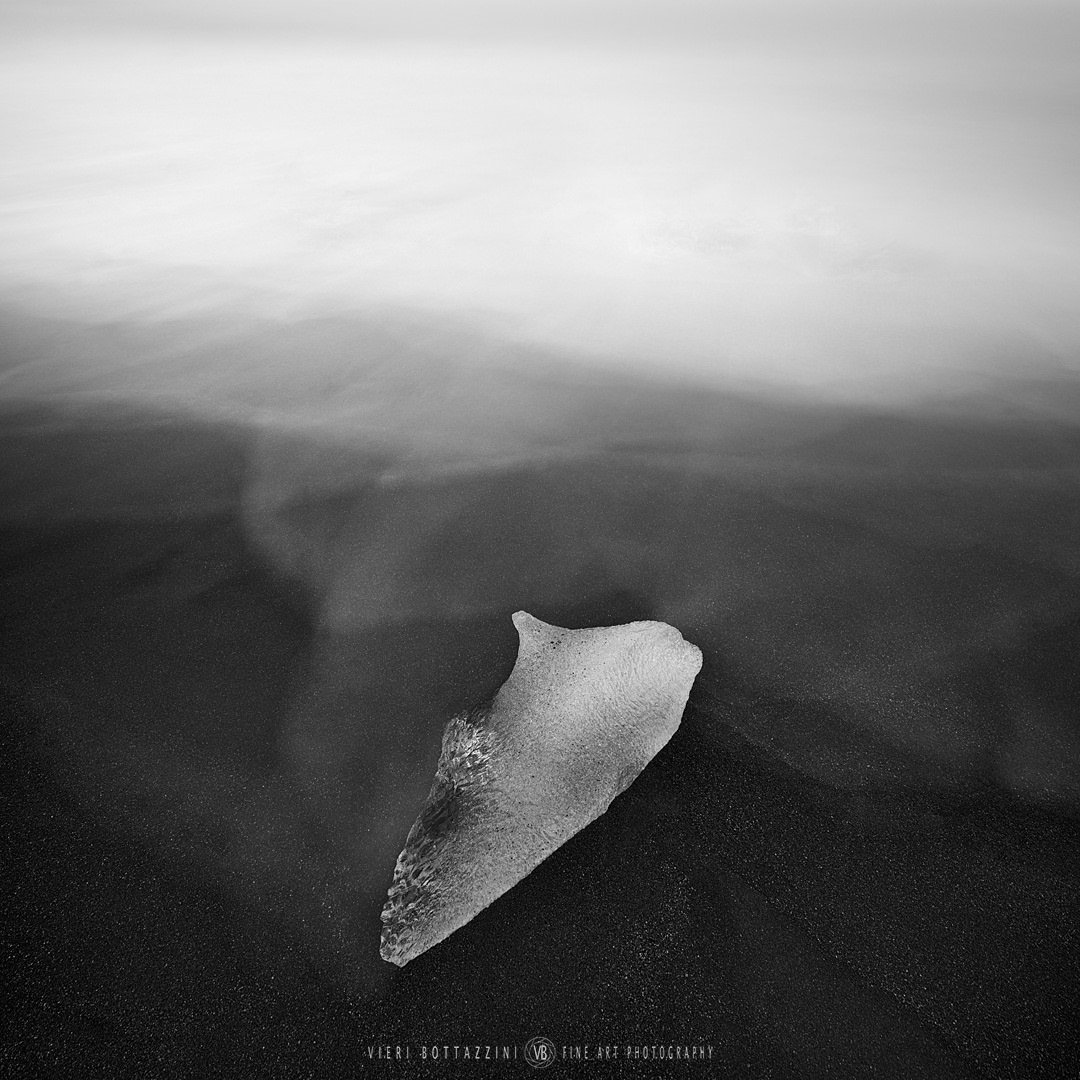
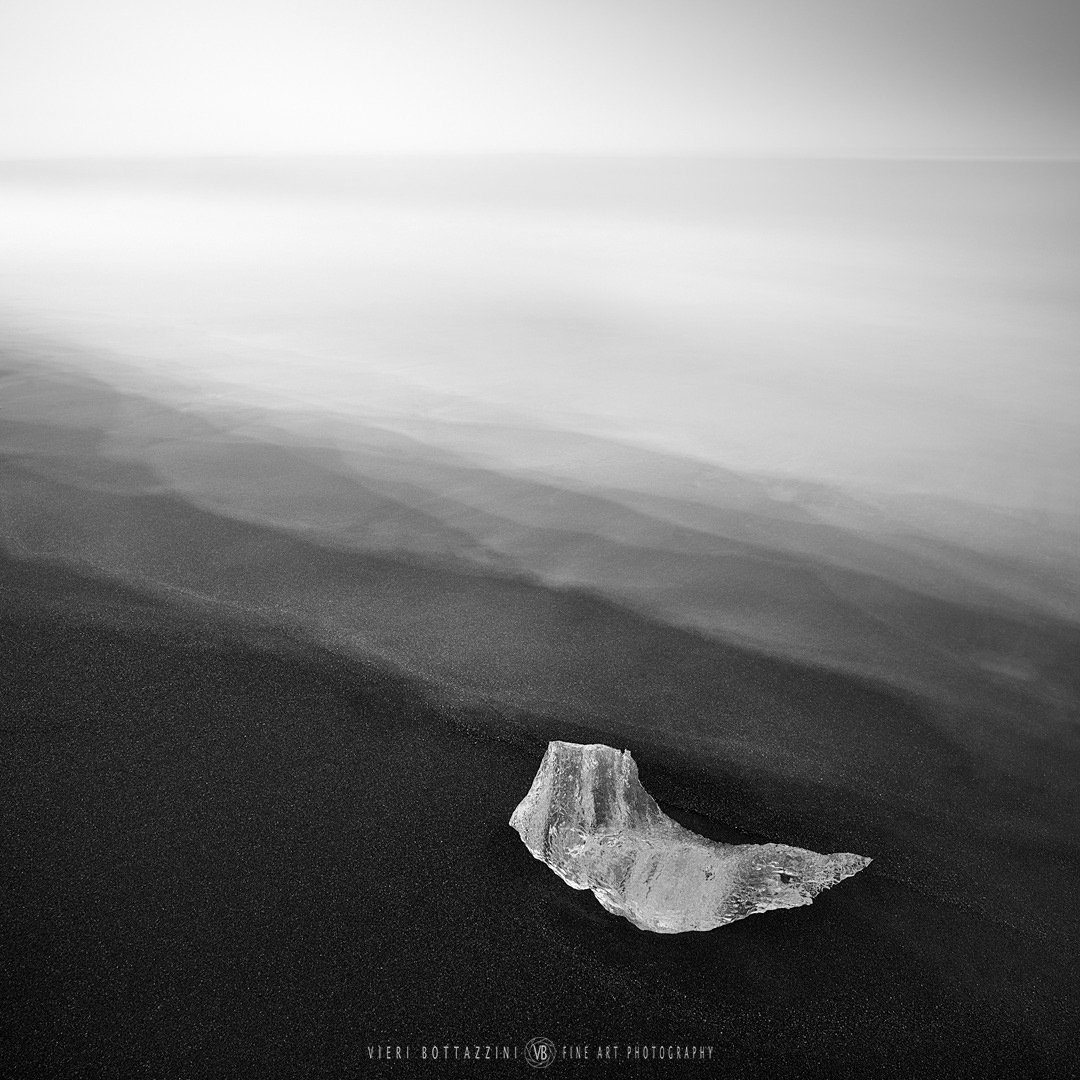
With “Solitude”, I aimed at exploring the concept of loneliness via the fleeting existence of single blocks of ice, each of them alone – or at most in pairs – in a crowd of similar blocks, and each of them condemned to a quick disappearance. As are we, in the big scheme of things.
I took a total of about 10 images of icebergs on that day. Six ended up in my Solitude Portfolio. Technically, this was quite a hard Portfolio to make, in that I used an ultra-wide lens in a place so crowded by both icebergs and people, and in that to render the ocean as I wanted, I decided to use long exposures of about 2 minutes for subjects that move easily when hit by the waves.
This is just one example of how thinking in terms of Portfolios in the field helped me focusing my attention, something we always need to do but which is perhaps even more fundamental in a place such as Jokulsarlon where there are always people, and which has been photographed to death. Also, it is an example of a Portfolio created on a single place and day, something much less usual for me.

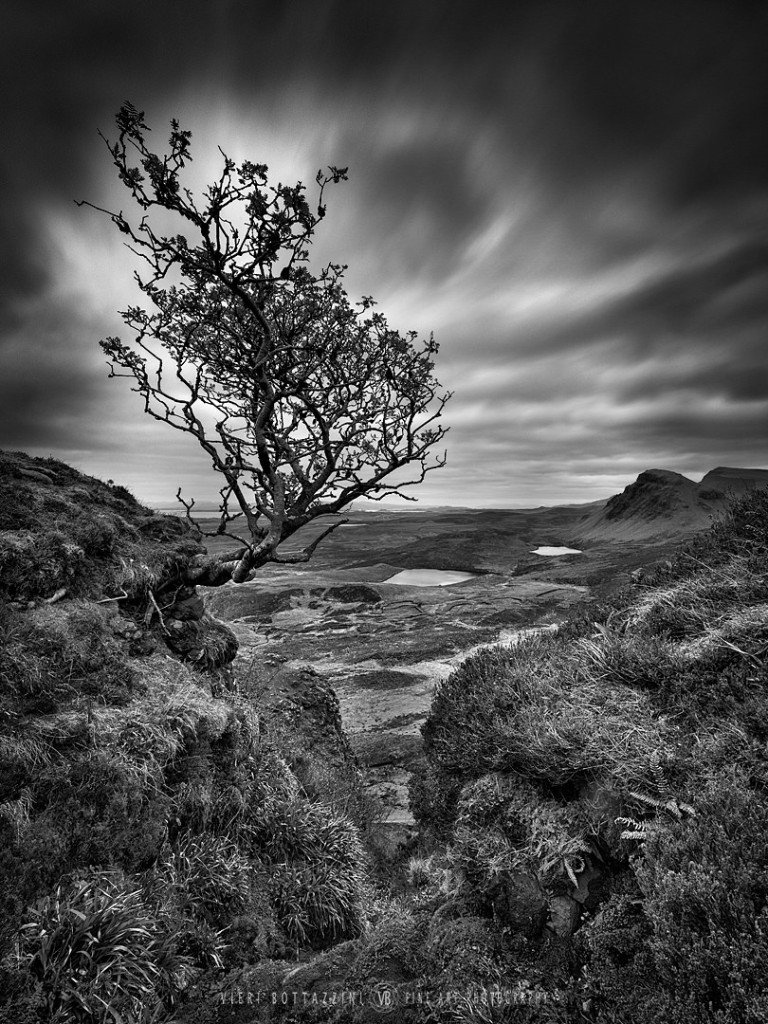
Let me give you another example, this time of a Portfolio built over time and in various locations. This time, I’ll take you to the Quiraing, on the northern end of the spectacular Isle of Skye, in Scotland. The Quiraing is a truly inspiring area, full of photographic opportunities. One thing that immediately made it special for me is a wee tree, living there in one of the most unlikely settings you could think of.
RESILIENCE | You might have seen many images of this tree, but I am positive enough that very few looked like this, with the tree shooting over the sky rather than overlapping the land – and getting lost in it. Since my first visit to that tree, over a decade ago, what struck me about it was its resilience.
This tree lives there against all odds, and that inspired me to photograph it in the most heroic way I could.
This meant saving the tree from visually drowning into the background, having it standing against the sky instead. At the same time, I wanted to photograph it from below, giving it a classic “hero” treatment.
Doing all that, in this case, turned out to be photographically quite hard in that you’ll have to set your camera up in a nearly impossible position. It can be done, as my photograph shows, but one needs to really work for it. This most definitely is not the “obvious” composition you’ll find when you’ll first get there.
The moment I photographed that tree, the idea for my “Resilience” Portfolio was born. I carried it with me everywhere I went since, and I still do. Over time, more trees living against all odds in places and conditions where they shouldn’t be surviving at all got added to the series. Many are still at a digital negative level, and the Portfolio will be published once it’s ready. What counts for me is that whenever I see a suitable tree, I now have a very clear idea about how to portray it and, must crucially, why.
WORKING DELIBERATELY AND PORTFOLIOS | There are many ways to train us to work in a more focused, more deliberate and more creative way. As well, there are many ways to develop our personal style and look, and to strengthen our photography. One of them, for me, is to think in terms of Portfolios already when working in the field, not just when home after the fact.
Those above are just two examples of how thinking in terms of Portfolios helped me photograph in a more determined, creative and focused way. I currently have perhaps a dozen of such Portfolio developing in my mind and on my hard drives, shaping over the years as I progress with my photographic journey.

Some are single location based, some are based on multiple locations. Some will see the light of day soon, other might never do. Some are just faint ideas, other are very clear in scope. However, I got to the point that when I approach a location, be it a new one or one I am revisiting often, I nearly always think in terms of Portfolios.
Doing so helps me see more clearly. It helps me see through the inevitable clutter of images I could create thanks to the endless possibilities my equipment offers me, images most of which would inevitably end up deleted after the fact, though. It helps me being much less dispersive and lose much less time creating photographs that I already know, deep down, won’t work but I used to take anyway.
Last, when I am facing inspiring subjects that wouldn’t fit in any of my existing mental Portfolios, I mentally file them in my “uncategorised” mental folder, waiting for them to arrange themselves with other photographs in a possible future Portfolio.
MISSING OPPORTUNITIES? | Am I afraid of missing opportunities, perhaps not taking photographs that might become something in the future, or that might become something once I see them on my computer screen? Not really, no.
First, over the years I noticed that discarding images that would then come back to me as great at a later time was something never really happening. I noticed how my instincts in the field about which images were worthy and which ones were not got sharper and sharper; I also noticed how I kept shooting less and less while at the same time keeping more and more of what I shot.
Second, over the years I understood that not missing opportunities is not the point. I understood that fear of missing out on something is often the very thing that holds us back from enjoying the moment and be fully present in what we are doing. I found this to be true both with photography and with life at large.
I am at a stage in my photographic journey where the point for me is creating work I believe in; work I feel compelled to create. I’d rather create one memorable image a year than a hundred weak ones.
I always chuckle when people tell me “You don’t know what you missed”. I always thought that if I didn’t know something, how could I possibly miss it to begin with?
When it comes to photography, I don’t see the photographs I didn’t take as missed opportunities. If I went somewhere and I didn’t see something that maybe others did see, even something truly portentous and amazing, it means it wasn’t for me to photograph. Perhaps I wasn’t ready to see it, perhaps I saw it and it didn’t register with me, or perhaps I was busy photographing something else.
We can’t photograph everything, and that’s perfectly fine. Life means making choices, and making choices means fully embracing the things you choose while giving up to the things you didn’t choose, preferably without any regrets.

CONCLUSION | Back to the topic at hand, while there are many ways for each of us to be fully present and connected to what we are doing when we are working in the field, I personally find thinking in terms of Portfolios extremely helpful.
I find that thinking with clarity about the destination and purpose of my photographs at the time of their creation in turn helps me add purpose and clarity to the way I work.
Over the years, this eventually resulted in taking less and less photographs but much stronger ones. More, thinking in terms of Portfolio not only helped me creating stronger images, but it also made me much more efficient while doing so.
While I appreciate that it might feel hard to do at first, starting to think in terms of Portfolio when we are working in the field is something I find very beneficial in the long term and something I highly recommend everyone to try.
Thank you for reading this post, I hope you enjoyed it! Why don’t you share it with your friends, or drop me a comment to let me know your thoughts about this?
2 thoughts on “THE BENEFITS OF THINKING IN TERMS OF PORTFOLIOS”
You make some good points there Vieri and, despite being a very selective photographer, hadn’t quite thought of the portfolio mindset as a way to enhance that approach.
Thanks, Paul.
Hello Paul,
thank you very much for reading and commenting, I am glad you found the article interesting and fitting with your approach to photography. I know where you come from, I was very selective as well and was already shooting relatively very little (especially compared to today’s fashion of landscape photography), and this felt like a natural next step to me.
Best regards,
Vieri