
AT THE CROSSING OF INTUITION AND THOUGHT
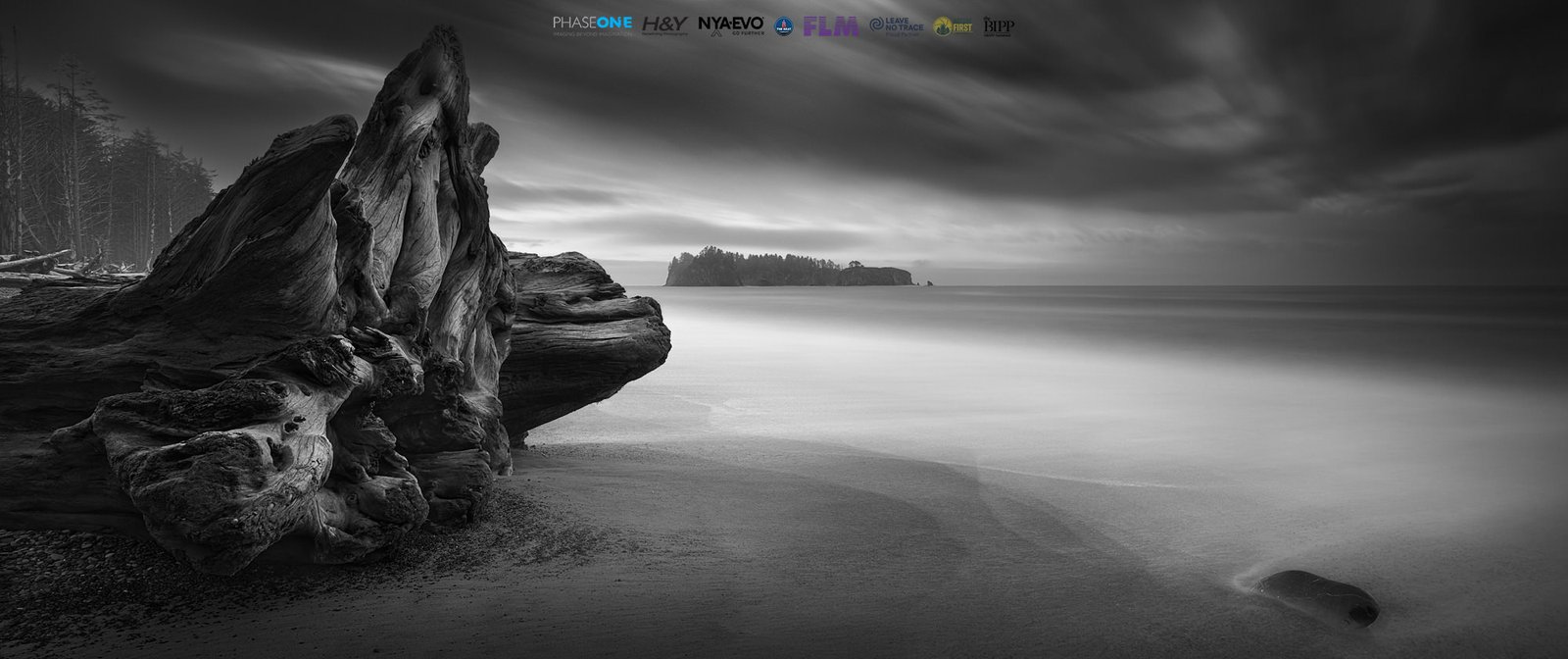
DO WE RELY MORE ON INTUITION OR THOUGHT, FOR OUR LANDSCAPE PHOTOGRAPHY?
Landscape photography is a truly beautiful art. The more I practice it and the more I study it, the more I am fascinated by how our mind works and enables us to create memorable, beautiful photographs. At the same time, the more I study, the more I am convinced that there are no universal answers explaining what enables us to do what we do.
Each of us, if we work enough and are perseverant enough, will eventually find one answer working for us – and one that may be constantly changing at that.

In today’s post, I decided to investigate how intuition and thought work together (at least for me, that is) in the process of photographic creation.
As we know, our sense of sight works in wondrous ways. One of the classic ways it works, is through what we could call “selective seeing”. When we are looking at a scene, our brains and eyes are intuitively attracted by certain elements, shapes, lines and details, rather than by others.
This intuition, a sort of talent for seeing things beyond what the mere appearance of a landscape is, is both innate and cultivated. It is innate in that our sense of sight works this way. It is (or can be) cultivated in that we can refine and intensify the quality of our gaze into the landscape both by studying as much visual art as we can and by deepening our culture, visual and otherwise.

Since we are all different, we all come from different backgrounds and we all have been exposed to different kinds of visual arts and culture, it is only natural for different people to be attracted by different things, and at different levels. Effectively, we can say that we all see in a unique way.
In short, different people looking at any given scene might – and likely will – find that the scene makes sense to them in very different ways.
When looking at a scene, oftentimes we see it (or to better put it, we see through it, or beyond it) with such clarity that it is tempting to think that just working out of our intuition would automatically result in strong, powerful, successful photographs.
However, when we press the shutter of our cameras, that layer of selective seeing – of intuition – is suddenly gone. The very scene that we intuitively saw processing it in a selective way, a way that made total sense to us, the camera saw – and, crucially, recorded – in a completely neutral way, so to speak, one that brought all those elements that stood out for us back to the same level of importance as all the others.
That, of course, is to be expected; it is just the nature of the beast. Cameras alone have no way to know what we want out of a scene, and least of all can make it happen all by themselves.
It is up to us, first in the field through careful selection of vantage point, of focal length, of aperture and shutter speed, then by mastering the development process (be it digital or analog), to create our photographs exactly as we envisioned them. It is up to us to make sure that people viewing our photographs will see what we want them to see.
Then, crucially, it is up to people viewing our work to make whatever sense they want out of all we did to create it, adding their own layer of interpretation on top of our own.
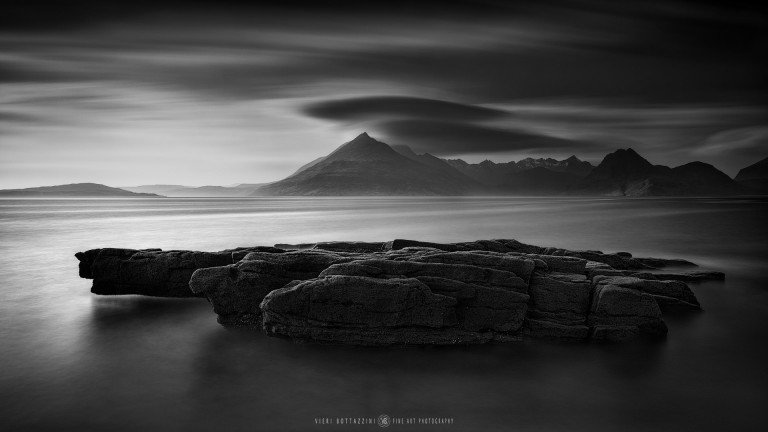
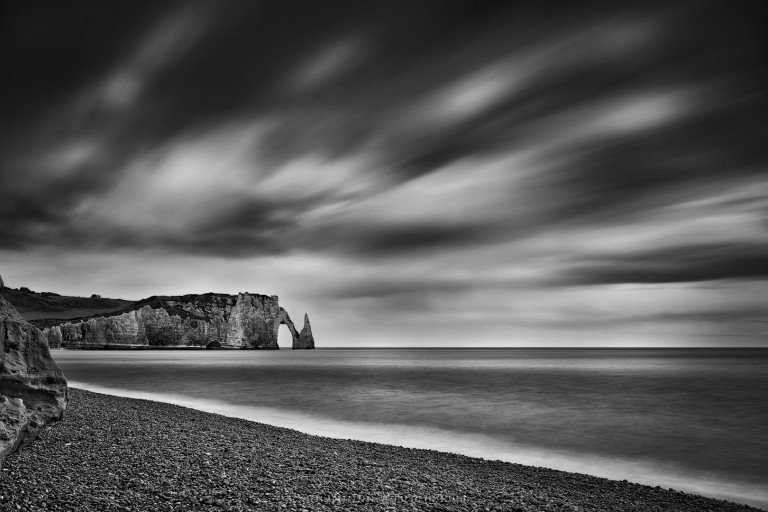
Doing so, however, is not always easy – certainly not as easy as people think. The way I see it, short of the occasional lucky shot, creating a great photograph requires a bit more than just acting on the initial intuition that had us stop and want to photograph a scene.
For me, a successful photograph can only happen at the crossing of intuition and thought.

While everyone has their own process, let me outline the one that works for me here, offered for what is worth, without any pretence of universality and hoping it might provide some food for thought.
When getting on a scene, it is intuition that forces me to halt and take notice. It is intuition that tells me there is a photograph hidden in there, somewhere.
Once that happens, thought kicks in. It is through a methodical, problem-solving thinking process that I analyze the scene and identify the elements that makes it compelling for me. I select the character(s) of the story I want my photograph to tell, line them up in my mind according to their importance and decide how to organize them against whatever backdrop there is for the story to take place.
Once these elements are clear for me, the next step is arranging them as precisely as possible in my camera’s frame. To do so, I carefully and slowly move around, playing with their relative positions until I am happy. While doing this, I start thinking about what I want their relative size to be as well, something that will determine my decision of which lens to use.
If moving elements, such as water and clouds, are present in the scene, I then consider how they will look photographed with different exposure times, something I routinely use to transform visible matter into lines, shapes and forms complementing the more tangible elements in my composition.
Once I am done with all that, it’s technically time to turn the image I envisioned into a photograph.
Of course, the details of this last step vary depending on the camera and overall system I am using. Generally, it involves setting the shot up (with or without the help of shift and rise / fall, if present on that particular camera), focusing it (with or without the help of tilt, if present on the camera), adding whatever filters I need for that shot (a combination of polarizer, Grad ND and solid ND is what I normally use) and, finally, take the shot.
I went full on landscape photography in 2010, which means I have now been doing this for a long time; more importantly, for the last ten years I have been doing this intensively, working in the field – between leading Workshops and my own personal work – for about 6 months a year. This put me in the privileged position of being able to practice photography almost daily, non-stop, for months on end.
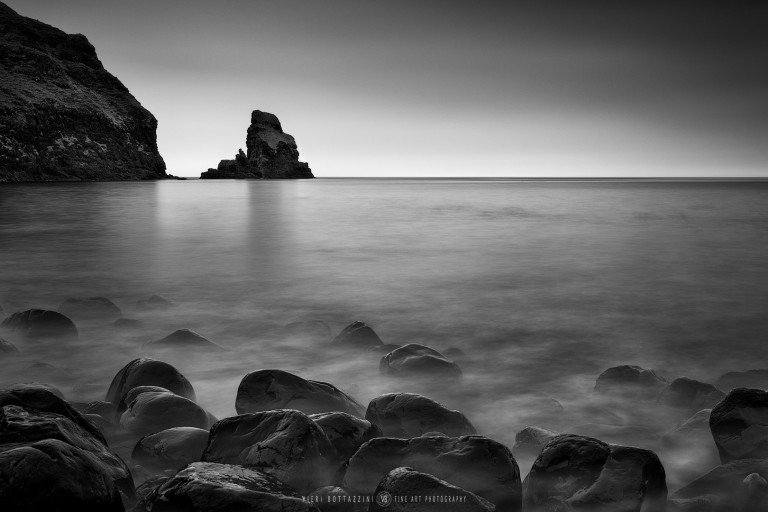
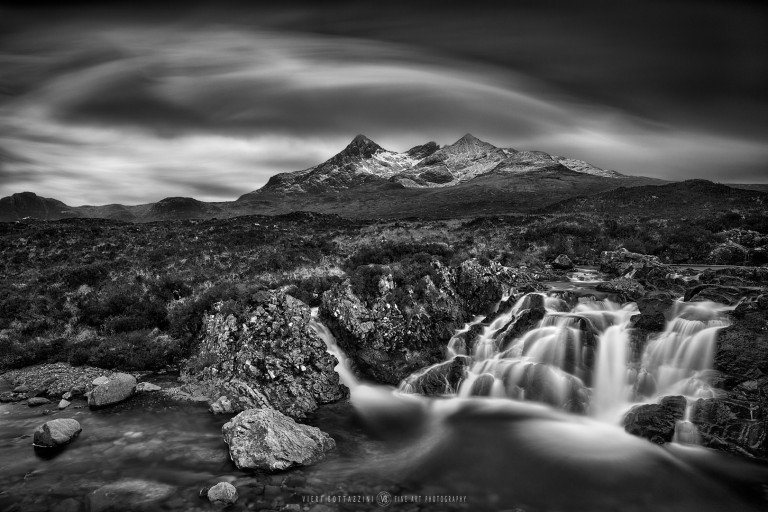

Over the years, the thinking, analytical part of my process got faster and faster, and my mastering of photographic technique improved as well. So much so that nowadays they both feel as intuitive as what I consider the truly intuitive part of my process.
To an outside spectator watching me working in the field, the intuitive and thinking / technical parts of my process might look one and the same – but I know they are not. I know that once I intuitively selected a scene to photograph, a very logical, thought-based, methodical process starts happening in my mind, a process culminating in the final photograph.
I find nurturing both parts, the intuitive one as well as the more logical, rational one, fundamental for my photography; equally fundamental, of course, is to keep honing and improving my photographic technique.
This is what works for me. How about you, how does your process work?

Thank you for reading this post, I hope you enjoyed it! Why don’t you share it with your friends, or drop me a comment to let me know your thoughts about this?
2 thoughts on “AT THE CROSSING OF INTUITION AND THOUGHT”
Ciao Vieri,
I am a professional photographer who often teaches. I am struggling with trends toward cell phone photography. Your particular article is in tune to my thoughts exemplifying how important is to wait, analyze, and craft what is actually in front of your eyes and make it your own. My big criticism for taking, (I am using the word taking rather than making on purpose), an image with a cell phone is that most of the time the person just stands in front of the composition and impulsively hits the shutter button. This is a rushed/lazy methodology, which is extremely annoying to me. I don’t think people who argue they can make great images with cellphones understand how you and I fabricate great efforts and thought into the creation of our images. They have no clue how our minds think instinctively from experiences in the field. It has taken me many years to refine how my brain and eyes work in unison to create what I want to document with my cameras and lenses. I am simply not in favor of what I call the “point and shoot cell phone/ snapshot era”. Buon lavoro con i tuoi scritti è le foto.
Pamela
Ciao Pamela,
thank you for your message and kind words about the article, I am happy they resonate with you. About the current trend, ideally the medium we use to create our images should be just that, a medium – the process should be what counts. Ideally, one could be extremely careful and reflective using a cellphone, as much as someone else could be very careless with a 8×10″. That is ideally. In the real world, though, as we all know different medium sort of encourage different uses; an 8×10″ is much more difficult to use carelessly than a cellphone, in that it takes a lot of time to get from idea to clicking the shutter.
In turn, this doesn’t mean that everyone using an 8×10″ is a genius creating amazing images, and everyone using a cellphone creates rubbish: there is a lot of rubbish photography in 8×10″ format, and a lot of genius work created by cellphones (I know many colleagues who are doing amazing work with cellphones). The thing, as often happens, is in the numbers: there are millions – billions even – of people using cellphones and posting their work everywhere, and of course the majority is not serious photographers. Add to that the number of people who thinks they are photographers and act as such, while they just are cellphone snappers (nothing wrong with that, as long as one is aware of it), and it’s easy to understand the frustration developed by considerate, thinking photographers against the cellphone.
All that said, for me the process counts infinitely more than the medium – as long as the final photograph is amazing, I couldn’t care less what one took it with. To create great landscape work, in my experience, a slower and more deliberate process brings to better results. Of course, the slower the medium one uses, the more one is forced to slow down and think. Hence, while it’s definitely possible to use a cellphone for serious work, the medium definitely doesn’t lend itself to that. Paradoxically, perhaps, since it kinda requires much more effort to use a cellphone mindfully (we all know how easy it is to just use it to snap away mindlessly!), we should appreciate great cellphone photography – if and when we find it – even more?
Best regards,
Vieri