
COMPOSITION AND FULL PAGE SYNDROME
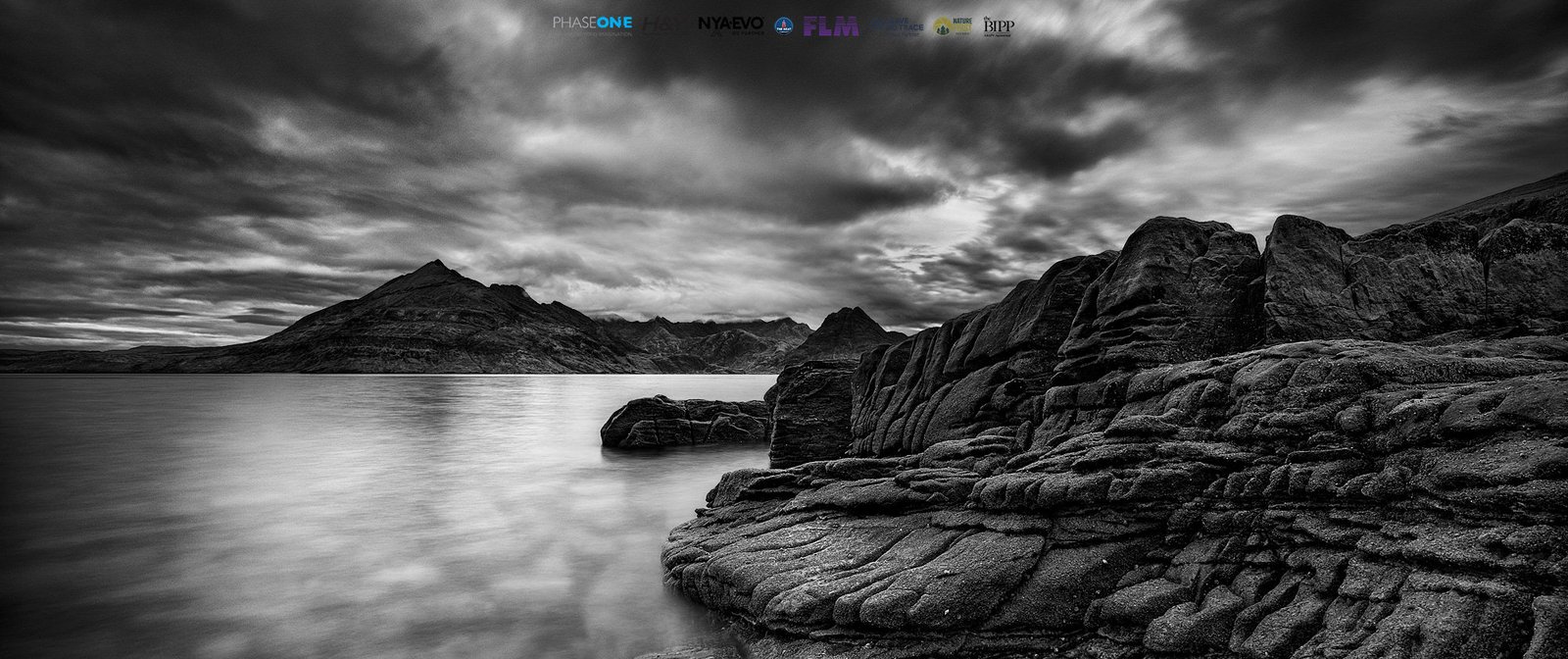
WRITERS FEAR THE BLANK PAGE SYNDROME, SHOULD WE FEAR OUR OWN FULL PAGE SYNDROME?
Famously, writers are known to often have to face the so-called blank page syndrome, a kind of writers’ block where they keep staring at an empty page, finding it difficult to start writing.
While a similar problem might present itself to studio photographers, who have the blessing and the curse of being free to create their own sets, when working in the landscape we photographers face a somewhat opposite problem.

No matter where we point our cameras, it is not very often that we’ll face a fully empty canvas. Generally, both natural and man-made landscapes present us with scene with different degrees of complexity and composed by various elements. Regardless of their number, size and placement, it is our job to make sense of these elements, arranging them in compositions that will express our interpretation of the scene in front of us in the most powerful, convincing way.
When it comes to approaching a location, however, many photographers fall pray of what we could call the “full page syndrome”. This is a sort of fear of missing out, a sort of counterproductive energy at work, something that makes sure that as soon as we get somewhere, see a scene we like and intuitively see something in it that catches our eye, we have to start photographing it immediately, with an unjustified urgency and without much thinking. It’s almost like if we didn’t start photographing a scene in the first minute of getting there, the scene would disappear in front of our very own eyes.

As mentioned in my recent article AT THE CROSSING OF INTUITION AND THOUGHT, our sense of sight works in wondrous ways. In particular, it works through what we could call “selective seeing”, meaning that when we are looking at a scene, our brains and eyes are intuitively attracted by certain elements, shapes, lines and details, rather than by others.
Bring five people into a totally dark room full of furniture and objects, turn on the light for a second and then off again, and ask each of them which objects caught their attention, and you’ll get five different answers. Bring five people to any given, complex landscape scene and ask them which elements caught their attention, and you’ll likely get five different answers.
Bring five photographers to the same location, let them work without telling them what to photograph, and as long as they don’t know the location and don’t have any “checklist” of images to take there, they would very likely take five different photographs.
In landscape photography, this ability to see selectively through a complex scene can prove to be a great asset in that it allows each of us to see things that other people wouldn’t notice and find images in scenes that others would pass by without giving them a second look.
Ultimately, we could say that is largely this ability that allows us to create personal, unique images of the locations and scenes we’ll photograph. Again, if we put our mind and creativity to it rather than just trying and replicate other people photographs, that is.
There is a downside to this, however, and one we see over and over. The practical risk of trusting our ability to selectively see and let our “full page syndrome” go unchecked when we get to a location, is that of forgetting that the camera sees and photograph in a neutral way.
Unlike us, our cameras do not see selectively. Without any deliberate, conscious effort on our part to make them do so, our cameras will just record what is in front of them, without highlighting and making the best compositional use of the elements that made us stop and want to photograph our given scene.
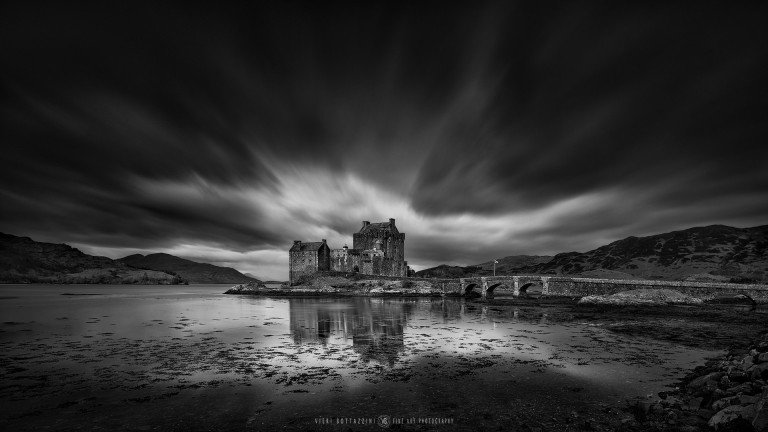
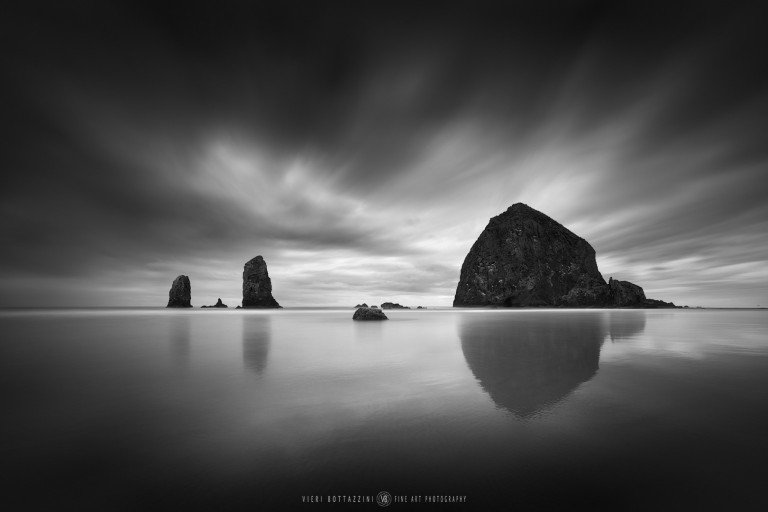
Unfortunately, very often the above does not result in getting complex photographs, which of course would not necessarily be a bad thing per se, when done well. It results in getting photographs that are just confused, without a clear story to tell. Photographs where it is not clear for the viewer where to look and, crucially, why.

Back to our writers’ simile, while a writer starts with an empty page that needs to be filled with words, ideas and stories, we start with a canvas filled with objects, potential ideas and possible stories that need to be arranged into a photograph telling a coherent story, one that makes sense. To do so, my solution to the full page syndrome is that of approaching photographic composition in a sort of reversed way compared to a writer’s approach. While writers do so through a process of addition, I think the best course of action for us is to build our photographs, and tell our stories, through a process of simplification and elimination.
This, of course, doesn’t necessarily mean we need to discard complex compositions altogether and just go for minimalist photographs. Complex compositions have a role in photography just as complex novels have in literature, and when done well they can be incredibly rewarding both to create and to enjoy. Minimalist compositions have a role in photography just as short stories, poems or even aphorisms and haikus have in literature, and when done well they also can be extremely rewarding both to create and to enjoy.
While everyone’s journey is different, in my personal walk along the path of landscape photography I found that proceeding through simplification and elimination eventually led me to appreciate first, and then love, the powerful beauty of black & white, in itself a simplification and abstraction from color; and, it brought me to appreciate and love the beautiful power of minimalism, a simplification and abstraction from too literal and crowded compositions.
Of course, the use of black & white and minimalism are just two possible outcomes of our quest for simplification. While valid ones, and ones I love to pursue when the subject matter is suitable for either or both, when I work in the field I also love to work on more complex, larger scenes. As well, while I have been shooting in black & white exclusively for the last couple of years, I still love the use of color when it adds to the story.
If I had to define what my photography is about, I’d say I use an approach that we could call “complex minimalism” to serve the purpose of telling stories of time and its effect on matters and, ultimately, on us.
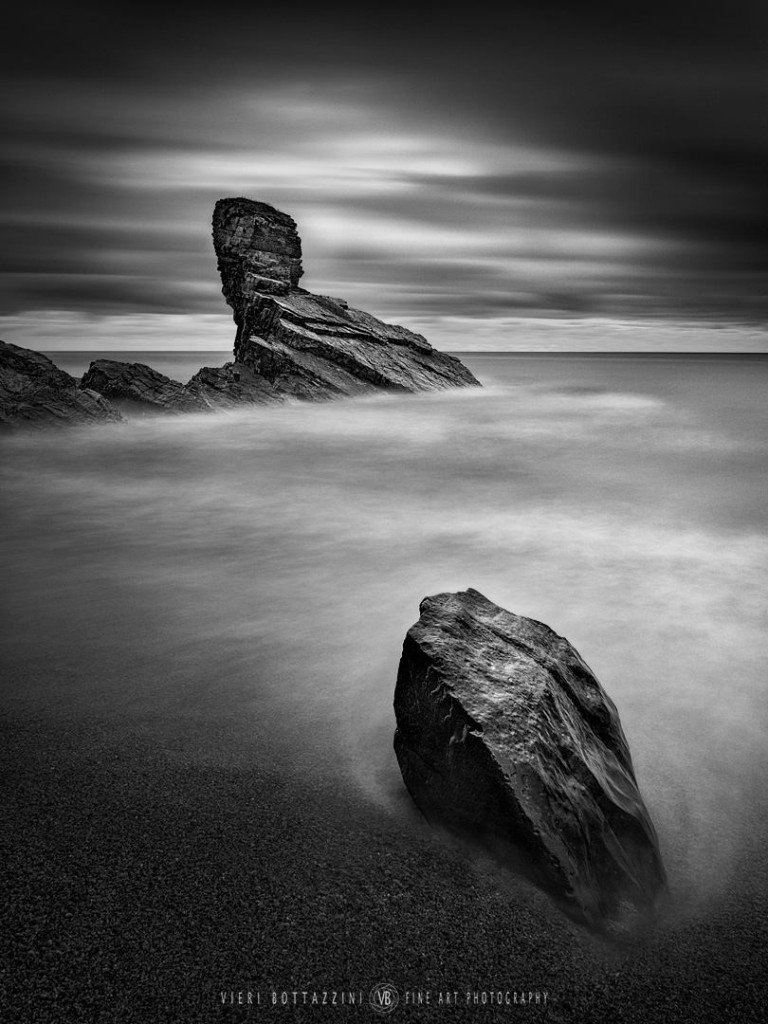
Most importantly, though, what counts to me is neither how a photograph is created, nor which path brought the photographer to create it in a way or another. What counts is the result, and how successful a photograph is. As well, regardless of the subject matter I photograph and the personal choices I make when creating my own work, I love to look at all kinds of photography. When done well, every genre, every form of expression, every choice of subject matter and every way of representing them, are interesting and inspiring to me.

So, in practice, how do we go about simplifying a messy scene, and bring the complexity of the world in front of us to serve our storytelling needs?
First, we need to identify the elements that, for us, make the story. Then, walk around the scene to see how we can best organize them: creating strong relationships between elements in a frame, as well as carefully positioning them in our canvas, tend to automatically exclude other elements from visually attract a viewer’s attention.
Once we did that, lens choice is the next tool we have available to lead a viewer’s eye into, and around, our frame. Playing with our frame’s elements’ relative sizes and with the compression or expansion of planes is a very effective way to point a viewer’s eye towards what we want them to see.
The choice of light, meaning both time of day and time of the year, influences the way different elements are lit and that, in turn, is another great tool we can use to accentuate some elements and hide others from view.
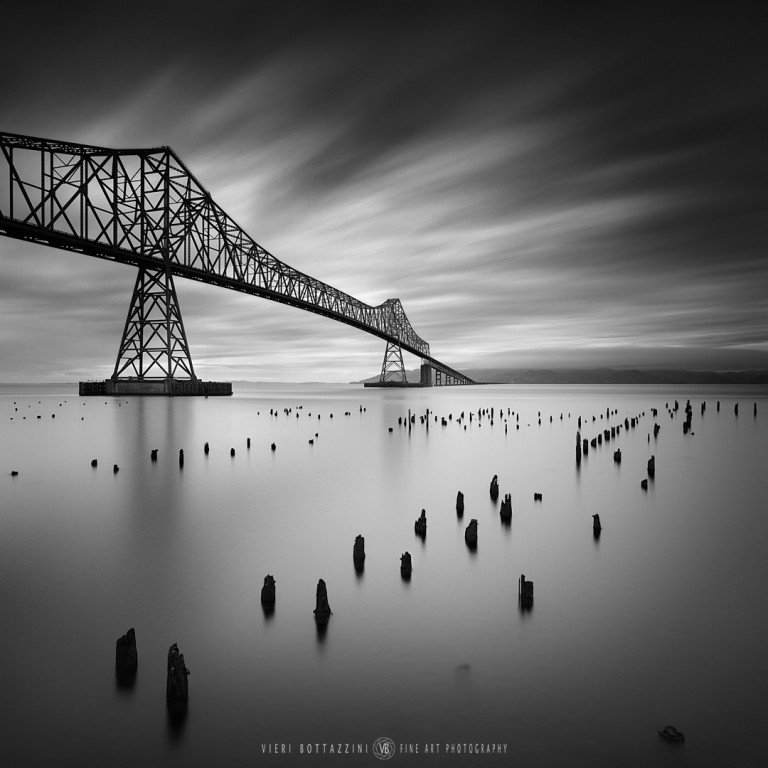
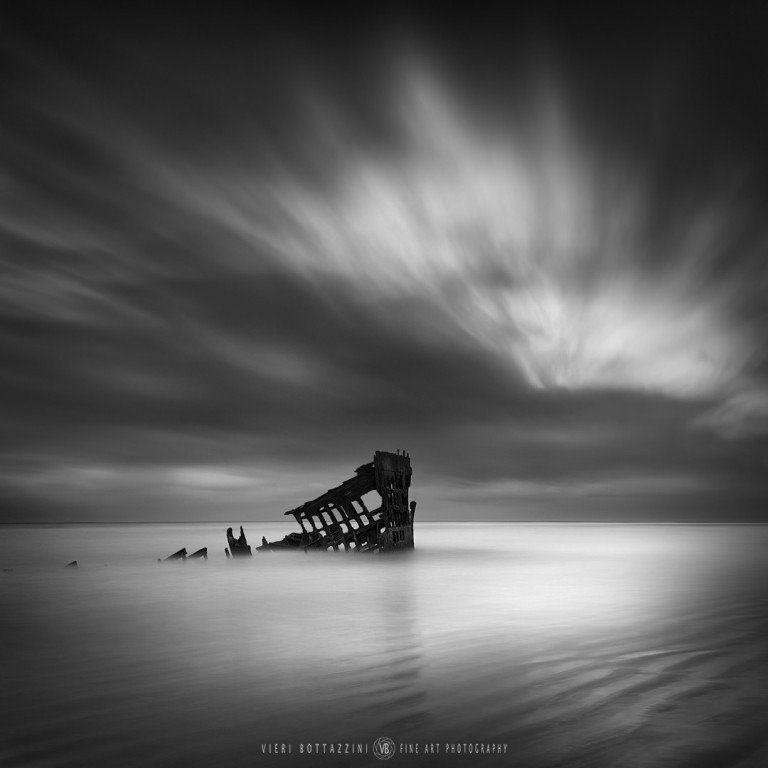
Then, there is the choice of aperture, allowing us to literally focus on certain elements and defocus others, if so we wish. Finally, the choice of shutter speed, allowing us to transform moving matter – such as water and clouds – into lines and shapes, dramatically simplifying what could otherwise be complex, or outright messy, elements in our frames.
Last, there is the development and processing stage. Digital processing is so mature, nowadays, that even without taking AI into account there are a nearly infinite number of post-processing steps, tricks and tools that can be used to make sure people will experience our photographs the way we intend them to. Given the power of today’s digital post-processing, however, care should be exercised in keeping our photographs believable; unless, of course, we are deliberately going for the unreal.
One inherent risk in the whole process outlined above is that of becoming too literal and rigid, removing any form of independence on the viewer’s part, every form of collaboration in defining what the meaning of our photographs is for them. In my opinion, being too literal never helps.
Art that doesn’t leave room for magic, reflection or dreaming, and that doesn’t let the viewer add their own subtext to what we present them with, is never too interesting to me nor very successful.
As a last note, the order of the steps above is fundamental to me. Without the first step, that of identifying our composition’s main elements, every following step is moot. Without organizing those elements, their mutual relationships and their position in our frame, every following step is moot. And so on.
The risk here is that of working our way backwards, starting with what would be just another snapshot and then trying to find something of interest to add to it with over-the-top post-processing, or through an indiscriminate use of long exposures, or via a formulaic use of composition, and so on. Leaving the first and most important step, that of finding something personal, interesting and unique hidden in a landscape, very low in their list of our priorities, if not altogether out of it.
Whether the approach outlined above makes sense to you or not, I believe that for all of us conquering our own full page syndrome and develop a more thoughtful, deeper and more deliberate approach to composition in landscape photography will help us create more powerful, focused and stronger photographs.

Thank you for reading this post, I hope you enjoyed it! Why don’t you share it with your friends, or drop me a comment to let me know your thoughts about this?