
PORTFOLIOS, PROJECTS AND CONCEPTS
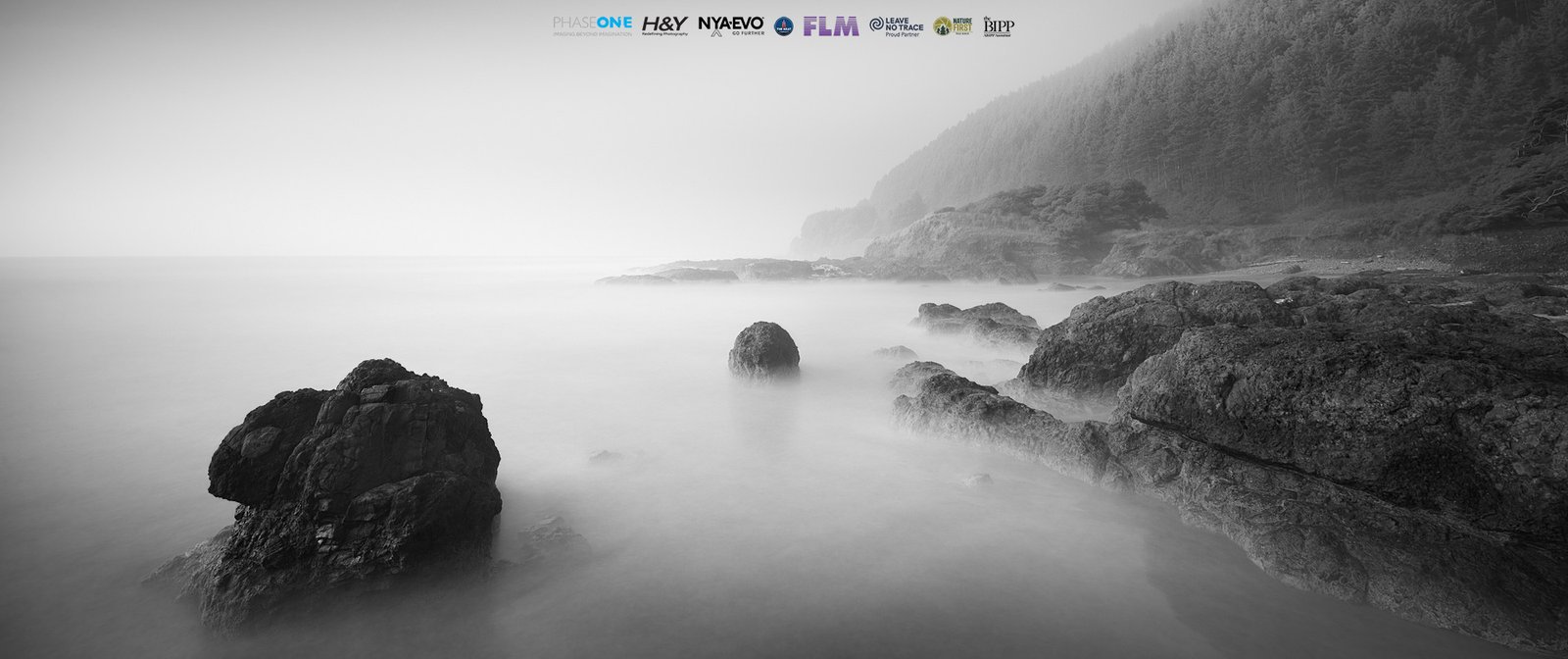
SO, WE TOOK HUNDREDS OF PHOTOGRAPHS. NOW, WHAT DO WE DO WITH THEM?
OK, so we have a hard disk or a negative cabinet full of photographs. We developed and post-processed them, and now we want to display them for the world to see, be it in a gallery, on a book, or more likely on the web, either on our own website or on an image sharing one. How do we go about it?
The common advice is to group them according to some criteria and publish them on your medium of choice as galleries or portfolios. That’s all well and good, but this opens the door to more questions: how do we go about grouping them into galleries or portfolios? According to what criteria? How do we select them, and why?
To answer them, let’s take a step back.

TWO APPROACHES TO FIELD WORK | For the purpose of this article, let’s consider two basic ways we can approach going out in the field to photograph.
The first is going out with no particular targets in mind, photographing what we find the best we can regardless of subject matter. For instance, let’s say we go to Scotland, and we photograph waterfalls, mountains, beaches, seascapes, ruins, shipwrecks, rivers, anything that catches our eye. We then leave it to a later time to organise them into portfolios, assign them to an existing project or perhaps using them to start a new one.
The second is to prepare a project before going out, as detailed as possible, with plans, sketches and drafts – both visual and textual – accompanying it, and then go where that takes us to create the photographs that we need to illustrate the project. For instance, if we wanted to do a project dedicated to ruined medieval castles then Europe would be our destination; if our project were about sandstone desert rock formations, then it wouldn’t be complete without going to the Southwest USA; and so on.

Of course, different people like to work in different ways, and both the first approach and the second one are equally valid as long as they allow each of us to go back home with the photographs we need.
The genre of photography we pursue will also have a part in which approach to choose. For instance, photojournalists may go for the second approach more often, whereas travel photographers may prefer the first.
As a landscape photographer, I personally follow a mix of the two approaches above, with a bias for the first one. Whichever approach you prefer, the important thing for me is that when I work, I have an idea about where each photograph I am taking might end up. In my mind – and on my hard drive – there always is a “destination portfolio” or a “destination project” for most of the photographs I take.
Those without a clear destination at the time of shooting, in many cases end up turning into the seeds for a new portfolio or project. The rest ends up in my “all images” folder, either temporarily or forever.
PORTFOLIOS AND PROJECTS | Now, back to the beginning. How to create a portfolio or a project?
First, to create a portfolio we need an underlying theme – our “portfolio’s name”, to simplify – or, even better, a more abstract concept that unifies the material we want to add to it. The theme or concept must be clear and strong, and possibly original and interesting; the content must be cohesive and coherent with our chosen theme and concept.
“Iceland”, or “Scotland”, or “Death Valley” are definitely clear themes; while they are hardly strong or original, they still can be interesting if the work is outstanding. Classically, themes such as these work great for coffee table photography books, where the location is what makes it interesting for buyers and readers. Personally, I use such themes for galleries illustrating Workshops, or blog posts dedicated to a trip, rather than for my Fine Art portfolios.
Using more intellectual, imaginative and abstract concepts as the motivators to create a portfolio is definitely more interesting, both on the creation and on the fruition side of it, than merely using a destination as our theme.
The flip side of the coin of using such concepts is that they are also more complicated to handle and represent in a clear and strong way when creating our portfolios. More, they can also be more complicated to understand for those sitting on the other side of the portfolio.
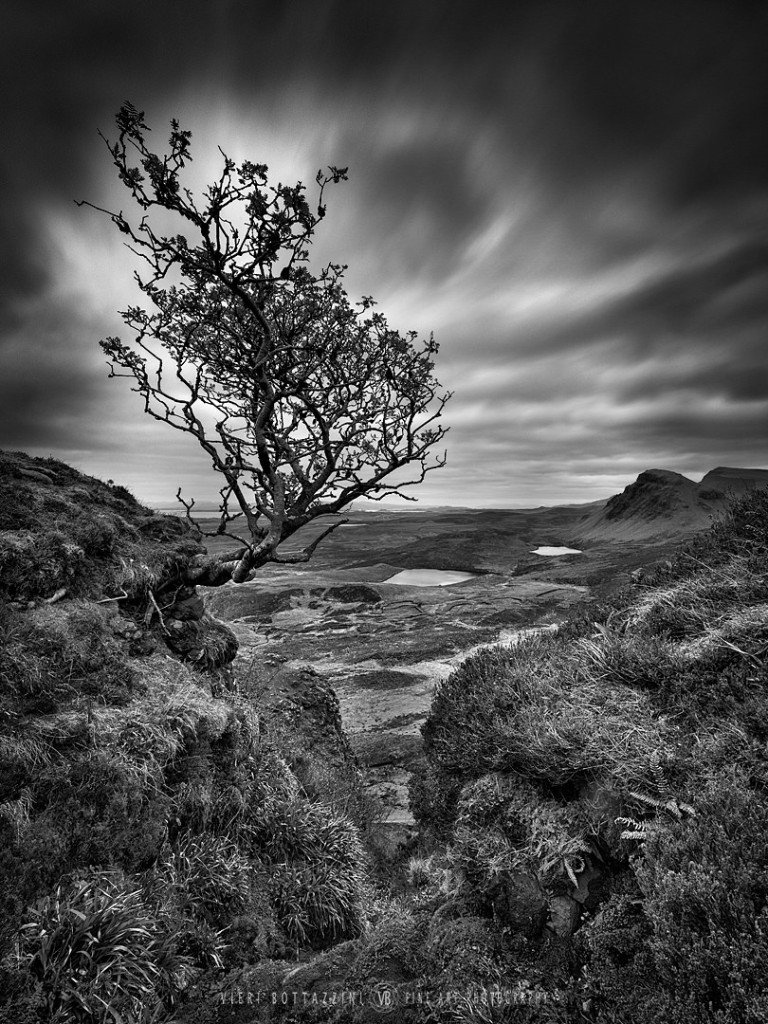
DECORATION OR FINE ART? | The Oxford dictionary defines Fine Art as “creative art, especially visual art whose products are to be appreciated primarily or solely for their imaginative, aesthetic, or intellectual content.”
Wikipedia starts its article dedicated to Fine Art by saying, “In European academic traditions, fine art is made primarily for aesthetics or creative expression, distinguishing it from popular art, decorative art or applied art, which also either serve some practical function (such as pottery or most metalwork) or is generally of limited artistic quality in order to appeal to the masses.” (Bold is mine).
Everyone today offers their work as Fine Art, and of course it is definitely possible to approach the creation of a portfolio called, say, “Iceland” full of imaginative, aesthetic and intellectually rewarding content. I for one can easily imagine a book called “Iceland” with plenty of content that I would find inspiring and would love to read, or a webpage doing just the same.
Unfortunately, however, that’s not what typically happens when we open an “Iceland” online portfolio nowadays. Instead, we meet with the umpteenth collection of very decorative sunset and sunrises (or moody Icelandic images), that we have already seen on several other similar such pages.

No original concept, no imaginative or intellectual content: at best, what we find is aesthetically pleasing, decorative art, whose purpose is that of appealing to the masses. Of course, most of it does that amazingly well, and has the social media likes to show for it.
Is the above something negative? And am I disparaging that “decorative art” approach? Not at all. I appreciate the intent and understand the appeal, and I have nothing against either that kind of photography or people doing it.
That said, for me personally as a photographer is simply a case of “being there, done that”. I stopped working in colour years ago and moved on to what, to me, feels like more interesting research on time and its effect on matter, and hopefully to a deeper understanding of the world around me and ultimately of myself.
For me as a viewer, on the other hand, this kind of approach to landscape photography is so popular that looking at one more of such portfolios becomes another case of déjà vu.
Lately, meeting with one more of these portfolios in a way started feeling like a missed opportunity to enjoy an enriching, inspiring and educational visual experience.
So, if we want to create work that is past decoration art, if we want to move more into the Fine Art field, we need to create deeper work, work that goes beyond the mere pleasant appearance. Work with an idea, a concept behind.
FINDING A CONCEPT | That’s great, but what about this elusive “concept” that we supposedly need? How and where do we find it? And, how do we create work representing a concept, or how do we assign a concept to our existing work?
As with most things artistic, I don’t think there necessarily is a single answer here, nor there necessarily is right or wrong.
A concept for a portfolio can be anything that moves us, or anything that we are interested in investigating, visually, philosophically, artistically, aesthetically, intellectually, and so on. It can be anything that represents us, or anything that the world around us inspired us. It can be a message we want to send out to the world, or it can represent a message the outside world sent us.
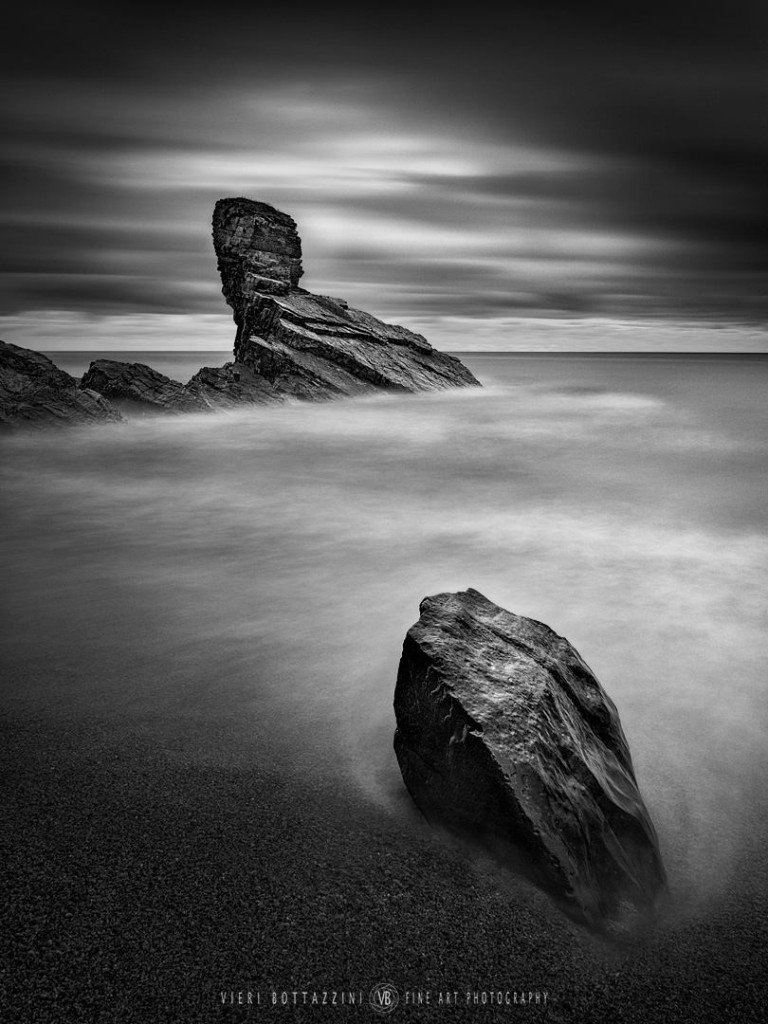
A portfolio’s concept can be inspired and generated, as it often is for me personally, by patterns we recognise in our own work after we created it. These patterns can be related to subject matter we are more attracted to and interested in photographing; or, they can be related to a way of representing reality; they can appear in the arrangements of elements in photographs of different subjects we take all over the world, or they can manifest themselves all in a single location and day.
Again, there is no rules here, and what works for someone doesn’t necessarily work for someone else. As long as the work is strongly connected to it, the concept can be pretty much anything.
Once we have a concept, be it something born before we take a single photograph or generated by photographs that we have already created, the next step is selecting the content going with it.

PORTFOLIO CREATION | So, once we selected our theme, our concept, our “portfolio’s name” if you will, how do we populate it with work? How do we select what to include or leave out of it? How many photographs do we include in a portfolio?
Populating a portfolio, we need to aim for visual and conceptual strength, and to make a portfolio strong, less is more. Take for instance a portfolio made by 10 images, one of which is clearly weaker than the rest. If we had the option to either remove the weak photograph, leaving a 9-photograph portfolio of equally strong photographs as a result, or adding another, strong image leaving an 11-photograph portfolio but with one weak photograph as a result, what should we do?
I would go for the first option, without a doubt. For me, a smaller portfolio made of all strong photographs wins against a larger portfolio with a mix of strong and weak photographs any time.
So, the answer is always edit, edit, edit – or, to better put it, cull, cull, cull. Nothing weakens and dilutes a portfolio as much as filling it with everything we ever shot of a given place, or everything that we ever shot which might remotely fill into that portfolio’s concept.
Editing our own work is not easy, but we need to learn how to edit our content mercilessly. We can do that by ourselves, or perhaps even better we can find someone we trust – and who is less invested than us in the work, thus freer to approach it as objectively as possible – to do that for us.
As far as the best number of photographs per portfolio, to me there is no set answer. But, if you had 50 photographs to exhibit in online galleries, I would be more interested in looking at two galleries called “concept this” and “concept that” with 25 images each, or at three galleries with less photographs each but even more focussed and even stronger concepts, rather than looking at a single gallery with 50 images called “my favourites” or something like that.
As a very general guideline, smaller portfolios are easier to be made strong, powerful and to the point than larger ones. Too many photographs in a portfolio risk diluting it. These were different times, granted, but consider that Ansel Adams over his lifetime produced just 7 portfolios for printing, each with 10 to 15 images.
Also, the most comprehensive book of his work, published posthumous, is called “Ansel Adams: 400 photographs” and it covered a lifetime’s work.

Think about these numbers for a second. In a lifetime, someone like Ansel created under 100 photographs that he considered himself to be portfolio grade. Someone else, posthumously putting together the most comprehensive selection of his work, came up with a total of 400 photographs – I am speculating here, but I am pretty sure Ansel himself would have narrowed that selection down. Again, these were different times, and sure, with digital shooting more comes with the territory. My point is that one thing is shooting more photograph; a different thing altogether is considering everything we shoot to be portfolio worthy.
In practice, if you were starting from your opus magnus of multiple hundreds of photographs and wanted to organise them into portfolios that were as strong as possible, that’s how I would proceed:
– Start by selecting the absolute strongest photographs you have, regardless of whether they will fit in this or that gallery or portfolio; you will think about that later.
– Give your selection another pass, this time looking for possible duplicates. If you had two similar photographs of the same scene, or even two photographs depicting the same place under similar light conditions, I would select the strongest one and leave the other one out.
Exceptions might be photographs taken under completely different light situations, e.g. one at sunrise or sunset, the other one under the night sky; or, e.g., one taken in daytime and the other one under the northern lights; or, e.g., a very long exposure of a seascape and a photograph of the same scene with huge crashing waves; and so on.
– Set your portfolios up, if you haven’t done so already, e.g. as folders on your computer.
– Split your selected photographs into your portfolio folders. Sometimes, the same photograph can occasionally end up in different portfolios, but if you find that happening too often perhaps the portfolios’ concepts are not clear enough.
– Check your portfolios again for consistency, coherence and strength, and cull them if needed.
– Write a short text describing each portfolio. This is important to help you clarify the portfolio’s concept in your mind. You can also use it to give viewers an idea of the philosophy behind the work, if you believe in doing that.
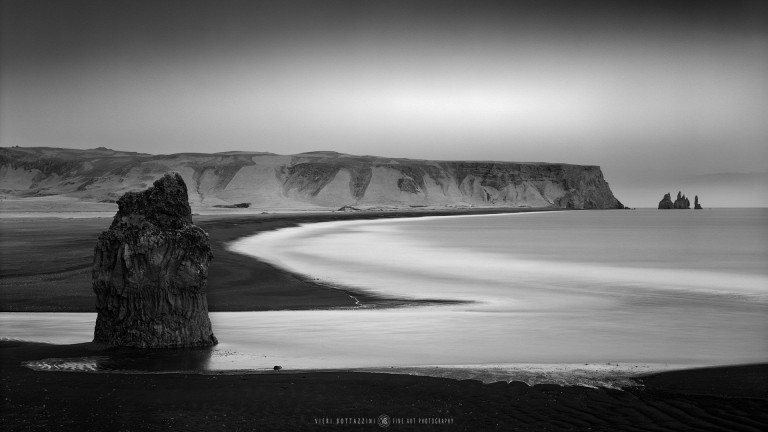
CONCLUSIONS | To sum things up, I put together some short pills for you:
- Projects are generally something you think about and create before going out photographing; portfolios are something you create once the work is done and ready.
- Projects are portfolios that are still ongoing; portfolios are projects that have been completed.
- “Fine Art” portfolios and projects are the ones created about, or developed around, a strong concept. Collection of photographs not based on a concept or idea are more of the “decorative art” kind and I tend to call them “galleries”.
- Less is more. Edit, edit, edit. Then, edit some more.
Let me add one last thought to bring this article to a close.
Nothing is created out of nothing. If we manage to raise high and become independent, original creators, we do so by standing on the shoulders of those who came before us. Every photograph we create today started its artistic journey in the drawings mankind did in caves thousands of years ago. Our best hope to add an original new step to that journey is study and learn as much as we can about what surrounds us and what came before us.
Also, it is always worth remembering that photography is just a very small step we took towards the end of our collective artistic journey. When I think about studying and learning, what comes to mind is philosophy, art, literature, music, history – and, of course, photography. But never photography alone, and never just whatever we got fed by the latest algorithm on your favourite social media.

Thank you for reading this post, I hope you enjoyed it! Why don’t you share it with your friends, or drop me a comment to let me know your thoughts about this?
4 thoughts on “PORTFOLIOS, PROJECTS AND CONCEPTS”
Less is definitely more, I have way too many images on my website. The next version will be more curated.
If you’re going somewhere special then you need a list of things you would like to shoot, the bonus is stumbling across the unexpected shot too good not to capture. Nearer to home it’s good to just get out there and see what appears before you.
Hello Murray,
thank you for reading and commenting, glad the article inspired you to curate your website – a very common problem we all face!
Best regards,
Vieri
GREETINGS, VIERI!
I SO LOOK FORWARD TO YOUR VERY INSPIRING NEWSLETTERS AND YOUR WONDERFUL AND CREATIVE IMAGES. I HAVE WRITTEN TO YOU BEFORE. I AM A PHOTOGRAPHY INSTRUCTOR AT A LOCAL UNIVERSITY. I HAVE SHARED YOUR WEBSITE, NEWSLETTERS, AND PHOTOGRAPHS WITH MY STUDENTS. YOU HAVE INSPIRED THEM TO GET MORE INVOLVED WITH BLACK & WHITE, AND LONG-EXPOSURE PHOTOGRAPHY.
MANY THANKS, AGAIN, AND PLEASE KEEP-UP YOUR VERY MOTIVATIONAL AND ENCOURAGING WORDS.
MY BEST TO YOU ALWAYS! ———LARS HICKS
Hello Lars,
thank you for your comment, always a pleasure to hear from you! Thank you for letting me know that my words and photographs are still serving as inspiration to your pupils, that is one of the best compliment my work and I could ever receive.
Thanks again! Best regards,
Vieri