
LANDSCAPE PHOTOGRAPHY & AI: A DEBATE
DIGITAL AND AI INTRODUCED A SEISMIC CHANGE IN PHOTOGRAPHY. WHAT DOES THAT MEAN FOR US?
Recently, in an interview I have been pointed to by one of our Workshop Alumni, talking about photography and AI OpenAI’s CEO Sam Altman said:
“I think the threshold for how real does it have to be to be considered to be real will just keep moving.”
This, in my opinion, goes to the very core of what a photograph is. The advent of digital photography first, and then of AI, induced a seismic shift in photography like nothing before. As photographers living and working today, professionals and amateurs alike, I believe this is something we simply can’t ignore.

Over the years, I have been privileged to have built an engaged Newsletter readership of like-minded photographers sharing their ideas to me via private replies after every Newsletter. This is why, rather than just telling you my opinion, this time I thought it would be interesting to try and start a wider discussion on this fundamental topic, using the Newsletter as a platform.
So, in my August 16, 2025’s Newsletter, to start the discussion I shared Altman’s quote and asked the following questions:
1. Do you think Sam Altman is right?
2. What does AI and the continuing shift away from reality, which started with digital and developed over the years as digital editing became increasingly powerful, mean for you and your landscape photography, as well as for photography in general?
The response has been so good, and offered so much food for thought, that I decided to bring the discussion here to the blog, where everybody can comment and reply both to this article and to other people’s comment.
To start, I decided to summarise the conversations we had so far grouping them by argument. I will present our readers’ thoughts first, anonymously quoted in italics to represent their ideas as faithfully as possible while preserving their privacy, followed by my take. Feel free to take part in the debate adding your thoughts using the comments at the end of this article.

ALTMAN’S PREDICTION | THE READERS | Out of all the replies I received, nobody directly answered the first question above. One person noted how Altman’s quote evidenced his “feelings of self-importance”, another found his opinion “frightening”, but nobody ventured into saying whether they believed him to be right or wrong.
MY TAKE | My take about Altman’s prediction is very simple. Reading it, I couldn’t help but think that there is nothing like offering something that is already happening disguised as a prediction to make sure said prediction will come true.
Photography in general, and landscape photography in particular, passed Altman’s threshold long ago. Setting aside the fact that photography is never real (see REALITY AND REALISM IN LANDSCAPE PHOTOGRAPHY), many landscape photographers – if not most of them – abandoned the idea of trying and representing reality as closer as it is as possible a long time ago. How to do that, however, is where the rub lies, as Shakespeare would say.
WHAT THIS SHIFT FROM REALITY MEANS FOR PEOPLE AND THEIR PHOTOGRAPHY | This is the question everybody focussed on, replying to the Newsletter. People’s replies were extremely interesting, varying in scope from describing what they themselves do to extremely well-argued analysis about how we got here, framing what happened with photography and AI into a wider reflection of what they see as a tectonic change long burrowing through our society.
Let us try and put some order into all the replies, grouping them into what emerged as the main topics.
HOW WE GOT HERE | THE READERS | A few readers offered a broader view on how we got here, and how the use of AI in photography is the result of a vaster change in society. Here are some of their thoughts:
“I see this as a reflection of the tectonic change underway across the globe mentioned above. The paradigm increasingly being rejected internationally is that of strangulating real effects of a predatory, purely speculative (non-real) finance on one hand, along with the imposition of a disassociated, asocial cultural pessimism on the other. It is reflected in the mind-numbing flood of imagery and illiterate text with which so many feel obliged to spends hours of their day trying to keep up.”
“Meantime, the ocean of images and information constantly flooding us has the unavoidable result of stopping us looking inside and outside in order to see what’s there.”
“AI was inevitable, given our fascination with Technology. We are a society that cannot seem to separate real from unreal. We have always been prone to distraction because thinking requires energy and focus. When the internet came along, regardless of good intentions, it was not long before those intent on making money above all else created algorithms and other ways to maximize distraction and shopping. Human weakness is inherent in the desire to belong and be accepted. It is lovely, of course, but the challenge comes when that longing supersedes remaining true to oneself as an individual. If you want proof, look no further than how difficult it is for most people to stop thinking and be present in any given moment.”
MY TAKE | I think the reasons for the current state of affairs in photography are complex. First, I neither think that all photography out there is bad, nor that everything digital is wrong. There are great photographers using digital, bad ones using film and everything in between. Of course, digital is just a tool and such as AI. Both can be used in a million different ways, and both are here to stay. But, there are inherent risks and dangers in both, and we need to be aware of them.
To add to our readers’ opinions above, I can offer the point of view of someone who worked in the arts and in education all my life. I taught hundreds of pupils in Academia, between college and graduate students. Over 30 years of experience showed me time and again that, since doing something well is hard and takes a lot of work, people find much easier to go and look for shortcuts – often in good faith, at least to begin with. An attitude, incidentally, explaining a lot of what goes on today around the world in general, not just in photography.
Wanting to become good at something quickly and to get from A to B with the least amount of effort is not just understandable, but human. So, it is no surprise how for people starting with photography, or working with it, the advent of digital and AI were not just any old shortcut, but a highway of easiness ready to be taken.

Digital is a tool, and as such it can be used in a million ways. For photographers knowing what they were doing, technically and artistically, digital was a way to do what they did before, but faster and in a more efficient way.
For people not knowing what they were doing, or who were just starting, on the other hand, digital risked to do more harm than good. Just to give a few examples, photographing with digital, with its instant feedback, became much easier than actually learning how to expose, develop and print film. Taking a snapshot at any time of the day and replacing the sky became much easier than going back to the location until the conditions are just right. Adding a figurine to give the sense of scale became much easier than making a viewer aware of scale without it. And so on.
If you keep going down that road, eventually you will get where it will become much easier for people to simply feed prompts to an AI than getting out, going to the airport, getting somewhere, arriving on location, exploring to find your composition, going back as many times as it’s necessary to find the light you want, and so on, in order to get a photograph you like.
It is worth remembering that change happened one step at a time, sort of “boiling the frog slowly” applied to photography. The result, however, was out with photography as we know it, while people still calling themselves photographers.

REALITY AND DEPARTING FROM IT | THE READERS | A few viewers proposed that defining what “real” means, should be the starting point for such a discussion. A viewer offered the definition of real as “existing in the physical world; not imaginary”, and everyone who touched upon this part of the argument agreed that no photograph can replicate reality as it is, being rather an interpretation of it.
Photography has been defined by one reader as “capturing an image that one has seen in a place where one has been present”. If we agree with that definition, it is easy to see how for many readers a photograph stops being a photograph when one moves from purely editing it to adding things to it, compositing, and the like.
On reality and departing from it in practice in people’s own photography, opinions varied greatly. Below you will find a few examples of the spectrum of our readers’ opinion on this topic:
“Either you’re skilled enough to get the image correctly recorded, or you’re not. Exacting exposure and timing – being a real photographer, controlling light, and camera functions/settings to produce the work. Not the computer or editing software. No scanning, no manipulation, dodging, burning, masking, layers, or use of any AI whatsoever.”
“I use digital cameras and techniques only to reproduce silver / wet photography.”
“I (so far anyway) rarely use AI, and when I do, it is typically for 1 or 2 things. Mostly it is to REMOVE a distraction from the image, and often at the edge of the image. OR to GENERATIVE FILL to cover a part of an image where something was removed. I almost never composite something or person into an image.”
“As soon as AI enters the picture by the inclusion or removal of elements of an image that are not generated by the photographer, the resulting image is no longer real.”
“I think there is an analogy with policies about the use of drugs in competitive sports where the aim is to recognize only purely human achievements.”
On digital editing, pretty much everyone agreed that the way film was processed, B&W or colour, has today been replaced with digital editing, finding that a necessity especially when shooting RAW.
Many people shared their own editing process in detail, which was very interesting to read but would take us slightly off topic. For the purpose of this discussion – reality and departing from it – I think this quote from one reader works well: “We have all probably seen the variations of ‘Moonrise’ that Ansel Adams went through to create the version we all know, but he never changed the ‘reality.’”.
MY TAKE | For me, a photograph is an interpretation of reality passing on to the viewer the emotions awoken in me by a place and a moment in time. We all create our interpretations in many different ways; as long as the result is successful and we each respect our own set of premises, there is no right or wrong here.
To do so, we can use the photographic medium as we know it, whether film or digital, remaining in the realm of what I consider “classic photography”. Developing and editing our photographs is necessary, but it is limited to enhancing what was on the scene.
Or, we can trade the limitations of “classic photography” for the power of unlimited digital editing first, and AI now. In doing so, however, we need to keep in mind that with great power comes great responsibility, to quote a superhero – or, in our case, the risk to abandon reality altogether.
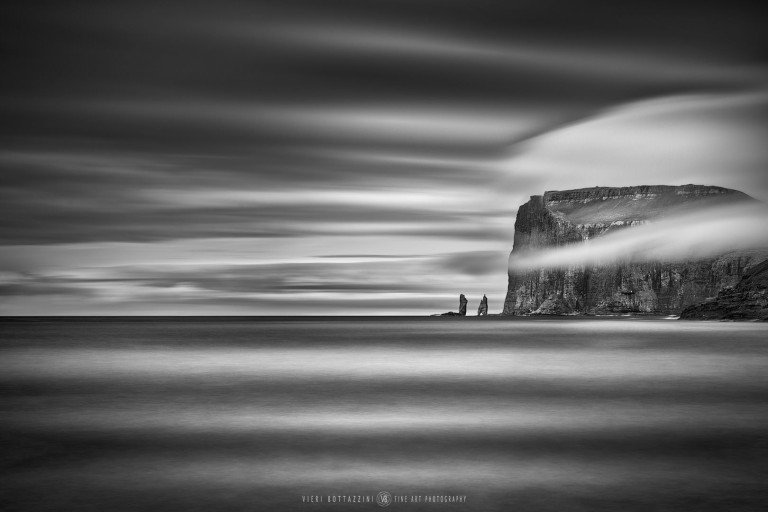
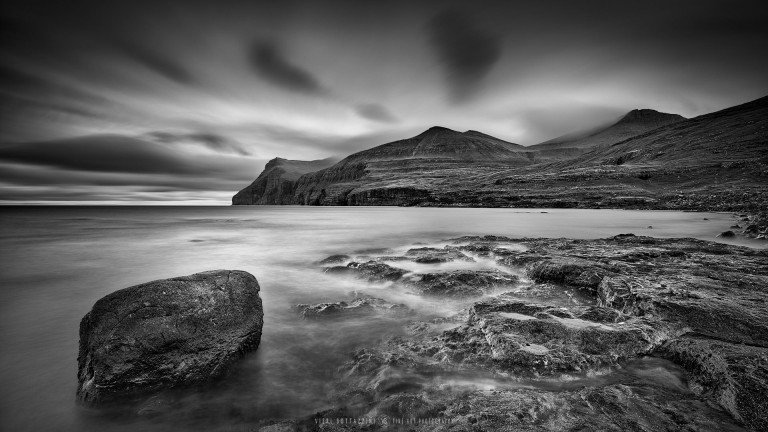
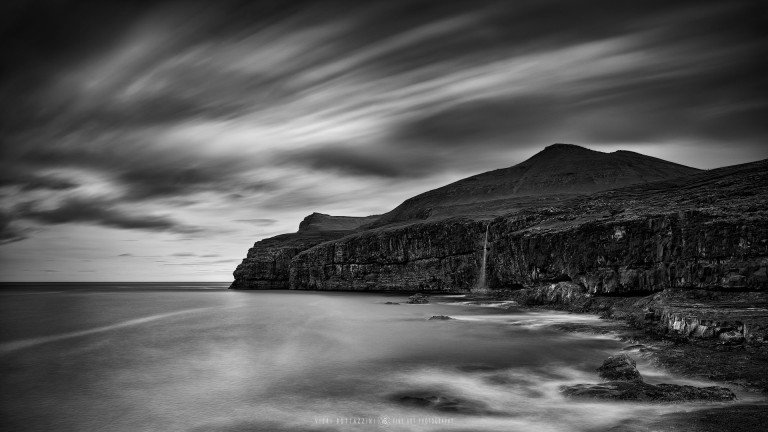
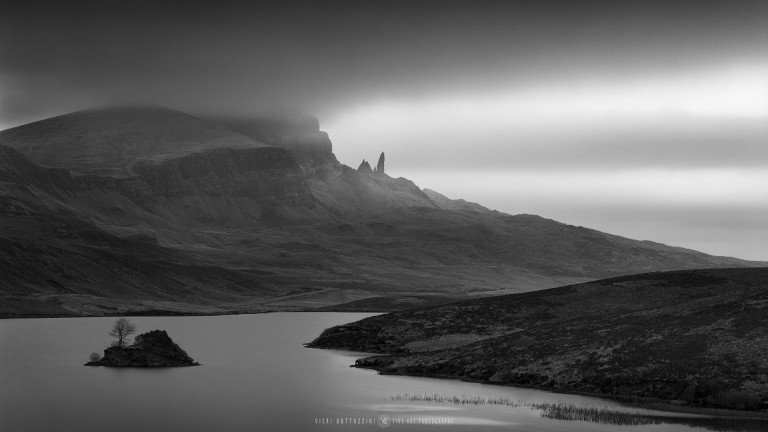
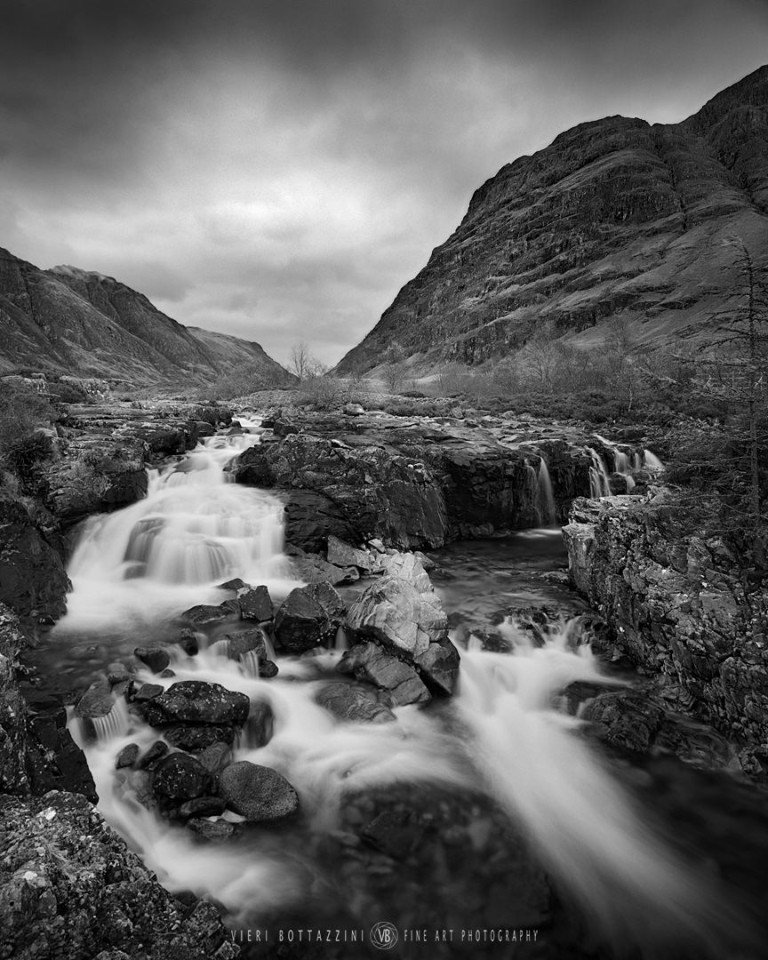
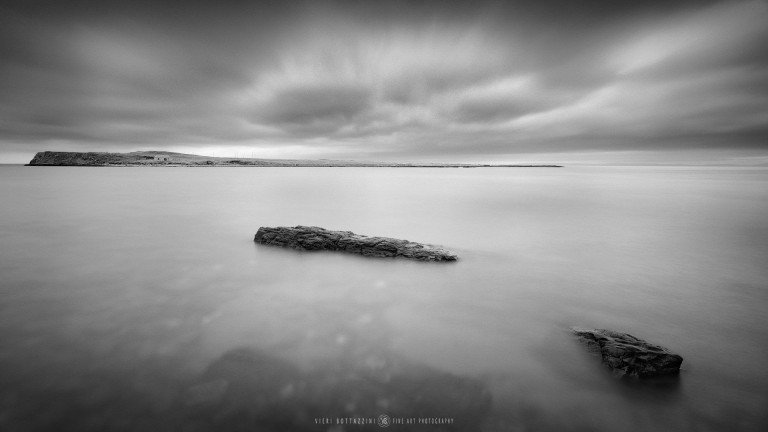
A classic example of using the possibilities offered by the photographic medium to interpret reality is through long exposures. Long exposures do change our perception of time through a different way of representing it in a photographic image, but do not change the physical reality of the scene in front of us.
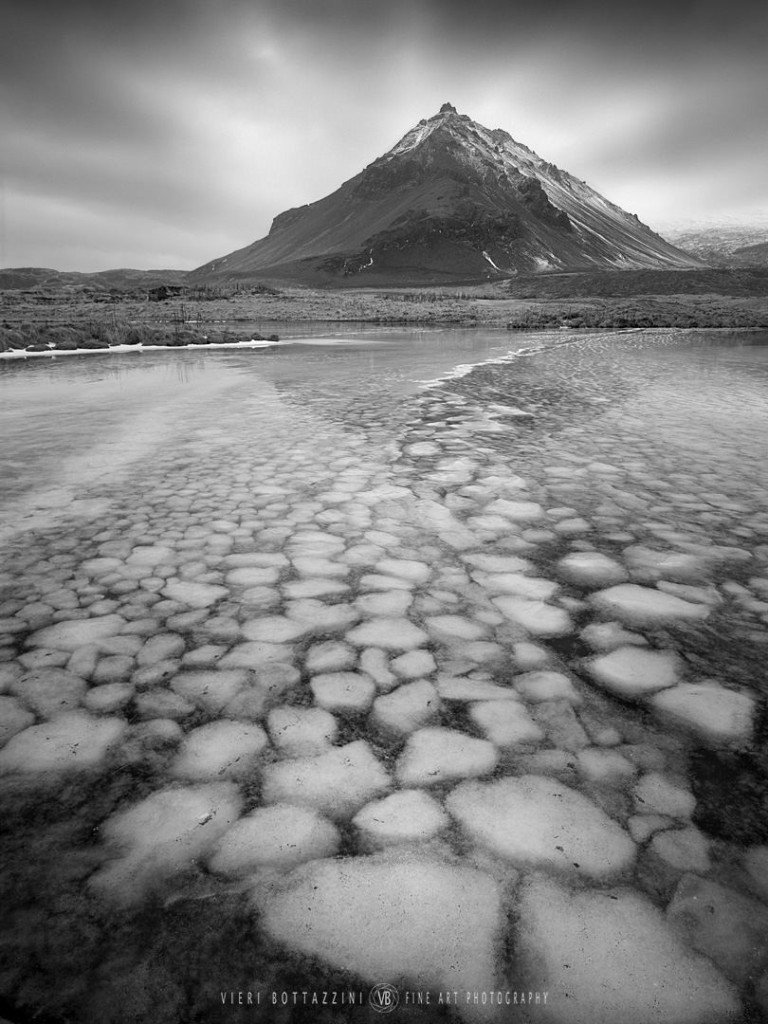
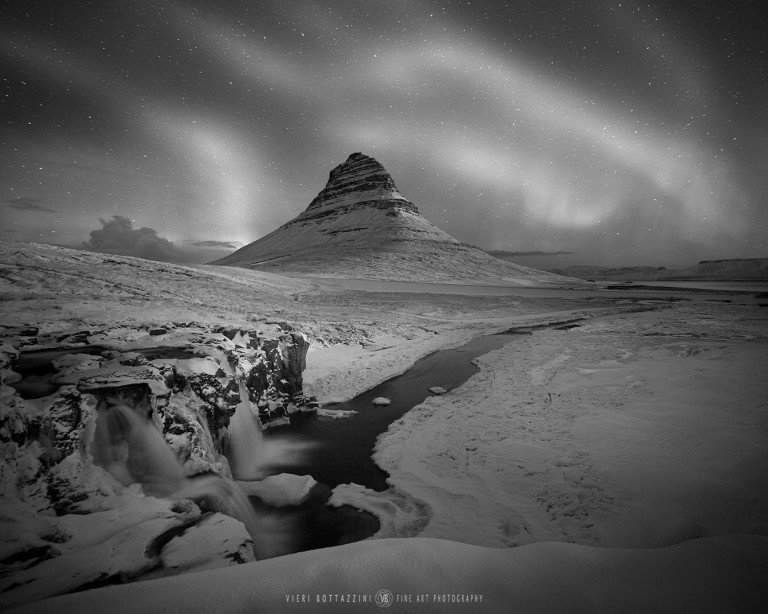
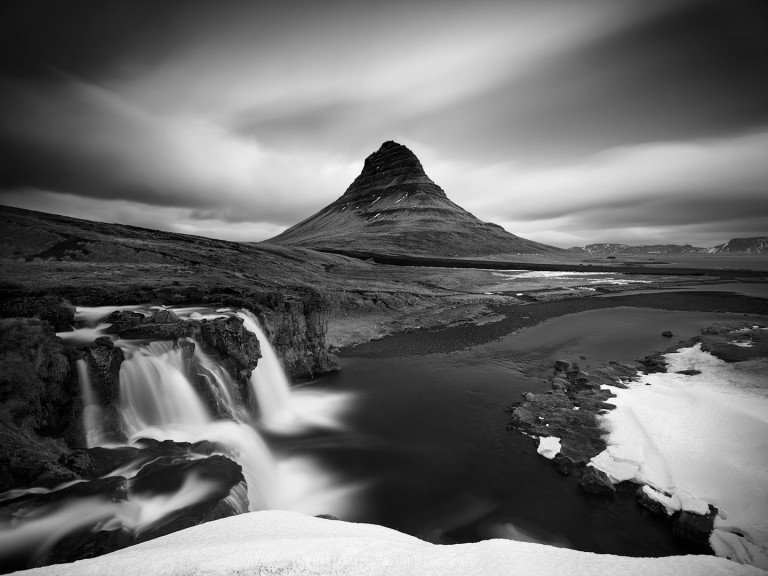
One the other hand, doing things such as adding sunset colours to a photograph taken in midday, replacing a photograph’s sky, adding the ubiquitous little figurine in a red jacket, compositing photos taken at different focal lengths to create the not less ubiquitous “giant daisy with a mountain in the background” shot, or adding light to a photograph that is completely inconsistent with the planet we live on, just to name a few, are all examples of manipulating a photograph in ways that alter the physical reality of the scene photographed as one would have seen it had they been there.
This is where we depart from what I consider to be photography and move towards what I call photography-based digital art. Yet, I am pretty sure that photographers creating such images are convinced they are still in the realm of photography; I am also pretty sure that viewers are still convinced to be looking at a photograph.

While I never add anything to my photographs, removing objects that shouldn’t have been there, such as garbage and the like, is acceptable to me. When I remove stuff, however, I never replace it with something that wasn’t there; I replace it with what would have been there behind the removed object.
Asking AI to generate something to “fill in the blanks” of an existing photograph is the next step in the journey taking us farther away from a photograph representing reality as we would see it with our own eyes, and it is a step I am not ready to take.
Finally, asking AI to generate an image from scratch following our prompts signals a complete departure both from photography as I understand it and from reality altogether – no matter how believable the resulting image is. The only connection with photography that such an image has, in fact, is that of very likely being based on a database of existing photographs used to train the AI. Of course, with no compensation to the creators, but this is a different story.
ON THE RISKS OF AI | THE READERS | Many readers offered their view about why AI is risky, both for photography and in general:
“AI however, does not have the luxury of artistic vision and cannot express an emotion on its own.”
“Before the AI is taking complete control of our lives, the Internet with all its facilities already destroyed most of our souls, probably the best part of them… Even if I’m repeating myself, with Internet there would be no Giotto, Leonardo or Brancusi.”
“My concern with AI is our diversity and individual styles – uniqueness may go out the window as people will not value our work.”
While others argued that AI’s inherent unbelievability eventually will make it not a risk for photography:
“AI is likely to be left to the motion picture and film-making industries. Everyone already knows it’s fictional and non-believable.”
“The use of AI to don the mask of photography will, I believe, fall into disrespect, while its use for illustration will probably increase.”
MY TAKE | All points above – positive and negative – are valid, assuming the ability of viewers to separate a real photograph from an image generated by AI. To me, the biggest risk posed by AI, at present, lies exactly in that ability – or lack thereof.
The lack of people’s ability to understand whether an image is a photograph or the result of AI, together with the cavalier attitude of people passing AI stuff for photography without even blinking, is what makes AI “frightening”, as one of our readers commented.
This is a trend that started with the boom of digital editing. The other day I saw a blatantly fake image of two birds in flight at dusk with their bills touching both ends of a waning moon lauded and praised as a great photograph taken thanks to amazing timing and technique. Simply blowing up the image was enough to see the artefacts resulting from pasting the birds in it.
Sadly, only I and a couple of other people noticed, out of dozens of comments. We posted under the image asking whether the image was real. The poster never replied. Unfortunately, for most of the people seeing it, that image helped pushing the threshold of what they are now ready to accept as “real” down a notch. Damage done.
As a last note, I find it ironic that most of the people using AI to create beautiful images should be so ashamed of their work to try and pass it for photography in order to get validation. Happily, that trend is changing and more and more digital artists are starting to own their work and their skills in manipulating AI to make it do what they want and started to openly declare their use of AI.
If this trend takes hold, it might be the only way AI and photography will stay separate in the eyes of viewers – assuming viewers will read the accompanying text, in the 1-2 seconds they dedicate to an image online.

ON POSSIBLE SOLUTIONS | THE READERS | Closely following to what people do in their own photography is the point of what a possible solution to the risks posed by AI could be.
Many readers proposed that going back to film is trending, albeit slowly. For many, the solution already is shooting film, either exclusively or combined with digital. One reader pointed out that:
“As many interested in the past decade’s rebound of film photography may have noticed, a certain thread runs through the conversation of more serious new and returning film photographers. To encapsulate: ‘I like how it makes me slow down and think,’ ‘I like the physical process,’ and similar comments, are frequently accompanied by the sentiment that film is ‘real.’ Some add their enjoyment of anticipation of waiting to see their images. One young person said in a tutorial for film beginners, ‘It’s a good way to train your brain to get over instant gratification.’”
While another said “My thought is that the only way back to real and believable photographs is through the use of transparency film stock. ‘It is what it is’ when captured – a provable and permanent record on the transparency or slide.”
A couple of readers brought up the point of Fine Art galleries and institutions preferring film photography as a guarantee of the authenticity of a “real photograph”. As one reader put it:
“With the strong presence of many galleries, calls for entry, and exhibitions limiting submissions to film only, it appears to be a growing issue where film is the preferred or only accepted medium.”
Another reader noted that “This potentially is why galleries and dealers, sponsors, promoters, demand film-only images, as they are reluctant to put their name and reputation on anything other than provable ‘real film images.’”
MY TAKE | Individually, there is no way we can stop technology, even if we wanted to (which I personally don’t). Also, there is very little we can do to control the direction where technology is going.
However, regardless of how influential each of us is, there is a lot we can do as individual artists to affect today’s understanding of photography and art.
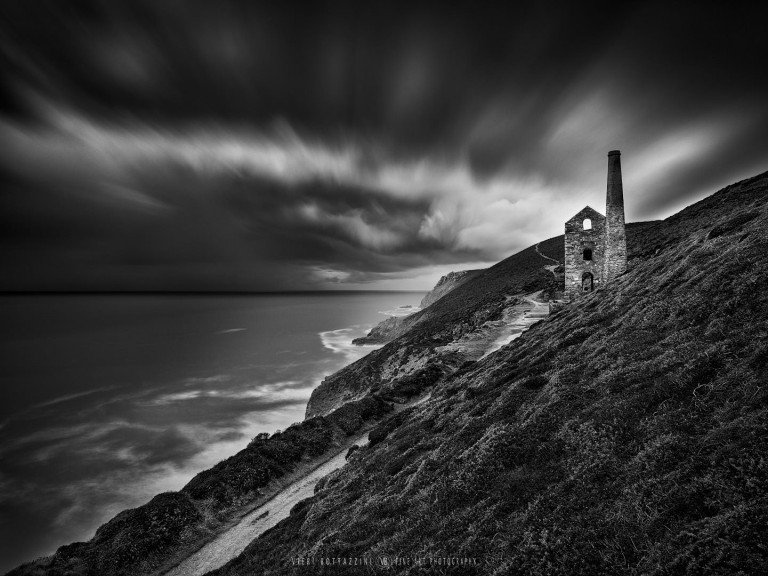
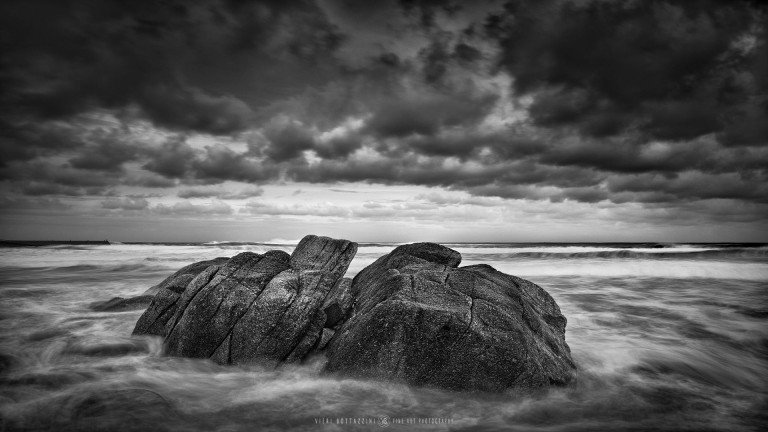
If we believe a photograph to be something created with a camera, an interpretation of reality developed or edited tastefully and with respect to the original scene, we can keep doing that regardless of whether we use film, digital or a hybrid of both.
While we cannot stop technology at large, crucially we can decide how far along we want to push Altman’s threshold of what is real in our own work. We can ignore the syrens of digital and AI to whatever degree we choose.
We can escape the hamster’s wheel of chasing Instagram “wow” falseness not just through our own work, but also by supporting and uplifting artists and photographers that create work in tune with our own beliefs of what a photography should be and how it should look like, regardless of how famous and popular the author is.

We can use whatever influence we have to promote photography, its beauty and its power, as photography – not as AI. Of course, if we love AI and digital art, we can use whatever influence we have to promote those as such – not as photographs.
Personally, in 2024 I went back to large format 4×5” film, and I am loving it. Since I have no intention to go back to wet printing, I use a hybrid workflow. After personally developing my film, I digitise it and prepare it for printing, which is also done digitally.
In the digital part of my workflow, I never add anything, replace anything, composite anything. All I do is cleaning my photographs, edit them using curves, levels and my own digital version of dodging and burning, which is pretty much what I did with my digital black & white photographs before going back to film.
This is how I feel comfortable in calling myself a photographer today.

THE DEBATE | This article is just the second step of what I think is a fundamental debate, a debate started on my NEWSLETTER and that I hope will keep developing here. Feel free to add your thoughts using the comments below, we are all looking forward to hearing from you!
Thank you for reading this post, I hope you enjoyed it! Why don’t you share it with your friends, or drop me a comment to let me know your thoughts about this?
16 thoughts on “LANDSCAPE PHOTOGRAPHY & AI: A DEBATE”
Someone made the comment that we as photographers need to make the correct exposure in camera and not rely on AI to correct in post. On the surface that sounds good and correct. However, I have been in many situations where the dynamic range of the image is greater than the camera sensor can render properly. I suppose you can take two or more images, exposing correctly for each dynamic range, then in post blend the images. This necessitates a tripod. There are many times I don’t have a tripod with me, then what do I do? I expose for the brightest part of the image, knowing that shadows can be recovered in post. My RAW image may look black, but the new sensors do wonders in preserving detail in the shadows. Do you consider this AI?
Hello David,
thank you for your comment. I personally believe that your approach is correct: when shooting digital, I would recommend to expose to preserve the highlights, since once they are gone they are unrecoverable, and then recover the shadows in post-processing taking advantage of the dynamic range offered by modern sensors.
If the scene allows, when on a tripod I would use a Grad ND filter rather than taking two shots and merging them, although doing so would also not fall into the category of using AI in my book.
Personally, all my digital photographs are single shot, and all are either created with a Grad ND filter to expand the sensor’s dynamic range, or using the sensor’s native dynamic range if that is enough to render the scene’s luminosity properly.
Hope this helps, best regards
Vieri
Someone commented “While another said “My thought is that the only way back to real and believable photographs is through the use of transparency film stock. ‘It is what it is’ when captured – a provable and permanent record on the transparency or slide.”
I do not process film so I leave that process to the lab experts. To that end, I think using transparency film stock exemplifies the reality of real and believable photographs to the point that I am seriously considering going back to transparencies, having them scanned and then printed for wall art.
Hello Robert,
thank you for your comment. May I ask you what are you shooting, currently?
Reason for asking is that, to me, what counts is one’s attitude towards respecting the reality of the scene, and one’s own red lines when it comes to what one is ready to accept – and, if one is true to oneself, then one can do so regardless of what one shoots.
So, if we shoot for ourselves, then all we need to do is respect the red lines we ourselves set for us. If we shoot for others, the only way our work can be believed to be “real” is if we gained the trust of our viewers / gallerists / buyers / and so on.
To do so, indeed, transparency film provides a good record of the reality of a photograph, and so does a negative for that matter – if both are printed traditionally, that is. Introducing a digital passage in the process, however, introduces also the possibility of editing – which can or cannot be done respecting the reality of the scene, regardless of whether the photograph was first created on film or digital – and we are back to the issue of trust…
Best regards,
Vieri
Vieri:
Have you gone back to film exclusively or a bit of both film and digital?
Hello Robert,
I am currently shooting film for my work, but I do carry a digital camera with me as a backup. Since going back to film in 2024 I never used it though.
Best regards,
Vieri
Vieri:
You asked me what I shoot. Mostly candids, street and urban decay several times a week.
Thanks for your thoughtful and inspiring articles; looking forward to future ones.
Hello Robert,
Thank you for your reply. How about film versus digital? And, which camera(s) do you use?
Best regards,
Vieri
Vieri, I shoot Hasselblad 503cxi, 903swc and X2D II.
Hello Robert,
thank you, great kit!
Best regards,
Vieri
Vieri:
Do you ever use your digital as a light meter and transfer the reading to your film camera?
Thanks,
Robert C. Siebert
Hello Robert,
No, I don’t. I carry a Pentax Spotmeter, which I much prefer.
Best regards,
Vieri
Great discussion, Vieri, thanks for initiating thinking about AI in photography. There will always exist a large “gray area” in what individuals see as “real” photography or “digital art”: From “only film” to using all options Lightroom , Capture ONE .. are offering. It is up to everyone to decide the limit for themselves, but what Vieri calls digital art should be clearly labeled as such. With always improving AI soon there will be no artifacts to recognize digital art, there will be digital art human eyes will not be able to differentiate from film.
Digital art should be an art of its own, not trying to be photography and be labeled.
Same discussion is ongoing in music as more and more AI music is flooding streaming services. This is why I canceled my Spotify account and changed to Deezer as they are actually the only one blocking or labeling AI music.
Looking forward to my next workshop with you…..
best regards
Stefan
Hello Stefan,
Thank you for your comment, great to hear from you! Thank you as well for your kind words about this debate experiment, I am happy you are finding it interesting, and thanks for contributing your thoughts, much appreciated indeed.
I completely agree with your point about AI and digital art needing to be labeled as such, and not try and pass for photography. Hopefully what Deezer is doing for music will also happen for photography, although I don’t have much hope – at least not at present time.
For now, I think all we can do is decide where the line that we are not ready to cross is, for each of us, and create our work respecting the boundaries that we ourselves decided for us. Being true to ourselves and acting consistently with what we say, in turn, should help establish trust – which is the most important thing, for professionals and amateurs alike, when we share images online and in the physical world.
Looking forward to welcoming you onboard with us! Until then, best regards
Vieri
Many people are irked when they feel they have been “fooled or tricked”. Not just photographers. Expose the deception!
Hello David,
thank you for your comment. I am not sure what deception you are talking about, and I am sorry to disappoint you but I definitely I am not into crusading to expose deceptions – I am just a photographer choosing to stick with photography versus AI, arguing my reasons to do so and curious to see how others feel about this topic.
Best regards,
Vieri