
BEING SEEN AND OBSESSING OVER ORIGINALITY
BEING SEEN AND HEARD IS A VERY HUMAN NEED. OBSESSING OVER ORIGINALITY MIGHT NOT BE THE ANSWER
The need to be seen and heard is something very human, something we all face all our life regardless of what we do. For those of us pursuing creative enterprises, that need is often even stronger. Since for us our work is often one with our soul, wanting to be seen and heard just as often becomes one and the same with wanting our work to be seen and heard.
I understand that today the landscape photography field got so crowded that many professional photographers became obsessed with being seen and heard, almost as a matter of life and death – professionally speaking, that is. I also understand that the need of being seen and heard is there for many amateurs as well; and I do appreciate this need for both categories.

ORIGINALITY AS A WAY TO BE SEEN | Originality is a fundamental quality of artistic creation, and one we should all strive for. Original, innovative and creative work stands out; consequently, it’s understandable how people think that being original will make them stand out as well. It will make them be seen and heard.
At the same time, photographers – amateurs and professionals alike – needs to meet every day the constant demands for being endlessly dazzling and creative put upon them by the instant consumption of content brought by social media.
Thus, it’s easy to understand why these days most landscape photographers try and claim originality whichever way they can, be it with their work or through the words accompanying it. And, most often, regardless of whether there is any basis to such claims.
While I understand all that, it seems to me that today’s obsession over claiming originality is becoming both unhealthy and counterproductive for people’s artistic development.
TWO REAL WORLD HAPPENINGS | Two very different, but in my view deeply related happenings, inspired me to write today’s post. Let’s see them.
First episode. A while ago, I bumped into an Instagram post by a well-known professional photographer that made me think. The lengthy post described in minute details the complications of finding, and reaching, destinations where nobody had definitely and assuredly ever been before – let alone photographed before.
The thesis behind the project that transpired from the text was that there is artistic value and originality in photographing locations that nobody photographed ever before.
Originality of locations photographed got equalled to artistic originality of the resulting photographs. That, to me, makes very little sense; not only that, but I believe it is fairly misguiding to pass that message on to people looking for guidance.
This idea, incidentally, is something that in some form or other often pops up in online discussions, forum and so on, with arguments such as “why are you still going to photograph XX (replace with any location), rather than finding your own, new locations?” being among the most popular.
To me, this idea doesn’t make any sense.
Back to the Instagram post I bumped into, the text perfectly detailed the process of finding and getting to the locations; it was so precise it looked like something a great logistic manager rather than a photographer could have written. The poster went to great lengths to make sure they were getting seen and heard through the effort they put into getting to the locations, implicitly claiming that such effort made their photographs original and artistically valuable. But what of the photographs themselves?
While I am sure they were extremely interesting documentary shots, in that they showed the world places the world had never seen before, if examined under a more Fine Art gaze they were quite mundane. One would not be too far from the truth if one mistook most of them for snapshots; none made me stop and look twice at them.

Second episode. Last week, as I do at least a couple of times a year, I went for an online tour looking at the work of advanced amateurs rather than professionals. I do this to get a feel of what the level and the trends are in the community. After a couple of days of exploration, a recurring post-processing approach appeared clear to me.
About 60% of the work I looked at featured the same, trendy post-processing style that is fashionable these days. What I think about the style itself is beyond the scope of this article, but that definitely didn’t strike me as if much quest for originality was done on the photographers’ part.
On the remaining 40%, I couldn’t help but noticing strange colours palettes, exaggerated saturation, overdone contrast, bizarre hues and stuff like that. I know very well how daunting post-processing can be, I know that we all had to start somewhere, and we all had to learn the ropes. So, at first, I didn’t think much of it.
However, while for some of them it might indeed have been the result of some lack of control over post-processing, the more I explored the more I got to think that it looked like the result of photographers going out of their way to make their work more interesting.
To me, post-processing is the fundamental part of the digital image creation process that allows us to leverage the power of digital editing to make the meaning of our photograph stand clearer and stronger. It’s a tool, a mean for an end. What I saw, on the other hand, felt like a search for something different for difference’s sake. Indeed, checking the accompanying posts, “different” and “original” were among the most recurring words used.
Different and original post-processing got equalled to artistic value of the photographs, regardless of the actual results. That, to me, makes very little sense.
A REAL NEED | Both points above are worth discussing, I believe, since there clearly is a point in the trigger behind both of them. There is a real need. I am just not sure what I saw online are the best answers to such need.
First of all, don’t get me wrong: I believe there is a real value in discovering new locations, or at least locations new to us and known to a few people, and in looking for new developing and post-processing technique. This should be self-evident, in my view.
I believe that exploring unknown parts of the world, when done with full respect to the planet and the people living there (if any), is a commendable pursuit adding to mankind’s knowledge, regardless of whether it makes us landscape photographers happy.
While the addition of new development and post-processing techniques might mean less to mankind at large, it offers us photographers new and more powerful instruments to create and to express what we have to say through our work; as such, it goes without saying that it is hugely welcome.

That said, however, just focusing either on discovering new locations or on post-processing our photographs in a different, new way for novelty’s sake, brings with it the definite risk of losing sight of the objective and mistaking the means for the end, as both episodes above clearly showed me.
In my opinion, there are two fundamental points to keep in mind:
1. The simple act of photographing a completely unknown location does not automatically make a photograph good. Obviously, the artistic quality of a photograph has zero relationship with the locations the photograph has been taken. What makes a photograph good or bad is the photographer taking it, regardless of the location.
Personally, I’d take an amazing photograph of a mundane location over a mundane photograph of an amazing location any day.
2. Simply going for “different” or ending up over the top with post-processing doesn’t automatically make a photograph good. On the other hand, it often results in the photograph losing all its power and, in many instances, makes it end up looking bad – in some cases, it downright makes it look garish and gross.
Personally, I’d take a classy, tastefully processed landscape photograph over a garishly over the top one any day.
Both points above should also be self-evident, but they clearly aren’t, these days. Why?
Take the first of the two episodes above. In theory, the photographic challenges we need to overcome to create a great image of a completely unknown location and those we need to overcome to create a great image of a known one are exactly the same.
However, in the real world the latter is in fact harder.
First, photographing a known location one’s work is bound to be compared with millions of other photographs, and that inevitably puts some pressure on the photographer. Plus, if one wants to be original one must free their mind of any photograph previously seen of that place not to get influenced by the work of others, and that is very hard to do.
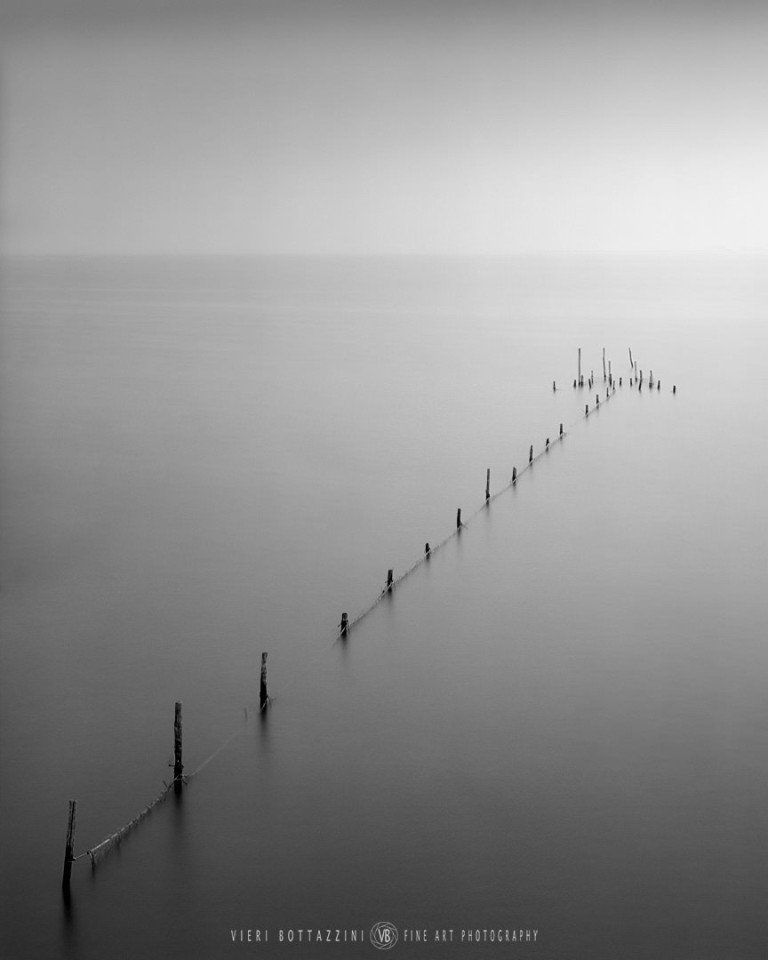
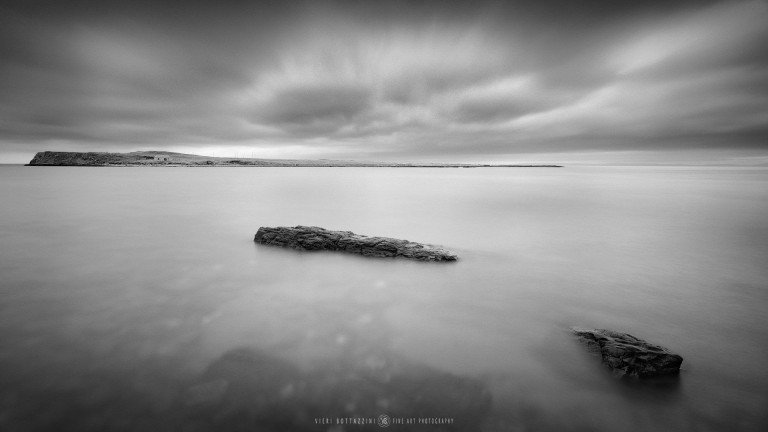
More, one likely is not alone on such a location, making it harder to concentrate and possibly even to find a vantage point one likes that is not encumbered by the presence of others. And so on.
None of these challenges are present photographing an unknown location. More, it’s much easier to claim originality by saying “you won’t see another photograph of this location” than having to create a photograph of a known location that actually stands out for its originality and power.

Let’s now take the second episode above. I believe it’s much, much easier to go for some outrageous post-processing made different for difference’s sake, than it is to post-process one’s photograph with class, style and taste.
The former can easily be done just by sliding controls around in one’s software of choice randomly cranking up saturation, increasing contrast, playing with hues and so on until one’s photograph looks and feels different enough from those of others. The latter can only be done by developing one’s class, style and taste, and that is much harder. The former takes a few minutes; the latter takes a lifetime of study and work.
CONCLUSIONS | Landscape photography is fun, beautiful and one of the best pursues one can do, at any level. If your aim for doing landscape photography, or part of it, is to be seen and heard through your work, there is no doubt that originality will be a fundamental quality to strive for.
However, just as with creativity (see CREATIVITY IN LANDSCAPE PHOTOGRAPHY), originality won’t happen overnight, and it won’t happen just because we say so. Doing something different just for difference’s sake won’t make one’s work original; and, fake until you make it doesn’t apply here, nor does keeping telling the world that what we are doing is original. It might help with getting likes online, to a degree, but besides that I just don’t think that’s the way it works.
I believe that if artistic originality will come to our work, it will be as a spontaneous result of our artistic development and thought process. In turn, I believe that this can only happen because of study, practice and work, on top of whatever talent each of us has.
I believe we should strive for originality related to the messages, the stories and the emotions we try to convey with our creations, rather than going for novel places or for the novelty of whatever photographic trick people wrap their photographs in.
Both these wrappers will fade away as novelties, once they’ll get diluted by the umpteenth people copying them; and when they do, they will bring our photographs with them.
On the other hand, a powerful photograph will never fade, regardless of how ancient the technique it has been created with, or how popular is the location it has been shot at.
To be seen and heard, I believe our best chance is to try and be the best photographers we can; study as much as we can; work as hard as we can; create the strongest, clearer photographs we can. If we have something to say with our photographs, history teaches us that it will be heard eventually.
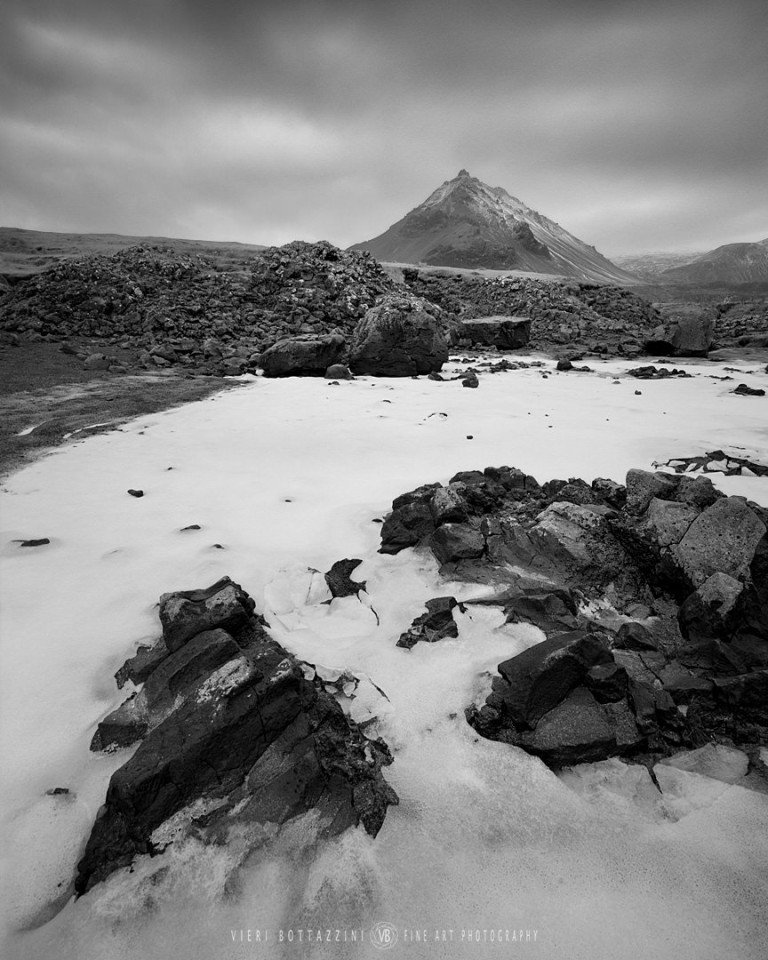
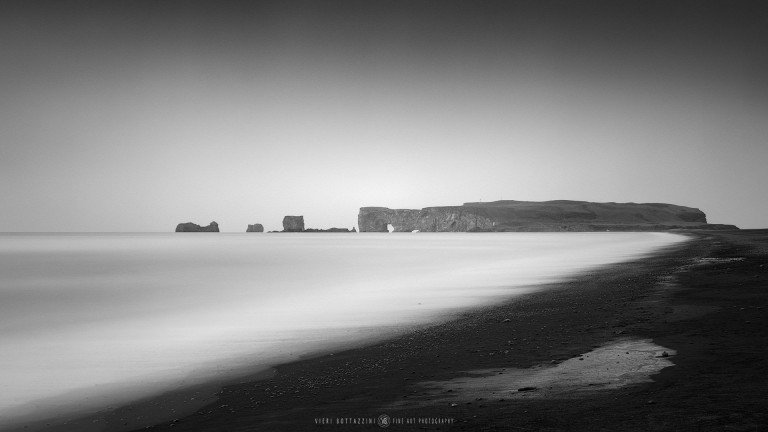
Just be yourself and your message, original because authentically yours, will come through in your own, personal way without the need to obsess over forcing claims of originality to your viewers. There are so many people doing it already, one way or the other, that it isn’t something original at all anyway.
Let me end this post with one example that I feel is to the point. The great late Salgado, one of my favourite photographers ever, created powerful work using black and white photography, both film and digital. His work was full of meaning in an era of hyper-colourful emptiness. He never shied away from using centuries old photographic techniques nor left them for novelty’s sake. Yet very few photographers created photographs as original and powerful as he did.
I think there is a lesson in there, if we are willing to listen.

Thank you for reading this post, I hope you enjoyed it! Why don’t you share it with your friends, or drop me a comment to let me know your thoughts about this?
7 thoughts on “BEING SEEN AND OBSESSING OVER ORIGINALITY”
Dear Vieri, as an artist, I most definitely agree with your comments. To me, we are striving to be the BEST VERSION OF US. When money or fame becomes the destination, the inclusion of self shrinks. With the flood of unlimited internet images, everything becomes ordinary. Creators, in a rush to stand out, will bastardize great originals and even their personal work, as if being different is the same as being authentic. I have participated in several International Art Projects, and each time I am challenged to come up with something new (and original). Currently, I am considering how to convey CONSCIOUSNESS in my painting. I look at the internet, and nothing comes close to my imagination. This, of course, is good because it forces me to create something that reflects me, my creativity, my skill, and my ability to express. To me, this is at the heart of creative expression…in all art forms, photography included. Thanks for a very observant article. Jimm Hughey, Philosophical Artist in California.
Dear Jimm,
thank you for reading and commenting, great to hear from you. Thank you for sharing your thoughts about your journey in the age of commodification of art. There is indeed so much visual bombardment we are subjected to, that it is hard to keep our artistic rudder pointed in the right direction. But, it can be done!
Best,
Vieri
Vieri, it is always a pleasure to read and think about your insightful commentary.
I would like to share a few related thoughts, though I hardly imagine them to be original.
As you know, Ansel Adams spoke of the negative as the score, and print as the performance. We can play with this metaphor a bit further. The musical score has been created by someone else, just as the landscape presents itself to us as an existing physical reality. The mere fact of a composer’s work being rare hardly makes it valuable. Nor does the application of “new development and processing” to a brilliant score by a performer seeking recognition for originality necessarily make the performance good—usually, the opposite.
Rather, the quality of performance of good and great works comes from the individual performer’s insight into the work itself; it develops from a dialogue of the mind of composer and performer. Landscape (and other) photographers have opportunities to capture unique lighting and sky, from a precisely chosen perspective, at a unique moment or period of time. How many are willing to accept going out day after day, perhaps week after week, either returning to one place or otherwise, and not getting a single image really worthy of the painstaking work of thoughtful printing/processing to create an enduring image with something to say?
When I first learned how to use a 35mm SLR in high school in the late 1960s, I had never seen such a camera. All those dials and weird numbers to be adjusted, let alone the light meter. I had had a basic-level Kodak Instamatic cartridge snapshot camera; my father had been given a Polaroid years before, which came out on special occasions in place of his 1920s (?) Agfa Billy. The SLR, and similar 35mm cameras, were “professional” gear, far beyond the interest of the average person. Snapshots were taken to the drugstore or sent to Kodak in a mailer for processing.
Today’s “average person” technology comes with a virtual studio-worth of pre-designed or customizable special effects; yet I suspect, without seeing data, that far fewer people carry even a camera that is not built into their “phone.” The “pro-level” of sharpness and post-processing are now in the hands of a majority, at least in the countries with something like a modern level of living standard. And enthusiasts have incredibly powerful (and seductive) editing tools.
At the same time, despite the “media-savvy” and visual-communications familiarity of recent generations, what has happened to educational standards, and especially, artistic training in these same countries, at least in the so-called West? What have they been taught about history, about poetry, about philosophy, that would prepare an artistically inclined individual to think through judgements? They have been robbed of what they need most.
In my view, the digital tidal wave has intersected a culture (or cultures) whose moorings have been lost, and, for reasons too expansive to enter into here, this has exaggerated the “fad” factor of popular culture. On the brighter side, I perceive that a certain portion are growing weary of chasing surreal sharpness, saturation, and special effects, and living a life dominated by new experiences appearing and disappearing in the blink of an eye. Our humanity has its own laws.
Dear Philip,
Great to see you here! Thank you very much indeed for your kind comment about my words and for taking the time to read them and add your insights to them.
As a fellow former musician, I can’t but appreciate Ansel’s metaphor, and as you I took it a bit further. For me, the scene in front of us is the score, the photographer is the performer and the photograph image is the performance – regardless of whether it is a print or a screen rendition of it. Adopting this metaphor and its musical parallel, instantly proves that the obsession to go to places nobody ever went to before us, and the position of those who maintain that we shouldn’t go again to places photographed to death if so we wish, makes no sense. It would be the same as saying that playing Mozart again doesn’t make any sense.
Equally, it proves that doing things just to be different doesn’t make much sense either. This is a plague in way too many musical interpretations, besides ruining too many photographs with great potential.
You point about the intimate connection, the insight, between an interpreter and their score (being a musical interpreter or a photographic one makes no difference), is perfectly made, and so is the rhetorical question about the willing to accept failure and return to a spot as many times as it is necessary in order to create a photograph that we feel worthy.
Both points resonated with me.
The first is the topic of my next article, which is about artistic gratification versus artistic growth, so I’ll leave it to that to get in more details.
The second absolutely made sense to me as a former musician, used to work on pieces of music not just for hours or days on end, but for months and even years, and to revisit them not just once or twice, not dozens of times but hundreds over the span of a career. Listening to Rubinstein playing Chopin as a young artist, and listening to his last recordings of it when he was in his last years, or famously to Glenn Gould’s two renderings of Bach’s Goldberg Variations proves beyond any doubt many of the points made above.
Which, in turn, brings me to your conclusions about newer generations:
“At the same time, despite the “media-savvy” and visual-communications familiarity of recent generations, what has happened to educational standards, and especially, artistic training in these same countries, at least in the so-called West? What have they been taught about history, about poetry, about philosophy, that would prepare an artistically inclined individual to think through judgements? They have been robbed of what they need most.”
You said “despite” their media savviness and visual-communications familiarity; I am afraid we are a step forward, where media savviness and visual-communications familiarity, together with the power of digital editing and presets / AI / you name it, replaced in too many people’s minds not just actual education about history, arts, philosophy, music and so on, but even the perceived need for it. I hope I am being too pessimistic, because if I am right, that would be an absolute disaster. The signs are certainly there.
But, as an optimist by nature, I can’t help but share both your hope for people being weary of all that “banalisation” and emptiness, and my commitment to never quit on sharing my thoughts, whatever they are worth.
Best,
Vieri
I appreciated your well thought out reply and am glad to have read it.
Thank you Vieri for another thought provoking post.
The easy access to the internet has spawned a new generation of people offering similar techniques, processes and photography based courses as they try to earn a living in today’s world.
There is a virtual industry in being first to show how to use every change in Photoshop, Lightroom, DxO or whatever, and each comes with an offer attached.
In this world differentiation is needed to be noticed and unfortunately this need to be different from the herd is expressed by some exactly as you put it above.
I recently saw an image of at least 60 photographers at Yosemite, at the same place, all hoping to replicate a famous image of the sun hitting Half Dome or El Capitan at the same time. It made me grateful to be living at the Southern tip of Africa where we still have relatively easy access to wonderful landscapes and, even though recognisable, only a few locations have been “done to death”
Kind regards
Hello Peter,
thank you for taking the time to read and comment, much appreciated, I am happy you found the article interesting.
Your point about people needing to make a living with technology and its developments makes sense of course, plus it often comes with the upside of providing the community with valuable information about new features and the like.
However, that to me doesn’t justify the way many go about doing that; too many times, when looking for information, I found myself watching videos with zero value designed to basically con people with more need for information than I had (and less tools to discern the information given) into buying this or that video tutorial or whatever.
In your example about the 60 photographers, the key word to me is “replicate”. Trying and replicate this or that particular shot of Yosemite or wherever makes no sense to me, but at the same time I believe it is a completely different thing than going to Yosemite and trying to photograph it your way, which on the other hand makes perfect sense to me.
Best regards,
Vieri