
THE TEACHING POWER OF MINIMALISM
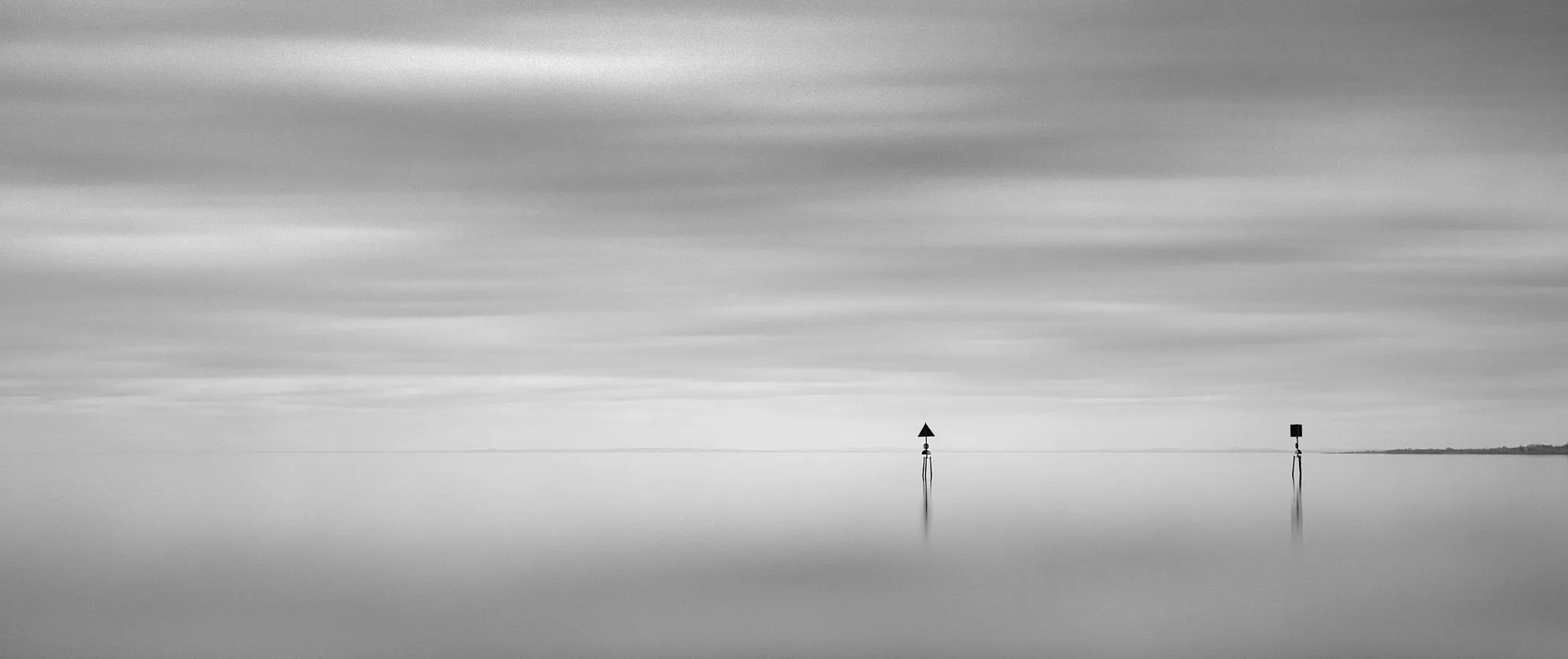
MINIMALISM: NOT JUST A BEAUTIFUL GENRE, BUT A POWERFUL TEACHING TOOL AS WELL
For some, Minimalism is a beautiful genre of photography to pursue and enjoy. Others do not care for it, and other still don’t have a definite position on Minimalism at all. Whichever camp you are part of, however, to me there is one undeniable thing about Minimalism: it’s power as a teaching tool.

In my view, the most important thing we need to pay attention to in the field when doing landscape photography is composition. Most people will tell you it’s the light; I don’t disagree with the importance of the light, of course, but light can be enhanced, fixed or even completely doctored in post-processing. Even if you are a film photographer, between exposing, developing and printing you can do a lot to control and modify the light you had.
Composition, on the other hand, is something we must get right at the time of shooting.
Composition is the art of arranging the elements we find in front of us in the field in the most effective way to tell the stories a given location inspires us to tell.
Ideally, everything in our composition should serve that purpose. Every element of our photographs – including negative space, crucially – should contribute to telling the story in the most effective, powerful and clear way. Ideally, everything that is unnecessary, superfluous or distracting should be left out.
That, in turn, brings the need for simplification.
Minimalism is the art of telling the most powerful story with the least number of elements. It is simplification brought to the extreme, while still retaining a meaning and a story. To paraphrase a quote attributed to Einstein, a Minimalist composition should be made as simple as possible, but not simpler.
While not a Minimalist per se, take for instance Piet Mondrian, the painter: he started as a representational painter, his landscapes portraying the world in a more naturalistic and impressionistic way. He then proceeded simplifying the scenes in front of him down to what he believed were their “building blocks”, so to speak: his later work is famously made of geometric forms with blocks of colour, but their titles tell us that he was still representing the reality in front of him.
With landscape photography, we are of course bound to what the camera sees; we cannot transform a mountain in an abstract, precisely shaped black square as someone like Mondrian would possibly have done.
Still, we can represent it in many ways: as a postcard-like, blue sky iPhone snapshot; or, just to mention one, as the fad-influenced, mandatory wide-angle-plus-longer-focal-lens composite cliché with huge daisies in the foreground; or, hopefully, as something more creative and personal.
The path to get to the point where we are mastering our art and craft in such a way as to express our creativity freely is, of course, different for each of us. The Romans said that all roads led to Rome: this, in turn, meant that there was more than one road taking you there. Equally, there are more than one way to master expression with landscape photography.
All of them, to me, pass through mastering composition. Of course, in this case too we can all take different roads to get there; that said, I believe a very powerful one to be studying, practicing and eventually mastering Minimalism.
The reason is simple. Imagine being able to tell a story with 100 words. Now, try telling it with 50 words, without losing storytelling strength or power. Now try 20. As Einstein said, you’ll eventually get to the point where removing more words does the story more harm than good, causing the story to weaken, rather than getting more focussed.
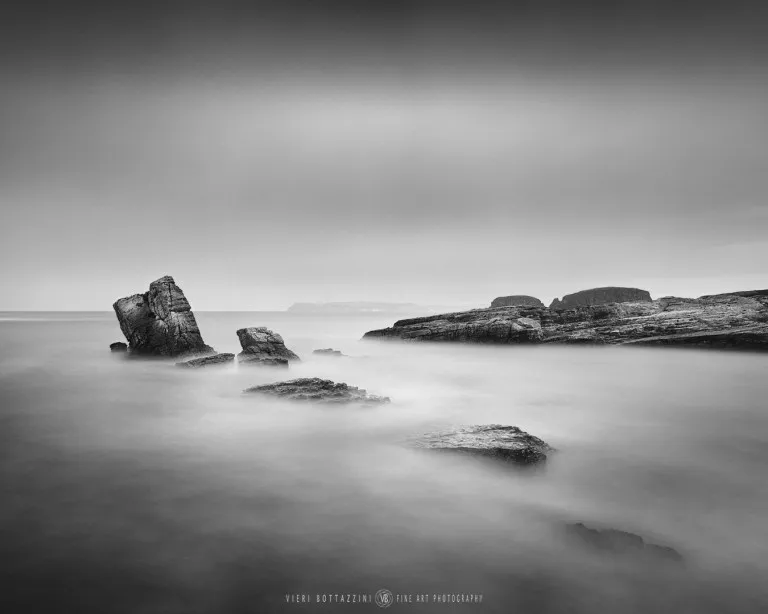
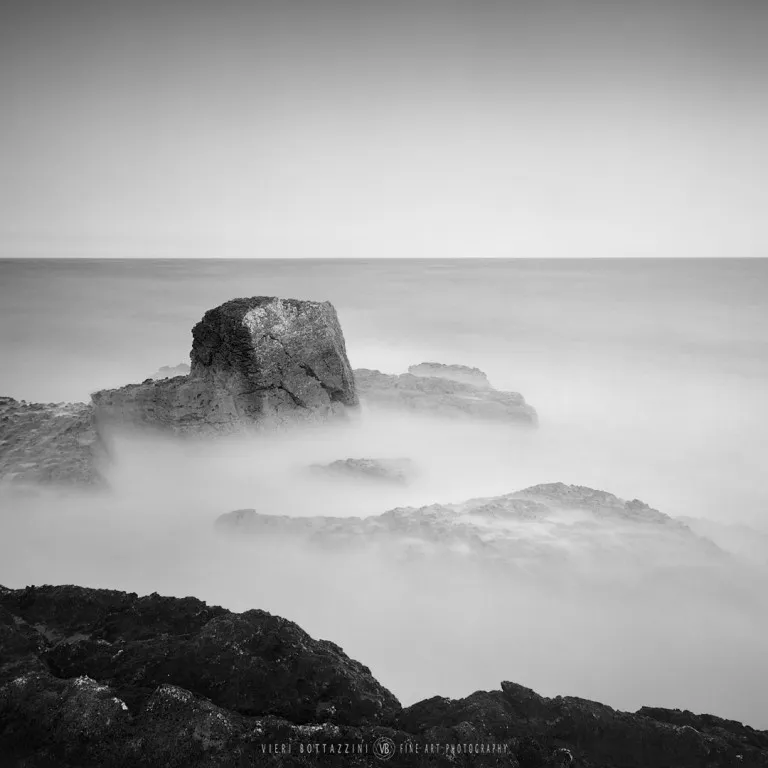
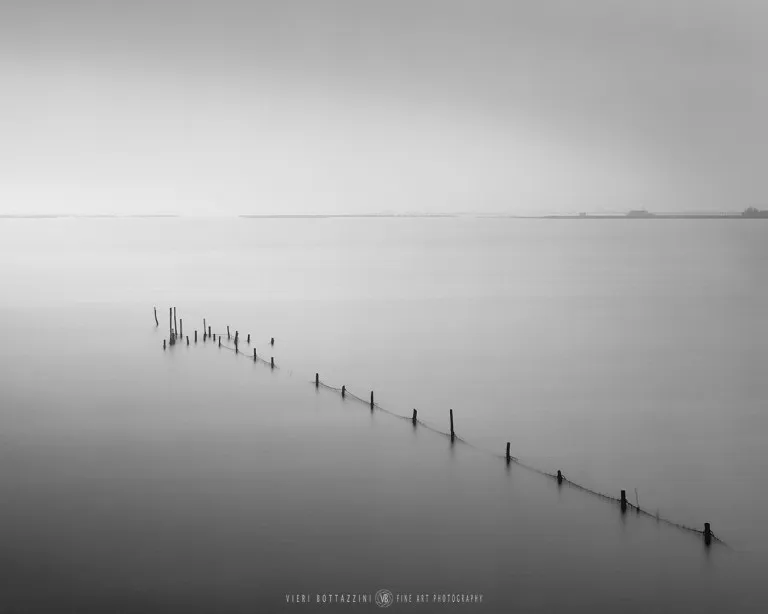
Back to photography. Mastering Minimalism in such a way that you’ll be able to create a powerful, meaningful photograph telling a clear, strong story with just a few elements will in turn enable you to start approaching and seeing the world at large by identifying the foundational elements of a scene, the ones that are absolutely necessary and you cannot live without.
Once you can do that, it becomes second nature to identify those elements in any scene, regardless of approaching it with a Minimalist-oriented approach or not.
The issue then becomes trying and make these elements prominent in your photograph. Seeing and identifying your building blocks is the hard part; reducing or removing clutter, distractions and any other unnecessary elements is conceptually much easier.
When you identified your photograph’s foundational elements, in fact, removing the rest, or making it less prominent, is more of a technical issue. Since we normally cannot physically move mountains and boulders, cut trees and grass, dry rivers out or stop waterfalls from flowing, the way to simplification passes through mastering the tools that photography offers us.
Precise choice of vantage point, careful selection of focal length, masterful use of devices such as exposure control, aperture, and so on, all are tools we can put to work to strengthen our compositions and, therefore, our photographs.
Sometimes, there are scenes where despite all our prowess we cannot manage to get the composition precisely as we want it, and compositional compromises must be accepted; in this case, we will need to learn to prioritise some elements over others.
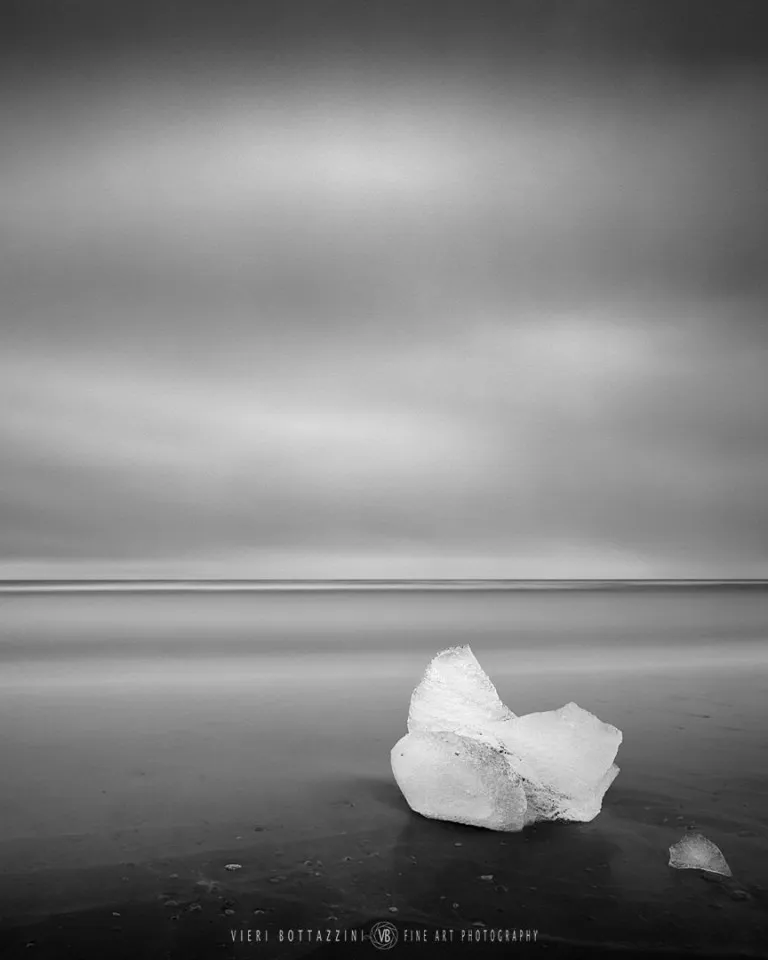
Unfortunately, there are, and always will be, situations where we will not be able to manage a successful composition at all, regardless of all our trying. Such is life, but since I believe we learn more by trying and failing than by succeeding, even if we don’t get an amazing photograph, at least we will go home having learned something new.
CONCLUSIONS | If you already are a lover and practitioner of Minimalism, the above will likely sound familiar. If you never tried Minimalism, but were always intrigued by the genre, its learning power might be the push you needed to try your hand at it. And if you weren’t interested in Minimalism at all before reading this, trying it even if only for its learning value will introduce you to the beauty and complexity of the genre, which might end up opening new horizons for you.

Thank you for reading this post, I hope you enjoyed it! Why don’t you share it with your friends, or drop me a comment to let me know your thoughts about this?