
NORTHERN SPAIN 2025: A 4X5″ PORTFOLIO
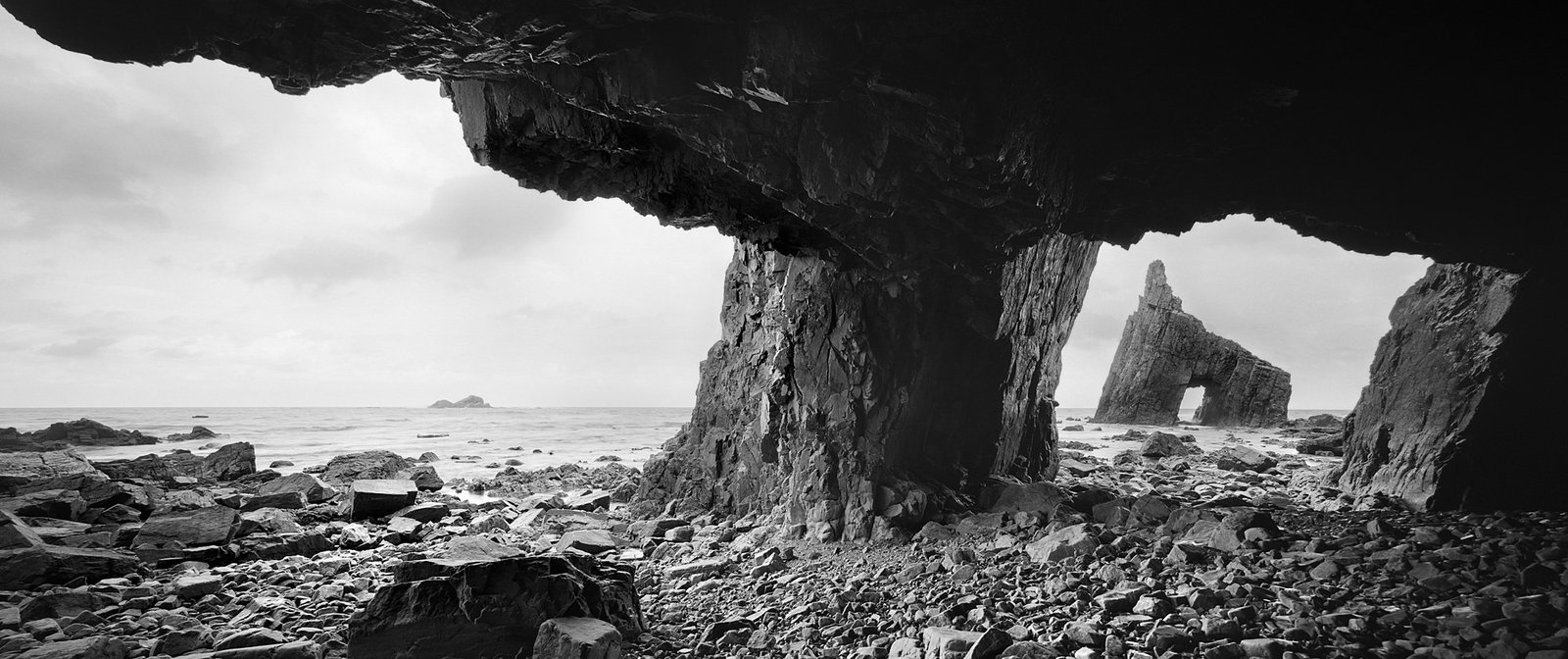
A SEASCAPE PARADISE: THE NORTHERN COAST OF SPAIN
In September 2025, my wife and I flew to Bilbao in the Basque Country; after spending a couple of days there, we picked up our Workshop’s group and travelled west along the Northern Coast through the Basque Country, Cantabria, Asturias and up to Galicia, spending a wonderful week working on this amazing coast.
I love photographing around the water; for a decade now, since our first trip there in 2016, the Northern Coast of Spain has offered me a never-ending source of inspiration. Since my first visit there, I found photographing with my tripod set right into the ocean to be an incredible tool to get unique vantage points and make the most of these seascapes.

As well, as many of you know, I love to use exposure control as an expressive and compositional tool. I love the simplifying power of long exposures and their ability to visually transform matter: as a result, my shutter speeds are often in the minutes.
Putting together the use of long exposures and photographing with my tripod right in the ocean required developing a dedicated, solid tripod technique to prevent micro-movement from ruining my photographs. Over decades of photography on the Northern Coast of Spain, I got to a point where I didn’t have to think about my technique anymore. This year, however, was different.
For the first time, I went to photograph these coasts with 4×5” film and I was very much looking forward to the experience and the distinct challenges I anticipated it would pose.
As mentioned in previous posts related to working with 4×5” cameras (see ICELAND: A 4X5” PORTFOLIO, GLENCOE & ISLE OF SKYE: A 4X5” PORTFOLIO and IRELAND: A 4X5” PORTFOLIO), the importance of solid support is paramount if we want to make the most out of our gear.
This is true photographing with 35mm digital, the so-called Full Frame; it is ever truer when using medium format digital, where the same level of vibrations has bigger negative impact than it would on 35mm; and it is exponentially truer with 4×5” film, with its huge negative size.
Wind caused vibrations are generally one of the major annoyances for medium format and large format photographers, especially those using bellows-based cameras.
However, that pales against photographing standing in the ocean, water knee-high and waves hitting your tripod.
To get those unique images and take advantage of those vantage points, making sure that your tripod is sturdy enough, your tripod’s head is as rigid as possible and that your tripod technique is solid, are all fundamental steps to achieve a sharp, technically perfect photograph (check out my GEAR & EQUIPMENT page to see what I use to support my cameras).
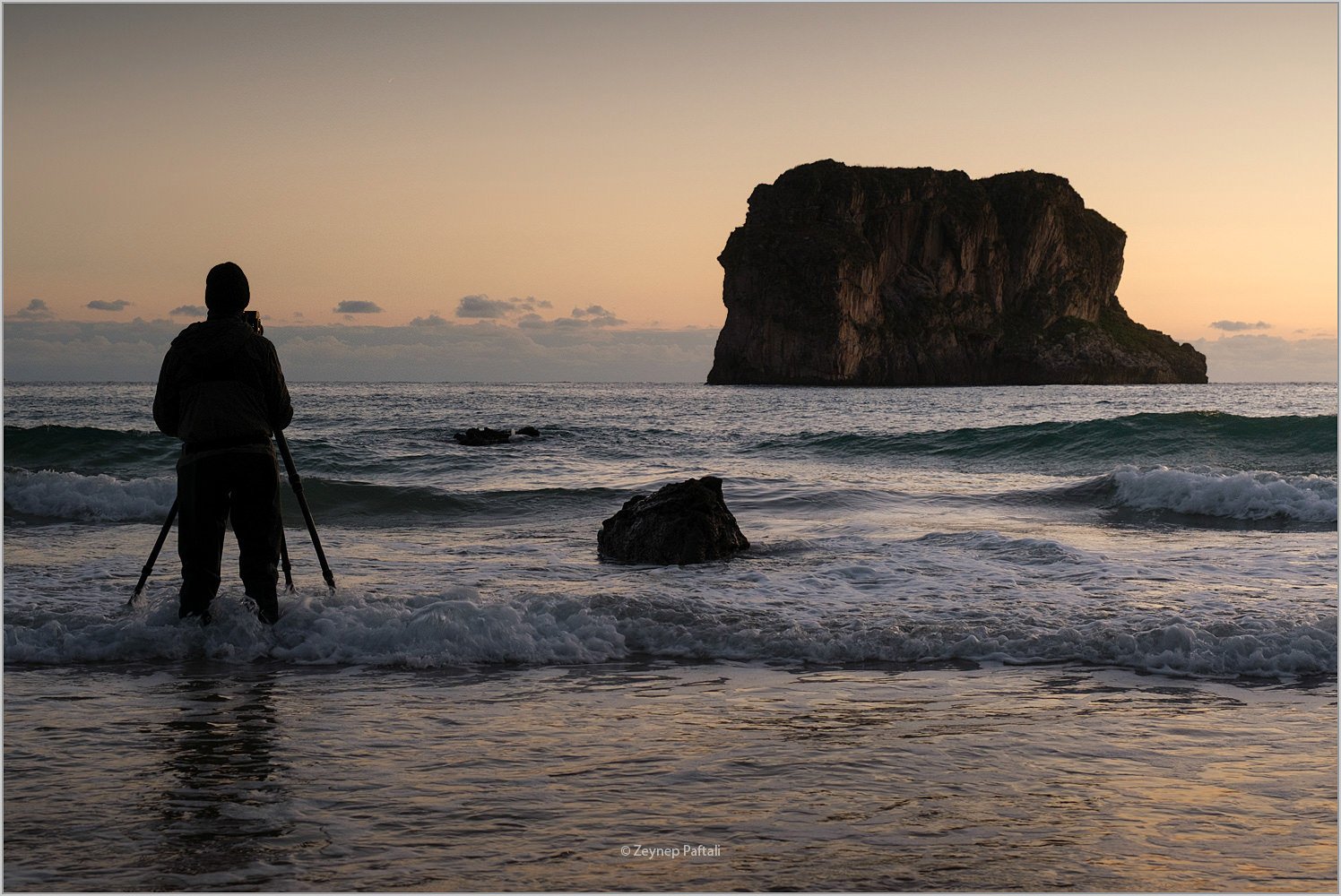
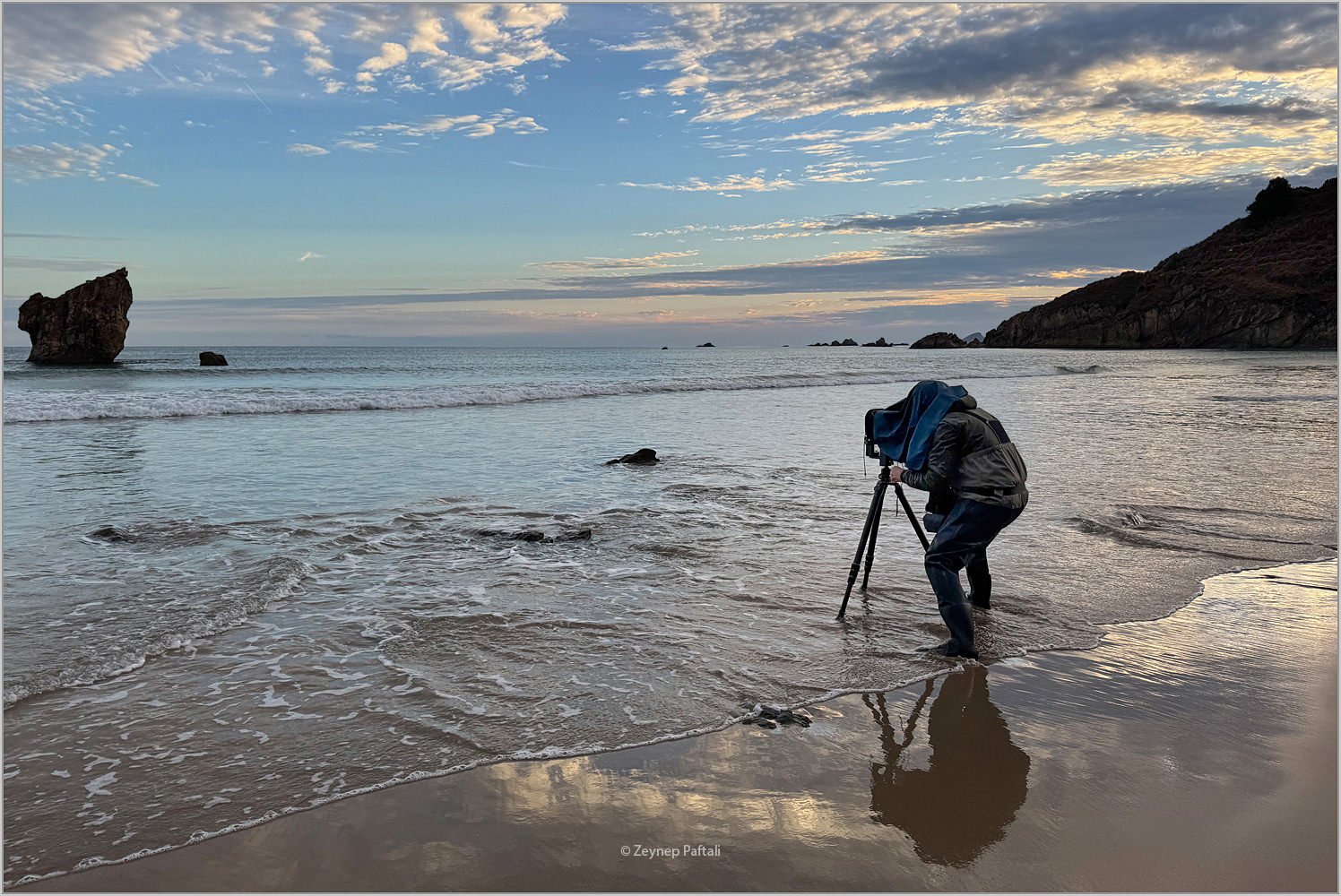
In Spain, I had the same improved setup I then took to Ireland (see IRELAND: A 4X5” PORTFOLIO). I brought with me the Arca-Swiss M-Two, a more travel-friendly, compact and lighter version of the M-Monolith, Arca-Swiss’ studio masterpiece, in a Demo version that Arca-Swiss generously sent me to try. The M-Two is simply unlike any other camera, and I enjoyed working with it so much, that around Christmas I ordered – and just received this last April – my own.
As my tripod head of choice for this trip I used an Arca-Swiss Z1+, which I believe offers the best compromise between rigidity, weight and bulk. As any Arca-Swiss product it is wonderfully manufactured, extremely easy and intuitive to use and kept my M-Two perfectly still not just when working in the ocean but in all sorts of weather conditions as well.
Coming to the tripod, the only one on the market offering the rigidity and height features I needed while keeping weight to a reasonable level was the Gitzo GT5543XLS, a.k.a. “The Beast”, the sturdiest tripod on the market in its class, bar none.
Thanks to this setup, the percentage of photographs I lost to micromovement during my whole Fall traveling season was dramatically lower compared to last year’s 4×5” setup. What I found truly remarkable isn’t just the fact that I haven’t lost almost any photograph even photographing in the ocean, but that I lost less photographs overall than what I used to when using smaller digital cameras on my previous visits to Asturias & Northern Spain.
Our 2025’s visit resulted in a Portfolio featuring 21 photographs, all seascapes except for a few photographs of the incredible Guggenheim Museum in Bilbao. Here you’ll find a selection of it for you to enjoy:
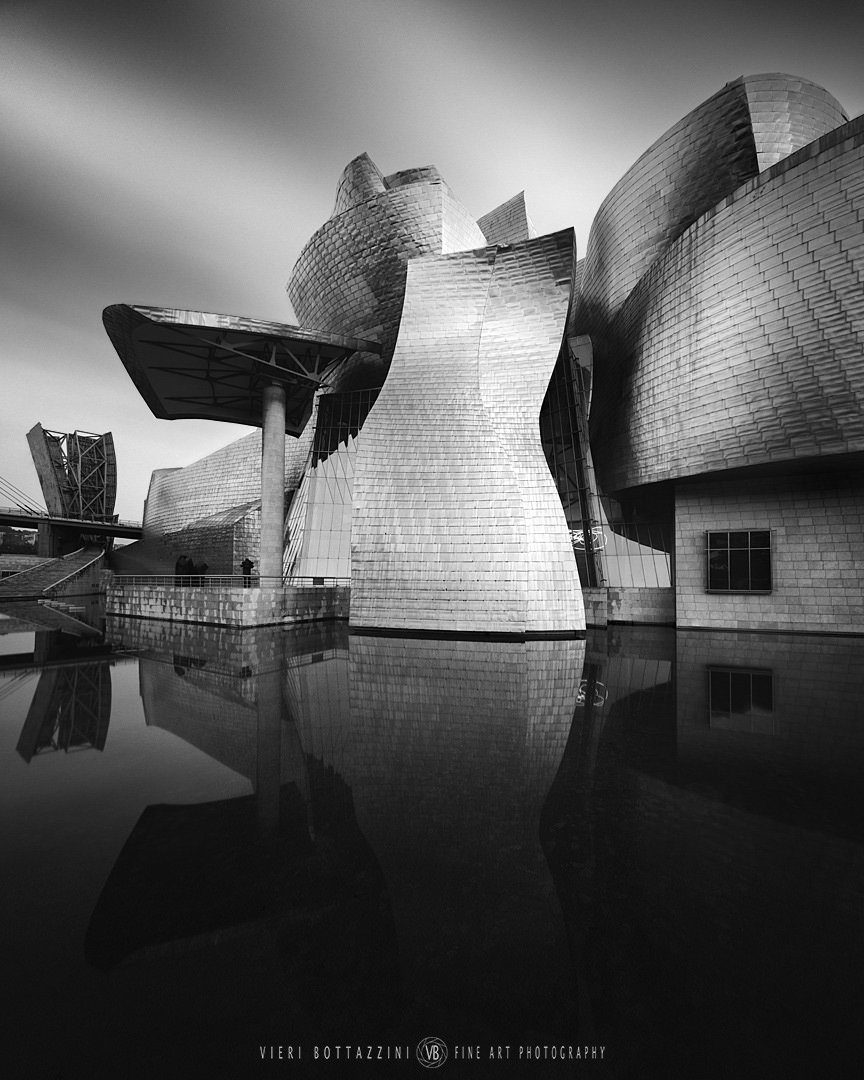
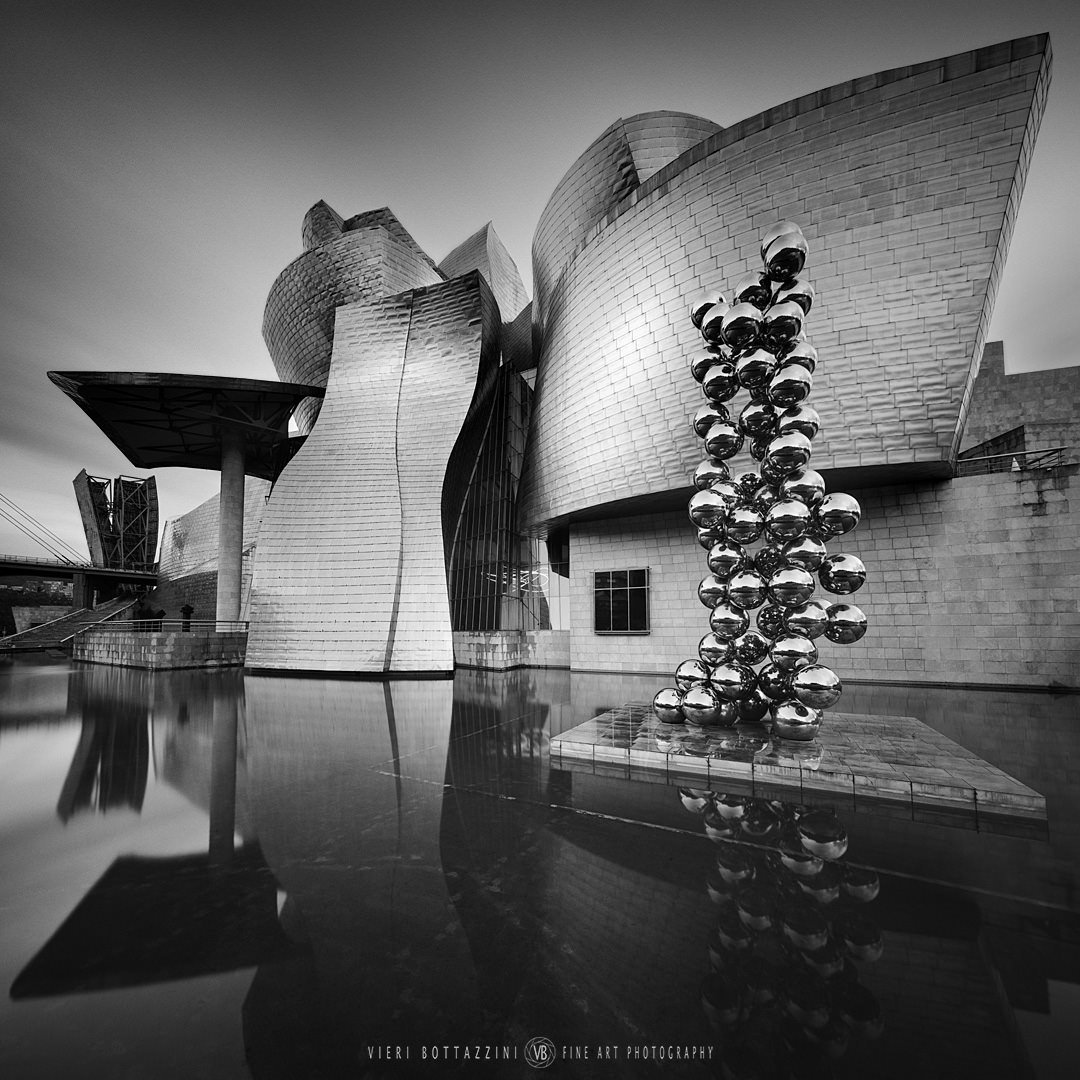
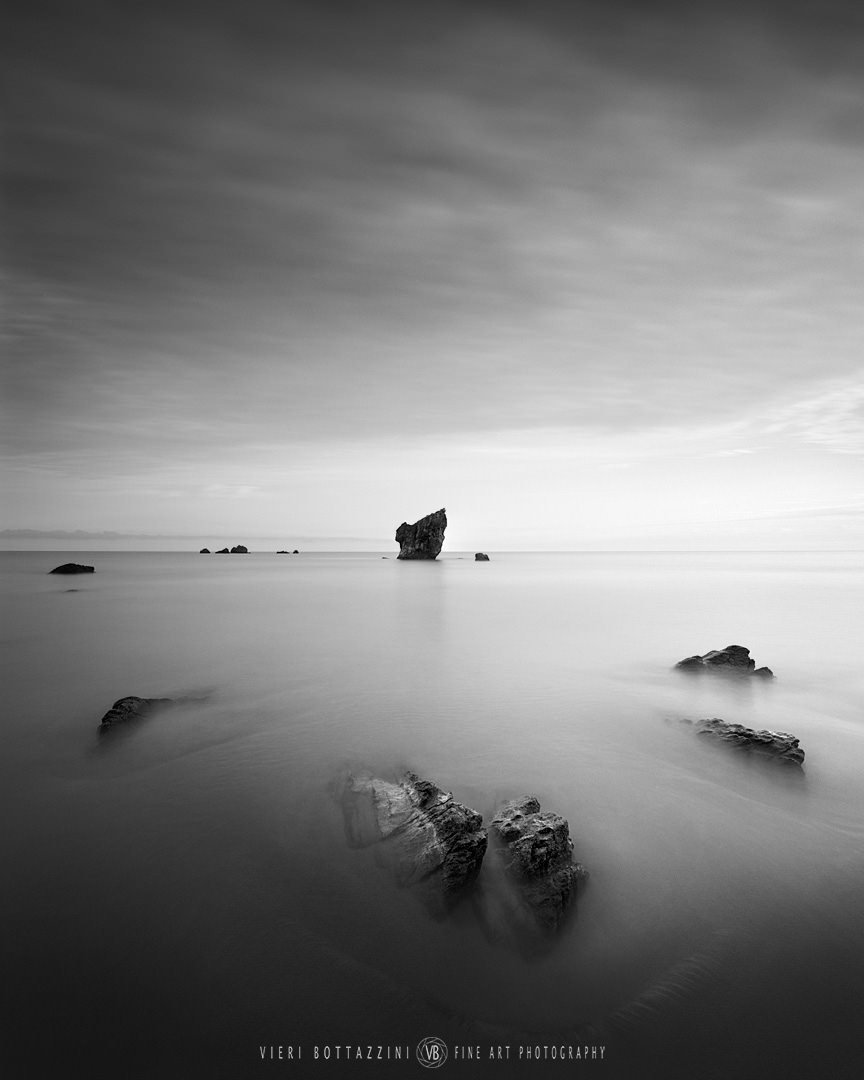
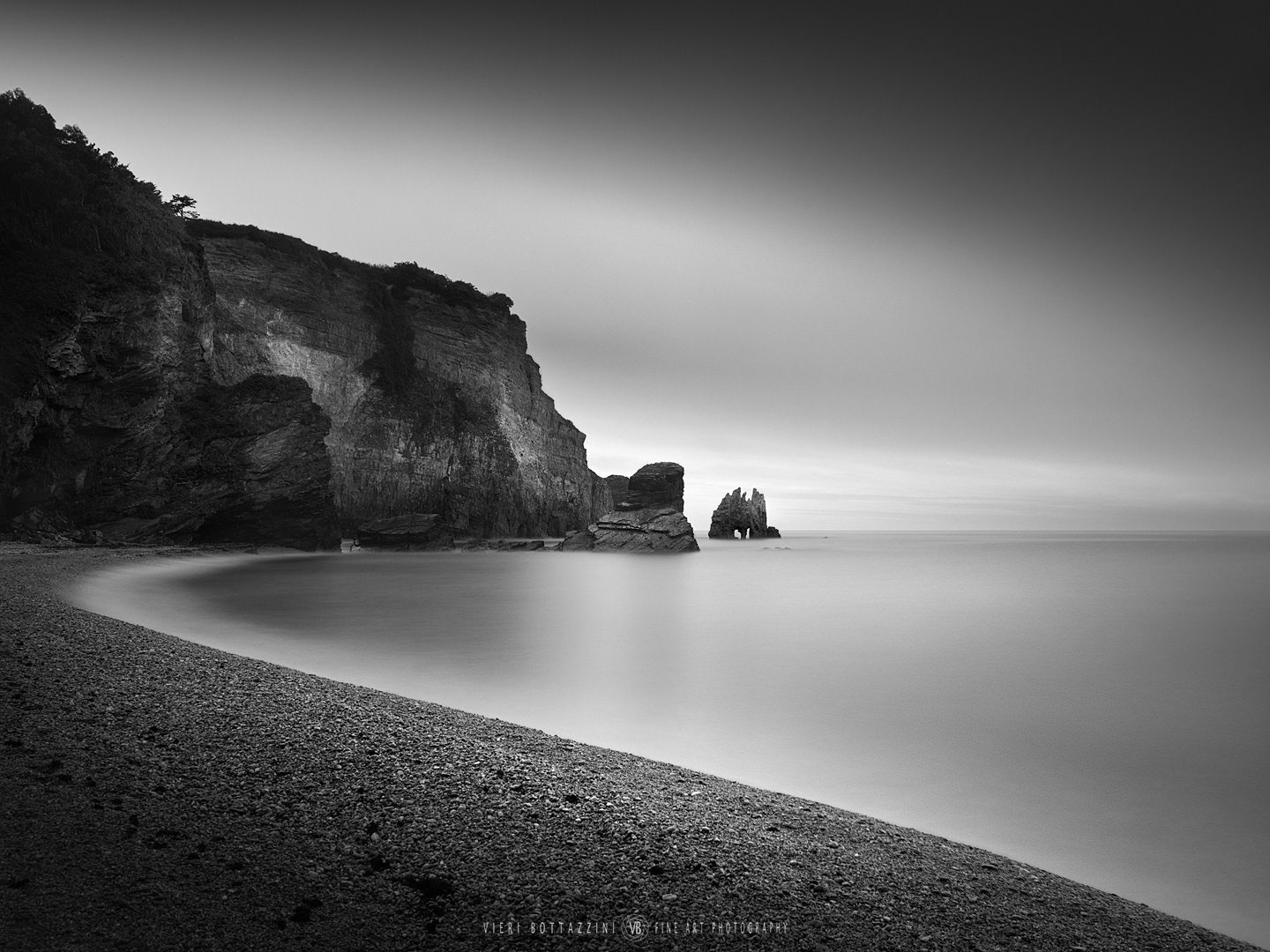
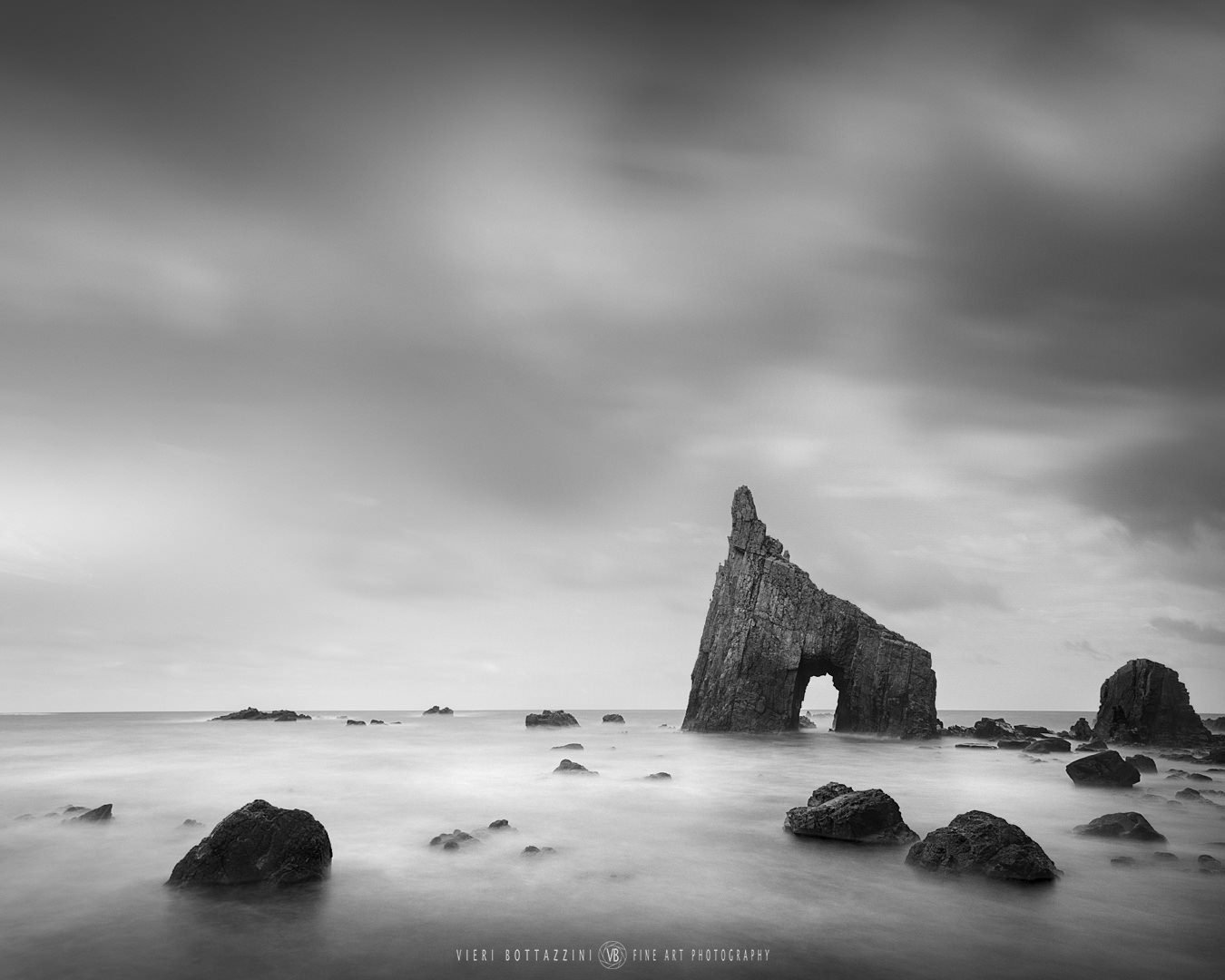
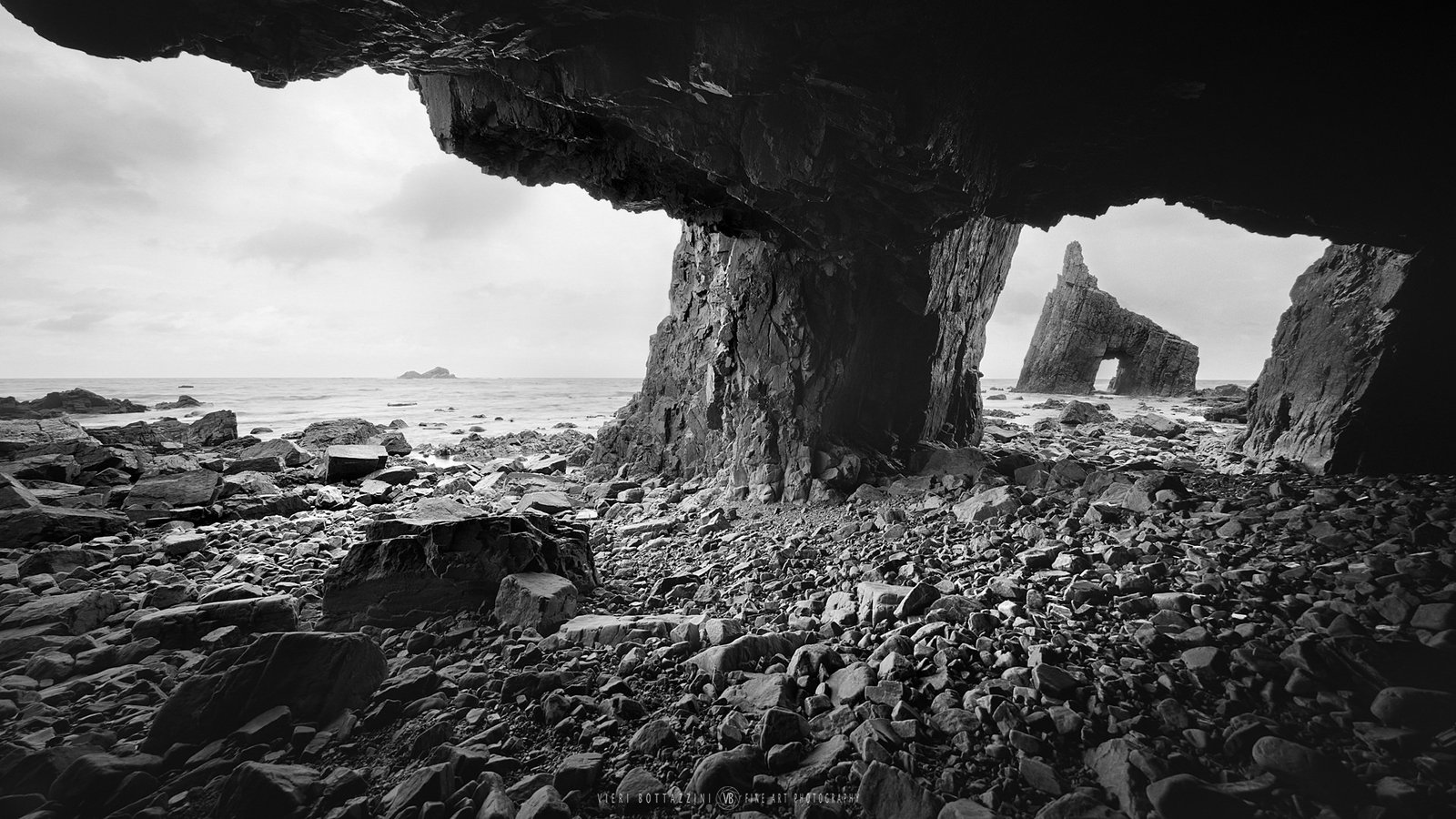
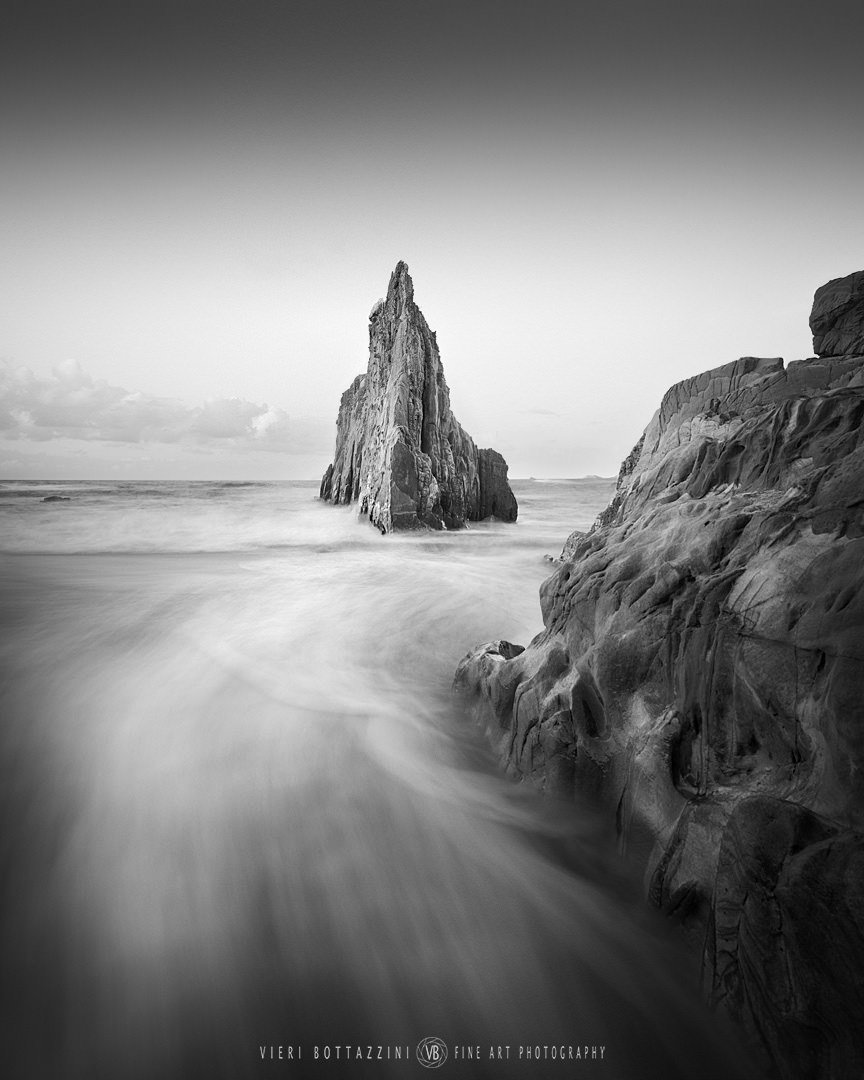
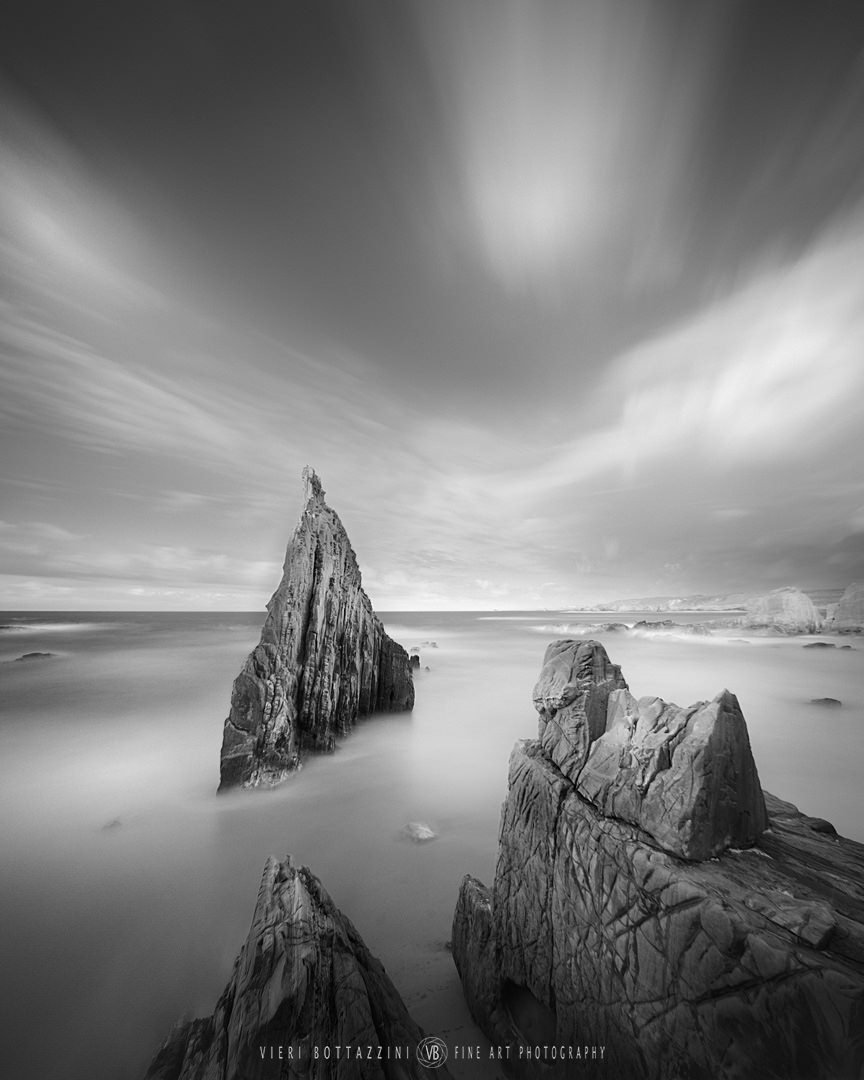
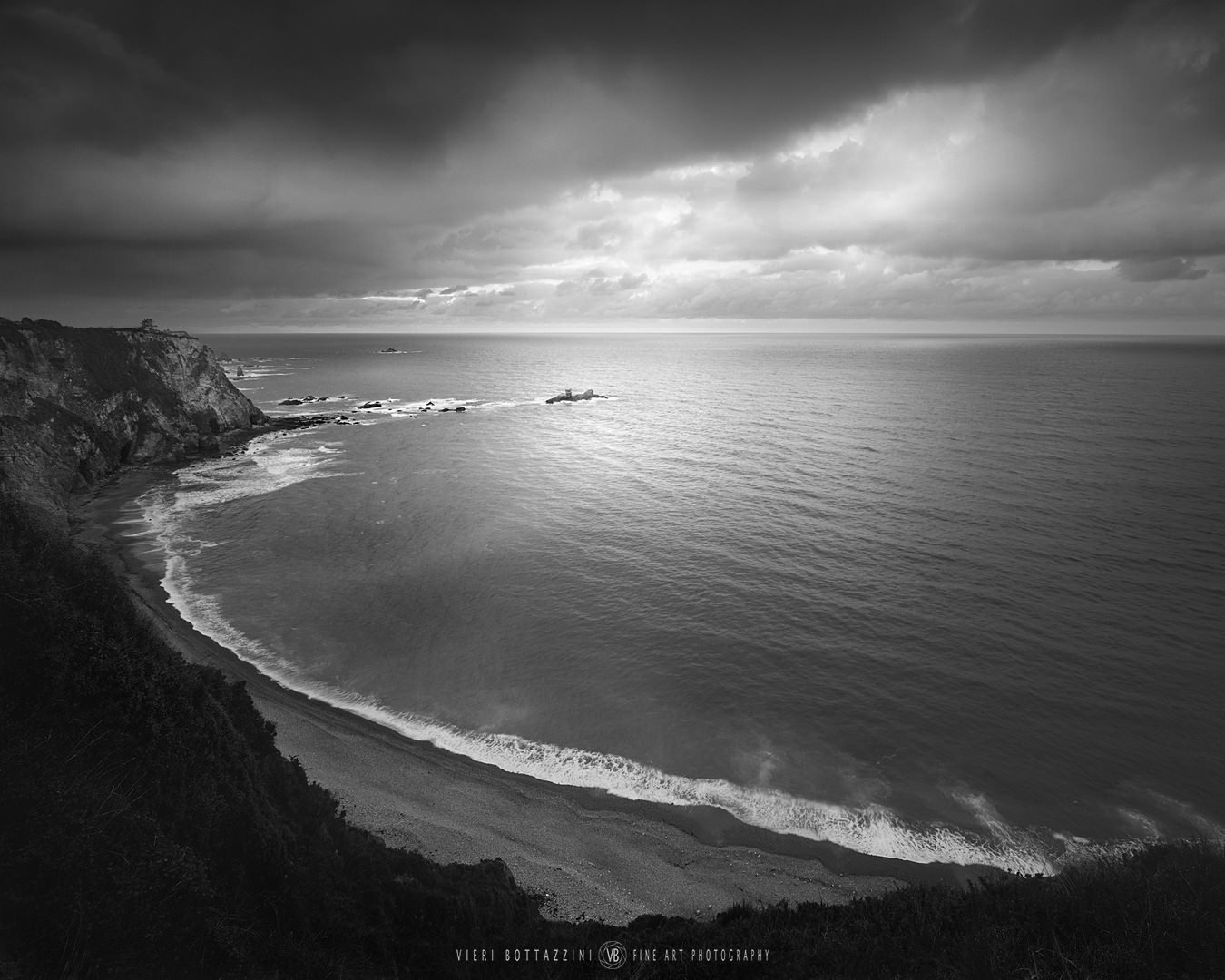
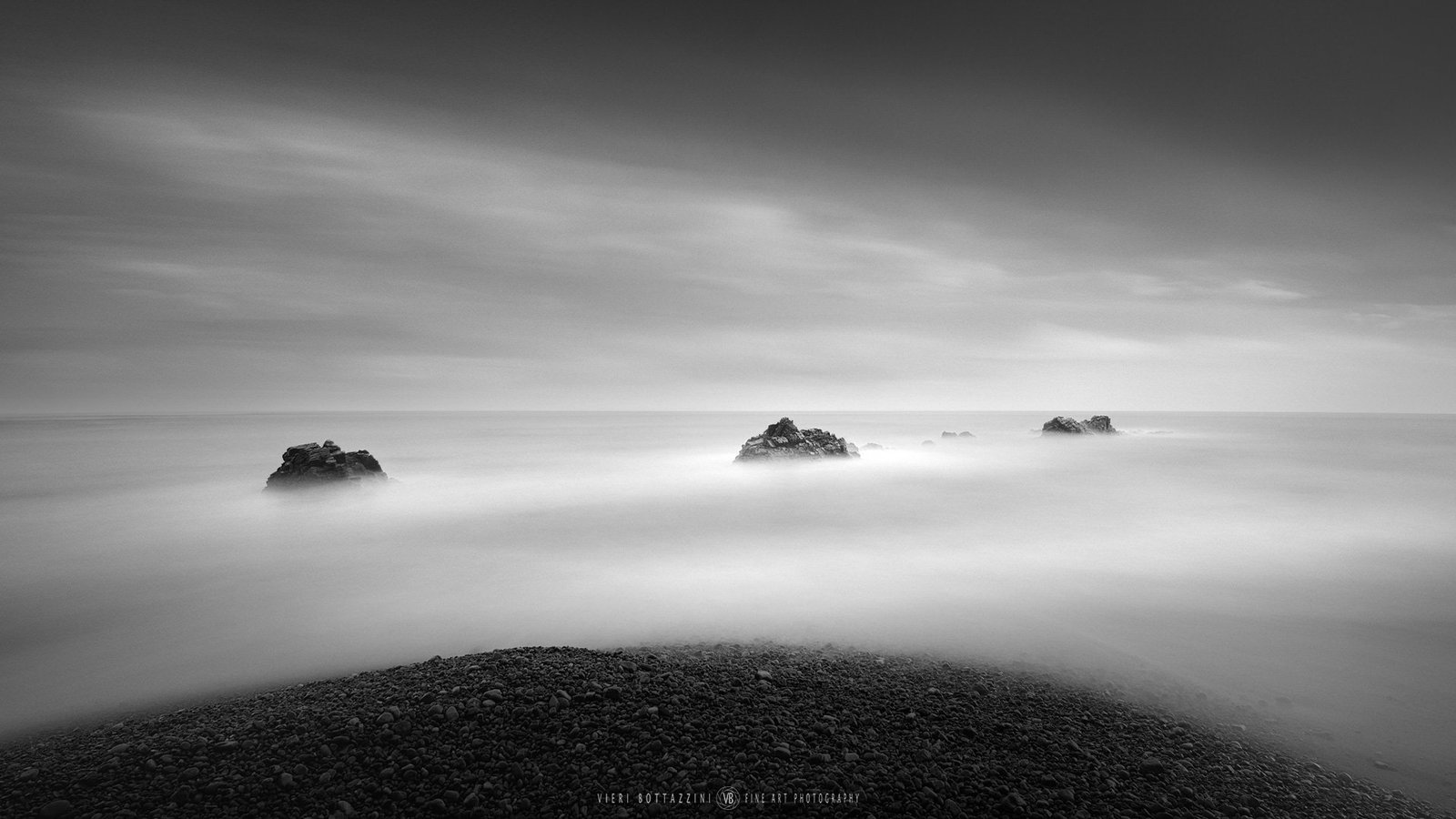
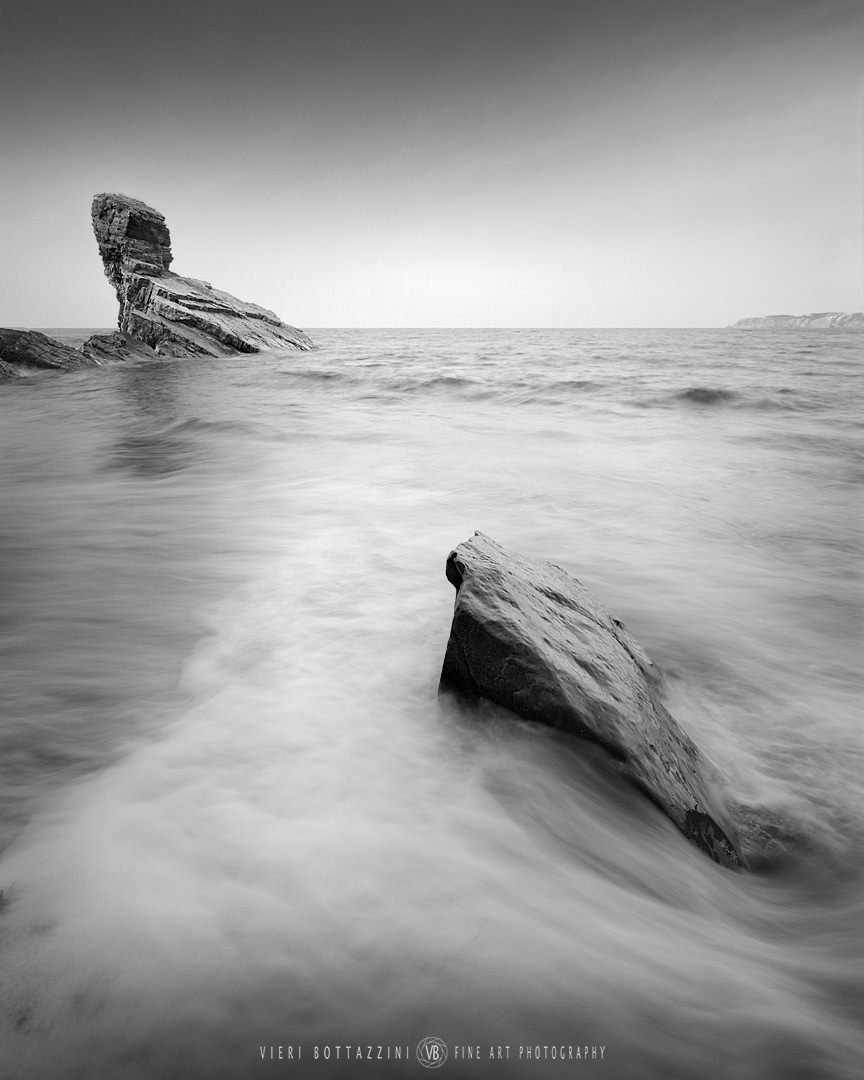
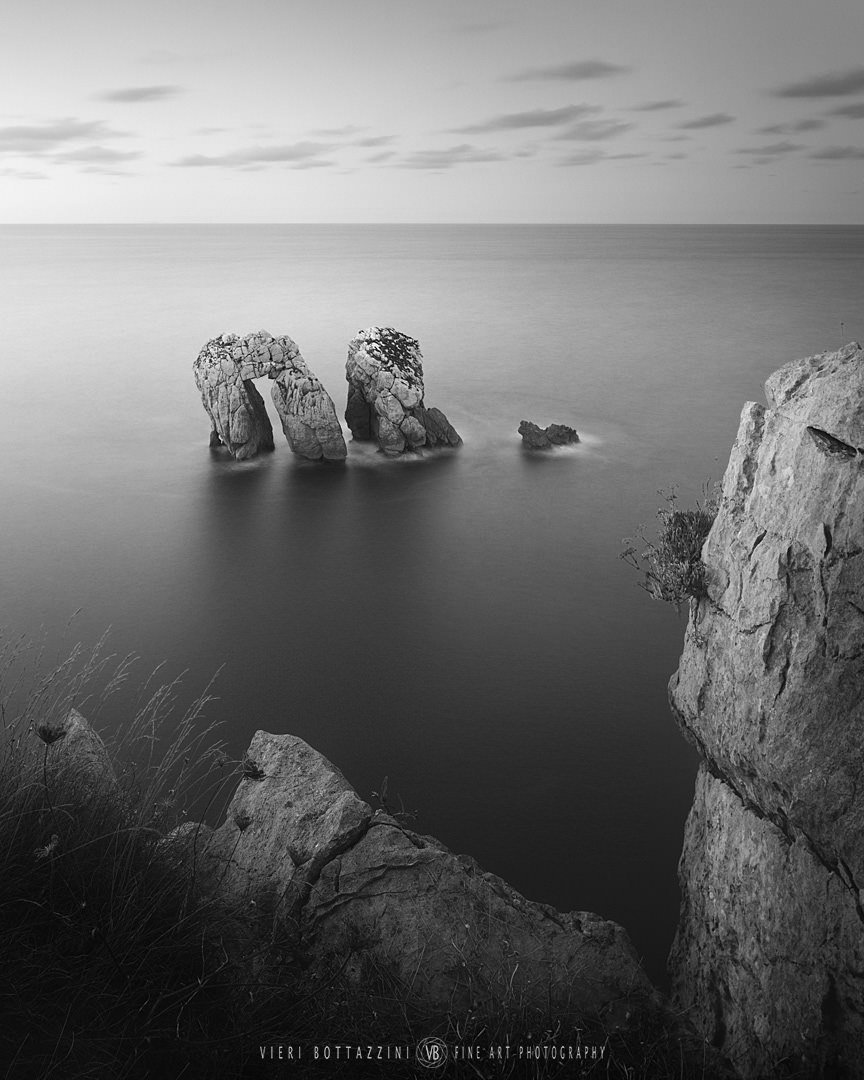
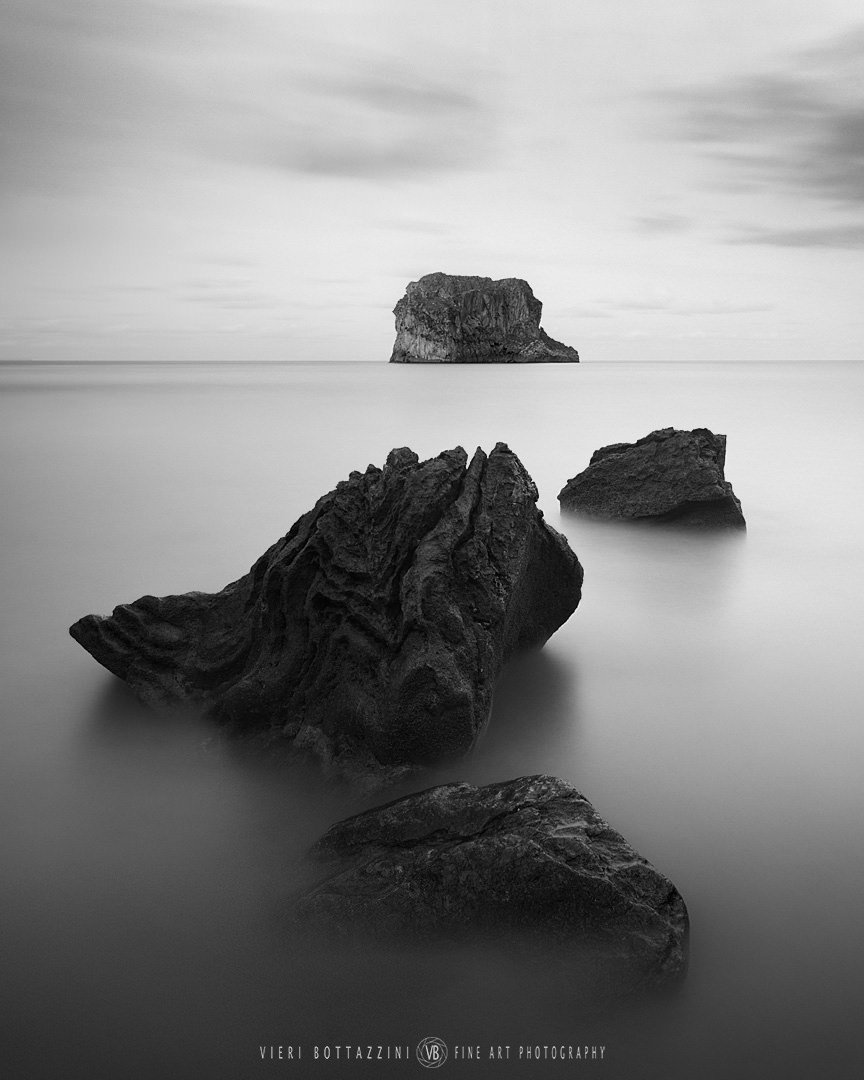
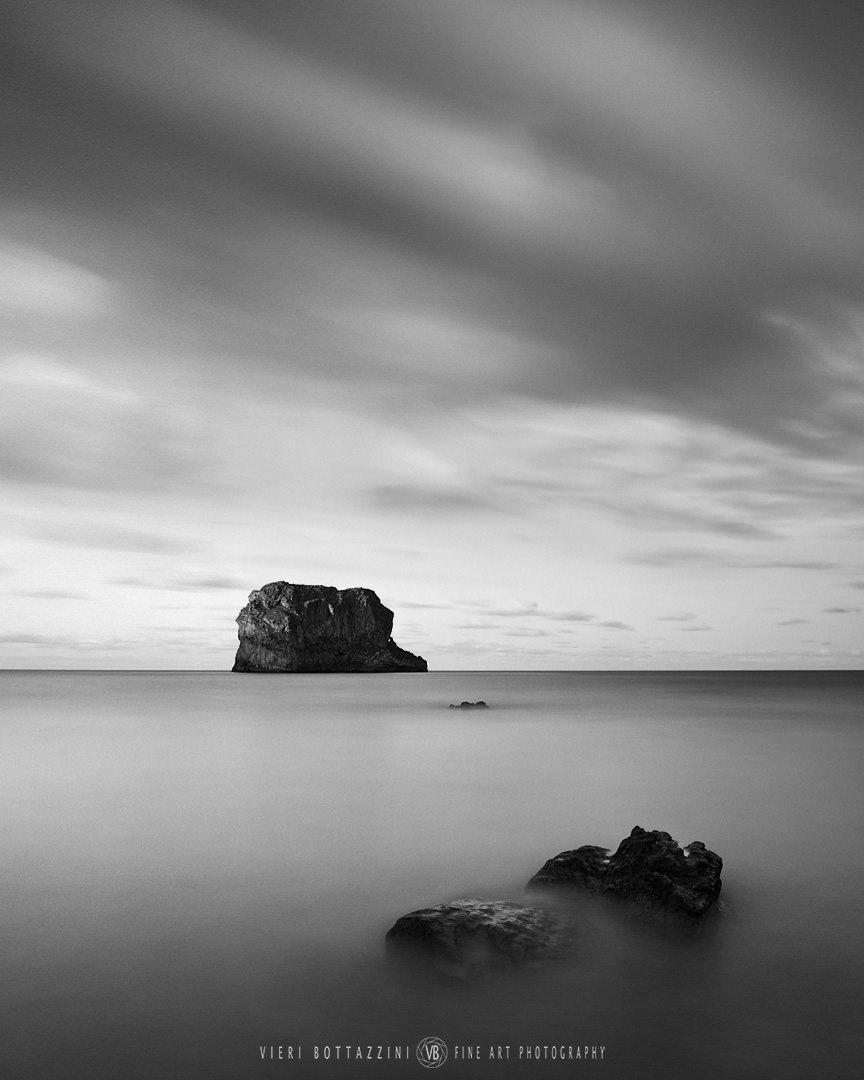
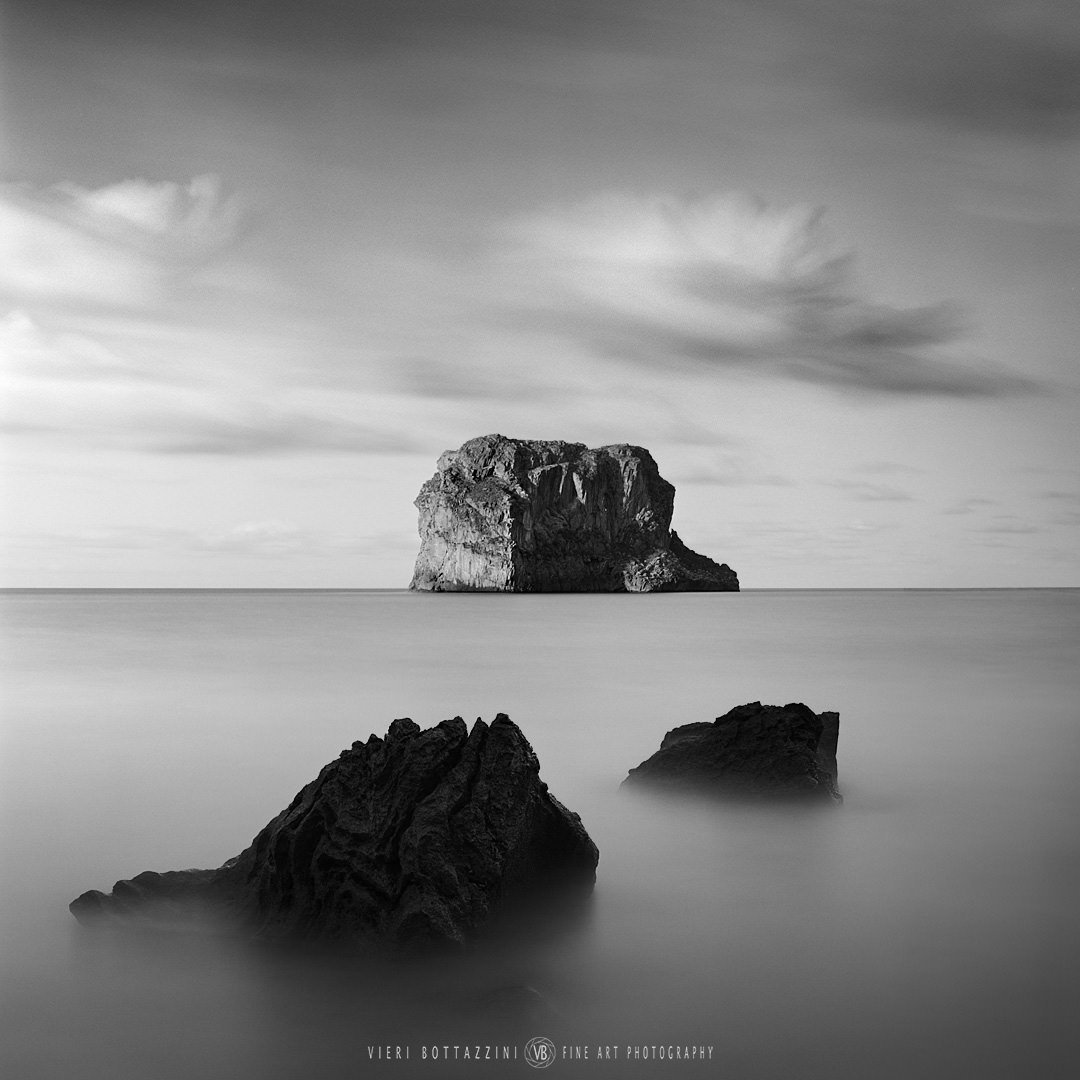
All photographs have been taken on Ilford FP4+, rated at 100 ISO and developed in Pyrocat-HD for 13 minutes and 30 seconds, 10 inversions at start followed by 3 inversions per minute. The film has been pre-washed in water for 5 minutes prior to developing. Negatives have been digitised using a Fujifilm GFX100S II and a Fujifilm GF 120mm f/4 macro lens.
Thank you for joining me on this trip to Asturias & Northern Spain, it was a real pleasure to share this Portfolio with you!
Thank you for reading this post, I hope you enjoyed it! Why don’t you share it with your friends, or drop me a comment to let me know your thoughts about this?
4 thoughts on “NORTHERN SPAIN 2025: A 4X5″ PORTFOLIO”
What a great article. So informative and also inspiring!
Thank you so much Jim, great to see you here, glad you enjoyed the read!
An informed read and amazing photography.
Hello Carolyn,
Thank you very much for your comment and kind words about my photography, truly much appreciated, I am glad you enjoyed the article!
Best regards,
Vieri