
THE DOLOMITES 2024: A 4×5 PORTFOLIO
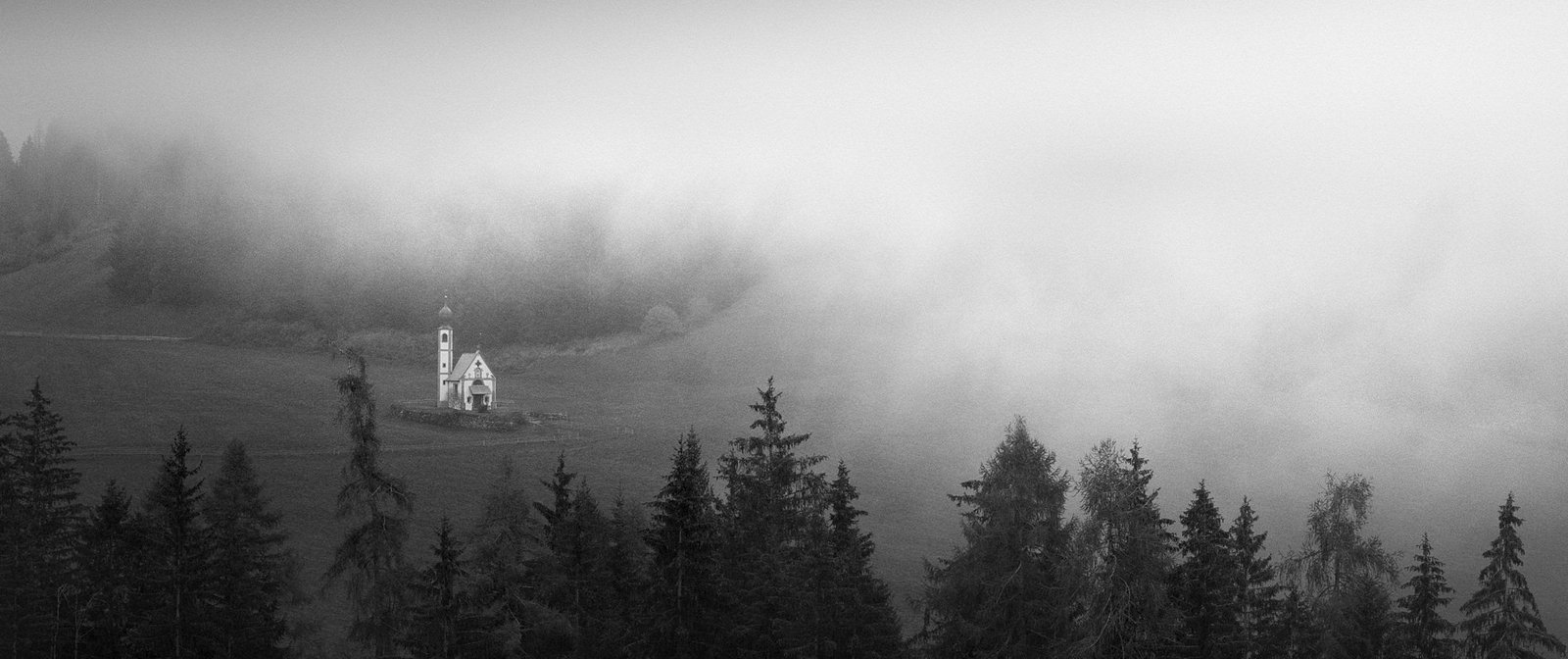
THE INSPIRING POWER OF ITALIAN MOUNTAINSCAPES
In 2024, between Workshops and personal work, my wife and I spent about a month on the amazing Italian Dolomites. I first visited the Dolomites as a child, visiting multiple times; in 2017, I first went to the Dolomites as a landscape photographer and went back almost every year since, either for personal work or to lead Workshops.
Compared to other mountain areas of the world, the Dolomites to me offer a unique combination of beautiful landscapes, variety of shooting situations, variety of weather conditions and options to make the most of any weather. As well, the Dolomites offer incredible photographic opportunities for everyone, regardless of their fitness and physical abilities: from locations very close to the car and easy to reach, to location requiring a moderate hike on mostly flat ground, to locations requiring more strenuous, uphill hikes, the Dolomites has something for everyone.

When it comes to iconic locations, the Dolomites are second to none: from the Tre Cime to Cinque Torri, from little churches such as San Giovanni in Ranui to lakes such as Braies, from mountain passes such as Passo Giau to Passo Valparola, and many more, the Dolomites offer an abundance of famous places to make any photographer happy.
Pair all this photographic goodness with the wonderful Italian lifestyle, high quality accommodation and unforgettable food, and you’ll see why I am always looking forward to spending time portraying these wonderful landscapes.
Besides that, however, what makes me come back time and again to the Dolomites is the inspiring combination of being able to portray these iconic locations in a completely different, and personal, way, paired with the possibilities for discovery on lesser known, but not less beautiful, locations.
In the fall of 2024, I went to the Dolomites with my Arca-Swiss F-Line camera, trying my hand at these mountains for the first time with 4×5” film. Weather on the Dolomites during the month we have been there has been extremely variable: we enjoyed early snow, together with stormy and windy days, followed by warmer days; we had rain and low clouds, as well as spectacular sunsets; in short, we couldn’t expect much more, as photographers.
Working with large format film in such conditions, however, proved challenging at times (see ICELAND: A 4X5” PORTFOLIO, GLENCOE & ISLE OF SKYE: A 4X5” PORTFOLIO, IRELAND: A 4X5” PORTFOLIO and NORTHERN SPAIN: A 4X5” PORTFOLIO). Once again, the importance of camera support proved fundamental on the Dolomites as well.
Large format 4×5” film is famously more sensitive to micro-movement than smaller formats. On the Dolomites, unsteady ground with snow and rocks, together with the often-windy conditions, resulted in losing a few photographs to micromovement.
My monthlong experience on the Dolomites, together with the experiences described in the articles linked above, had an important role in my decision to move to a sturdier combination of camera, tripod and head moving forward.
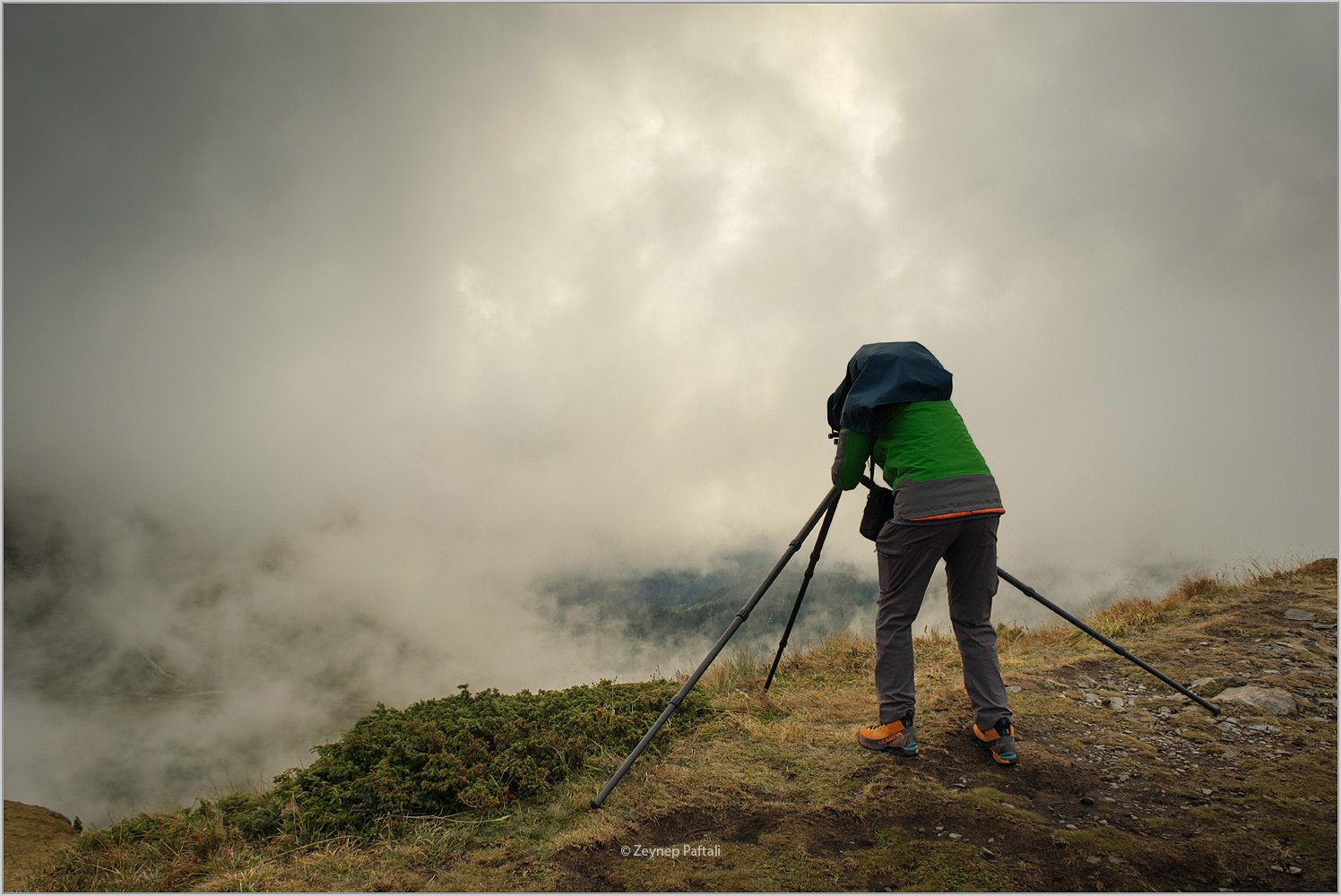
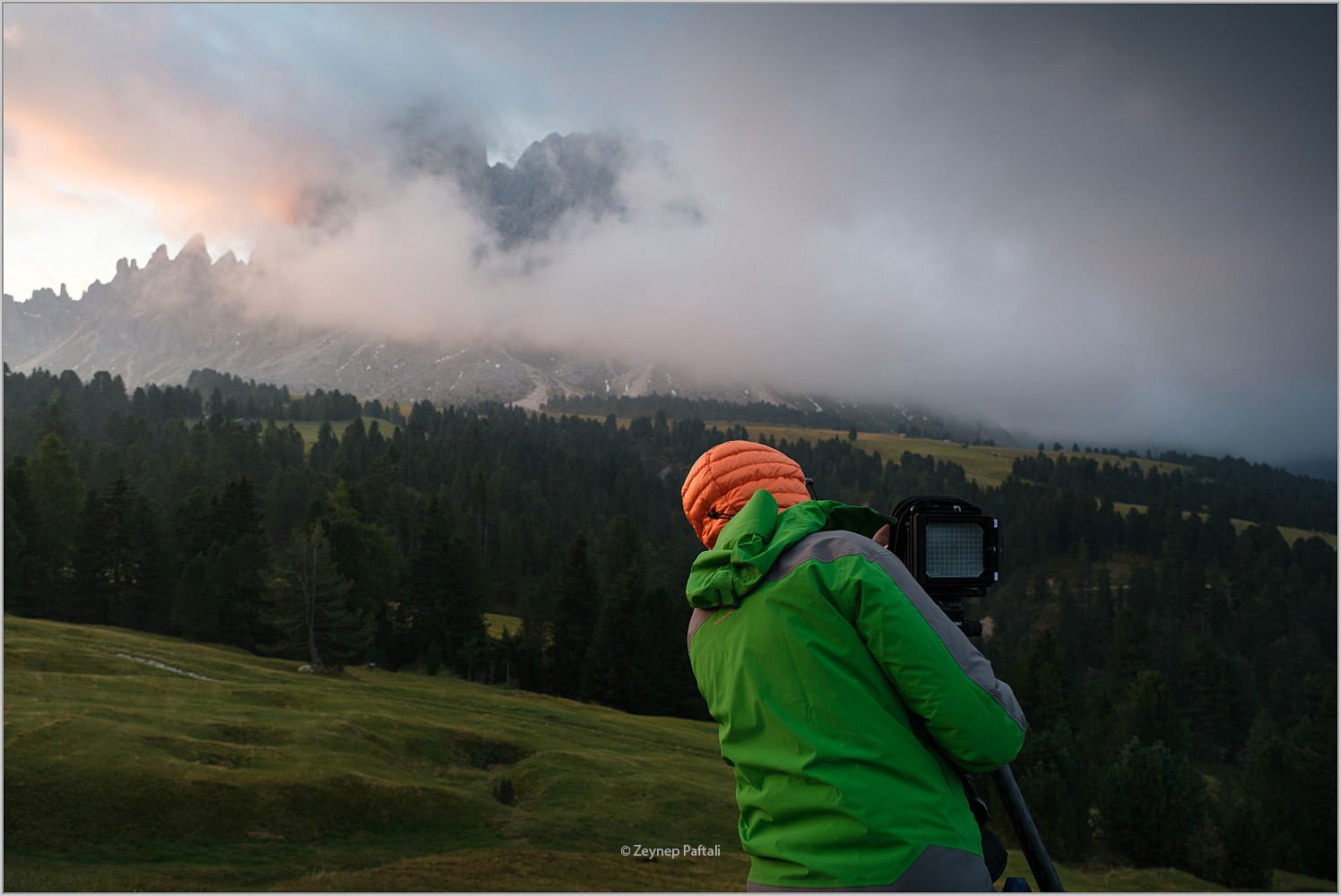
As a reminder, let me share again here my film workflow, out of my ICELAND: A 4X5” PORTFOLIO article, hoping it’ll help photographers working in harsh conditions.
First, I shoot a photo with the “metered” exposure, even if that would be faster than what I wanted for a given scene. Since this is normally fast enough for the camera not to be affected by micro-movement, doing so allows me to have at least one good photograph per composition and to have a reference image for sharpness, exposure and so on to check long exposed photographs against.
Then, I shoot one photo with my ideal exposure for the scene. If the wind and overall stability conditions look safe, I am done. If conditions are difficult, on the other hand, I also take more photos (one or two more are generally enough) with exposures in-between the metered one and the ideal one I want.
When working in the Dolomites’ difficult conditions, the workflow above often saved me. The metered exposure photograph always turned out perfect. As mentioned above, my (variably long) exposure images sometimes showed micro-movement and were unusable, but in those cases, out of the one or two extra photographs I took one was always perfect.
Our 2024’s visit resulted in a Portfolio featuring 17 photographs. Here you’ll find a selection of it for you to enjoy:
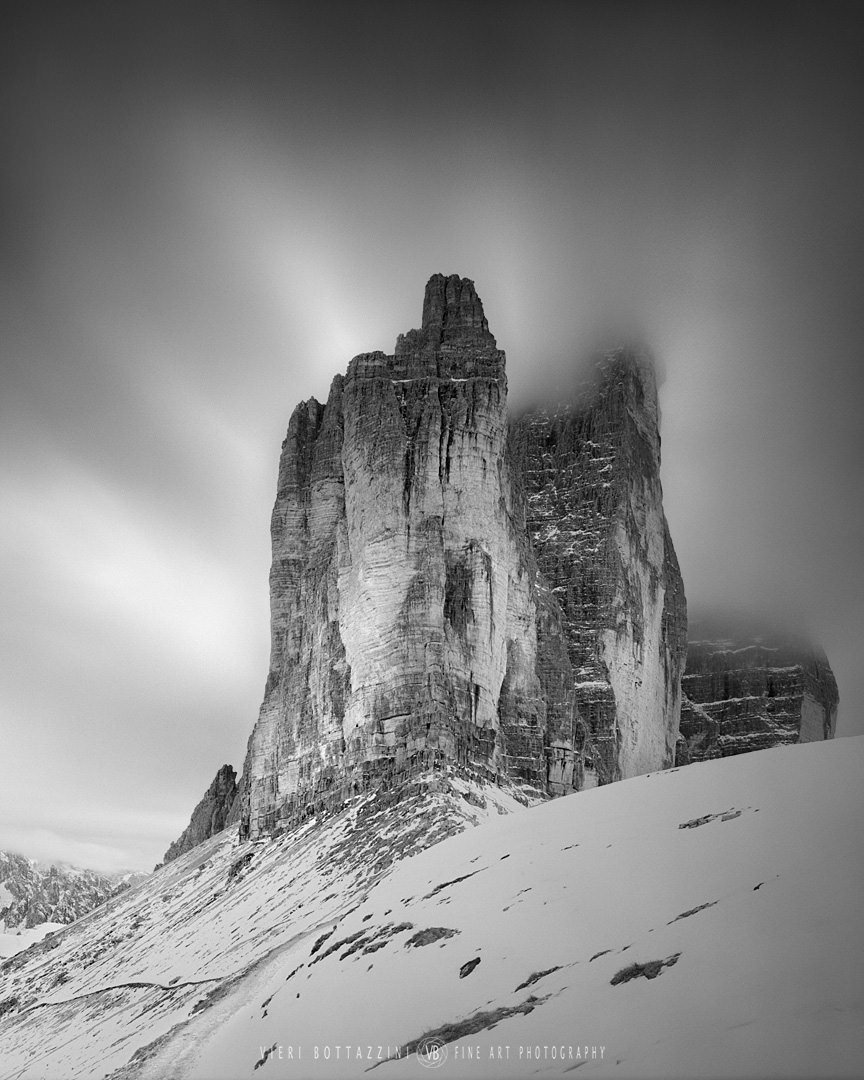
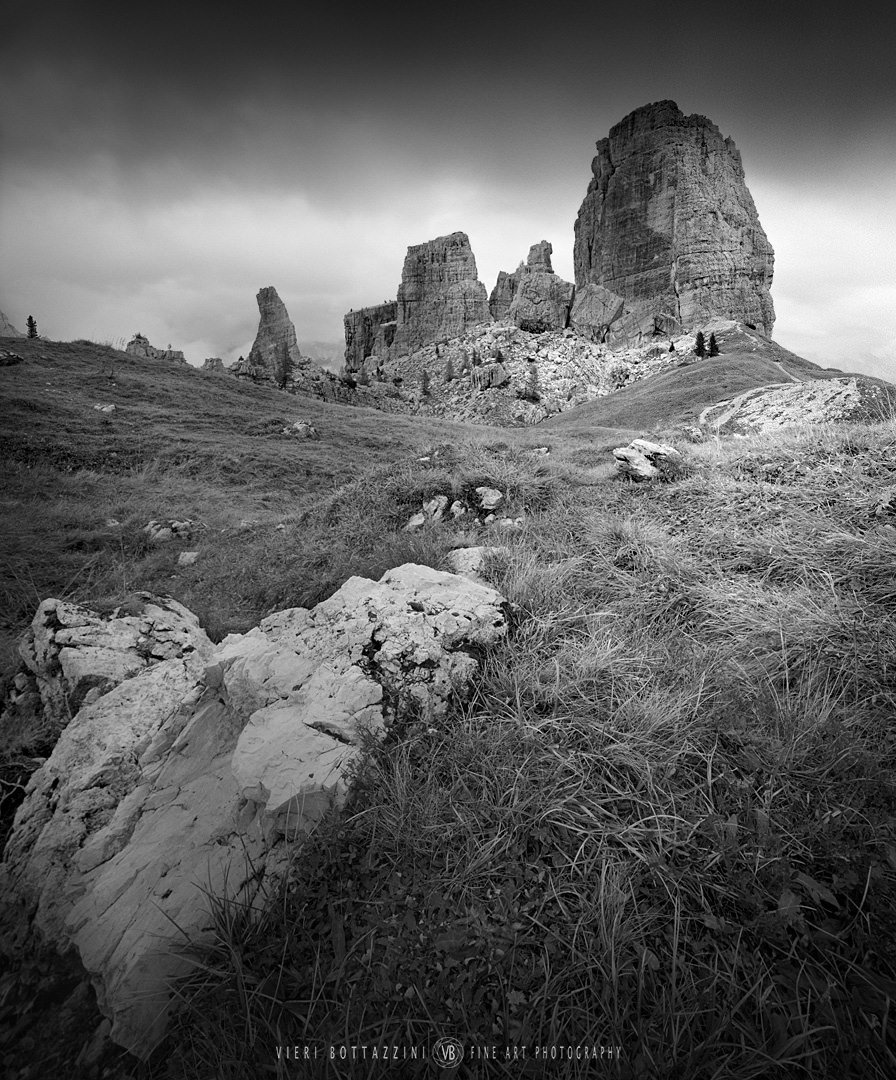
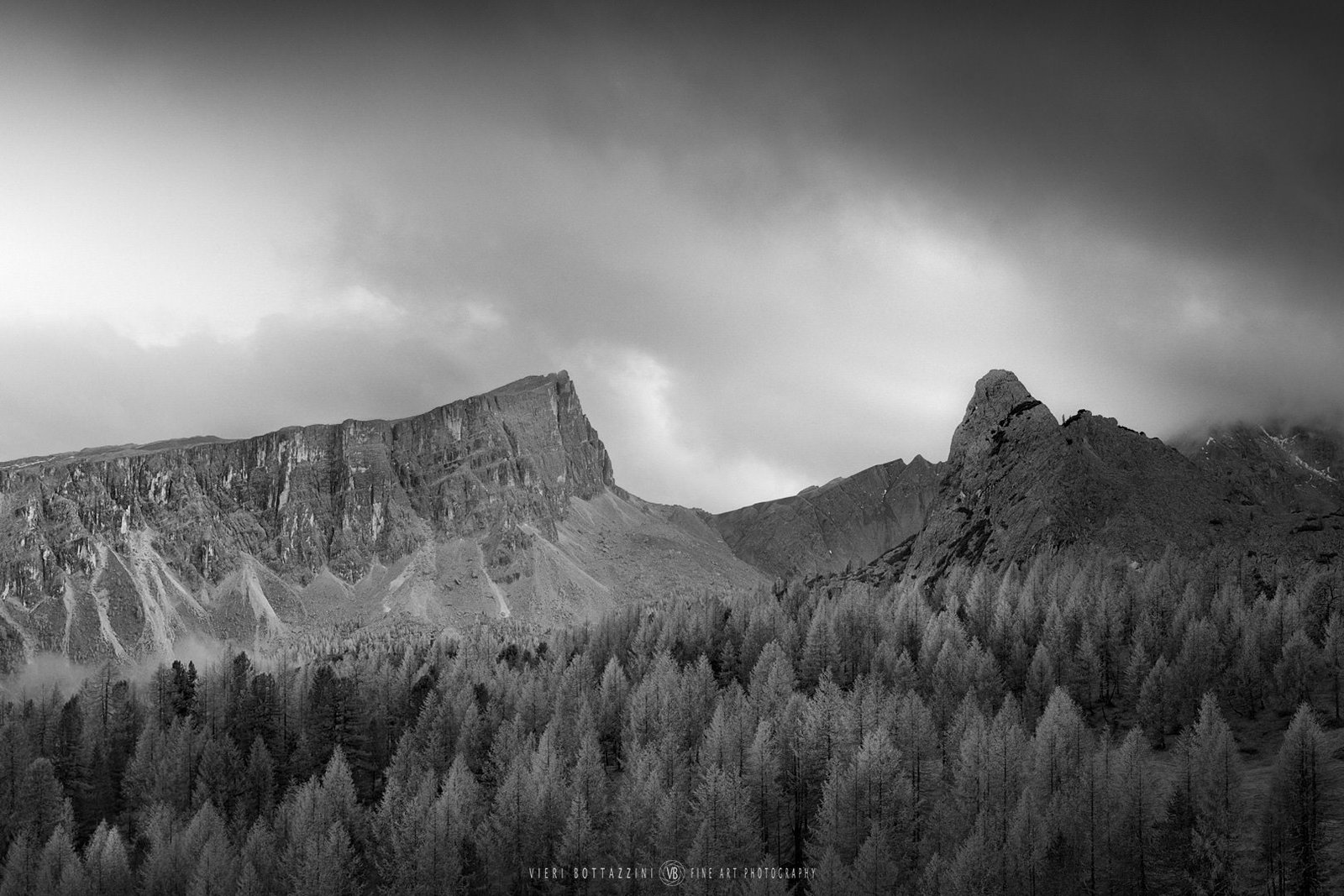
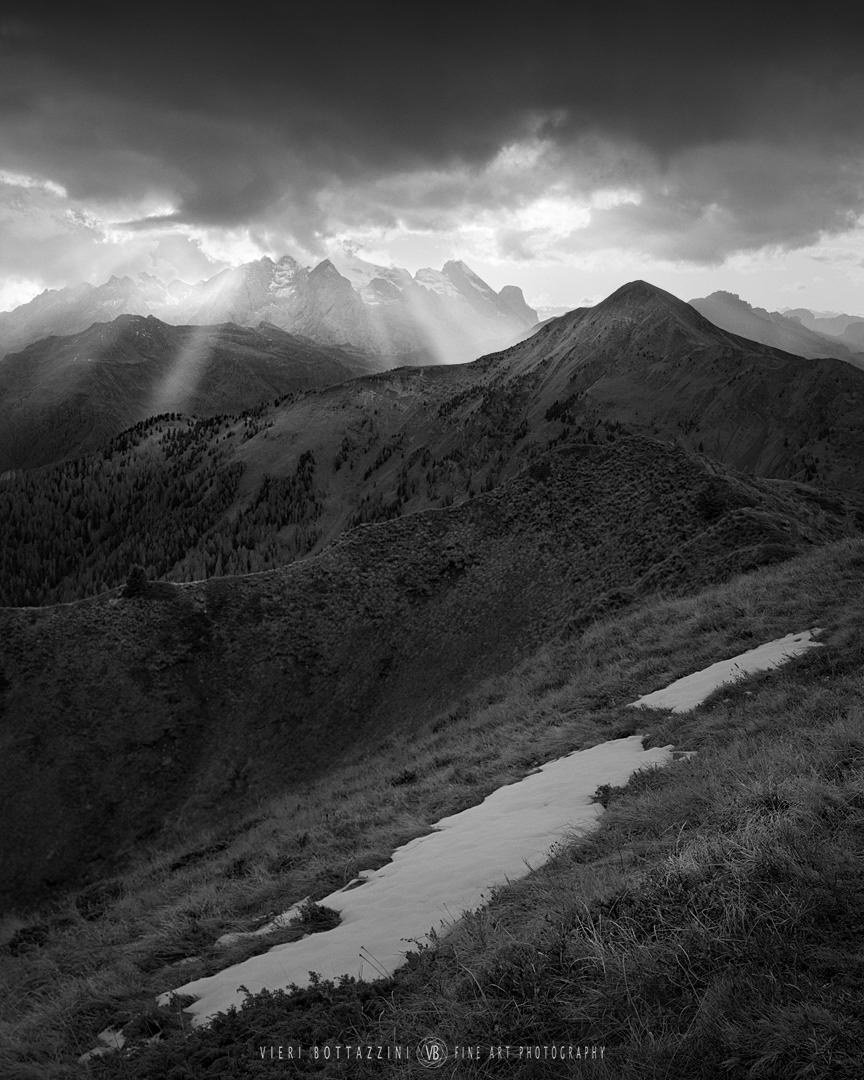
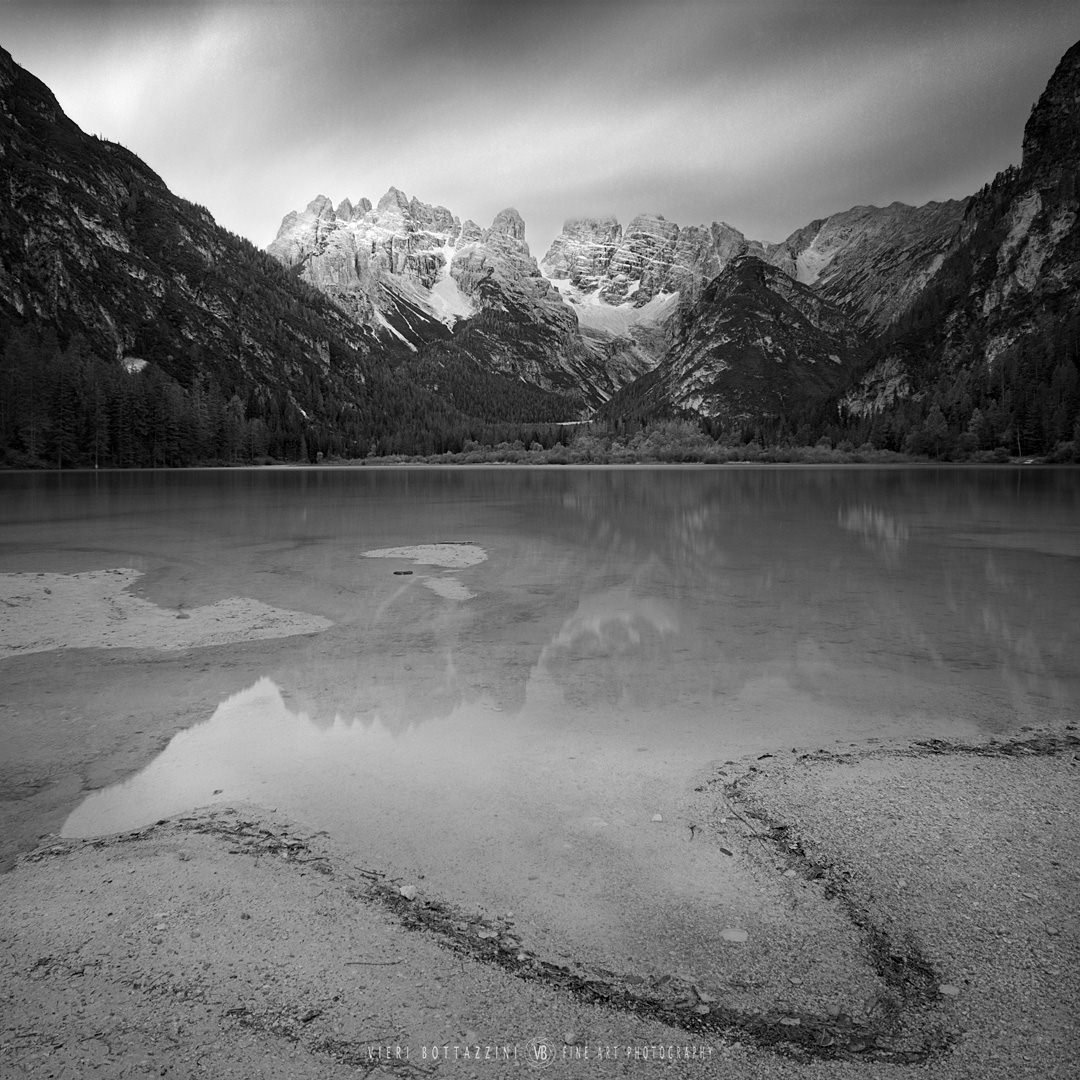
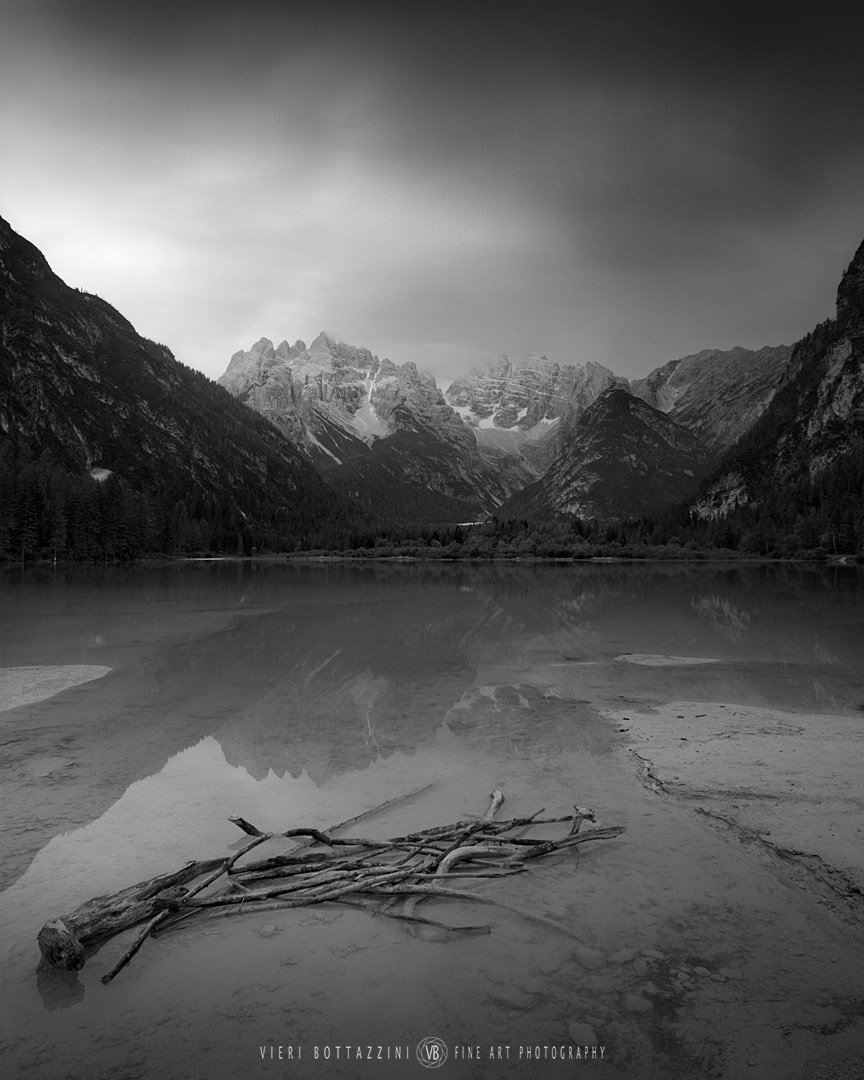
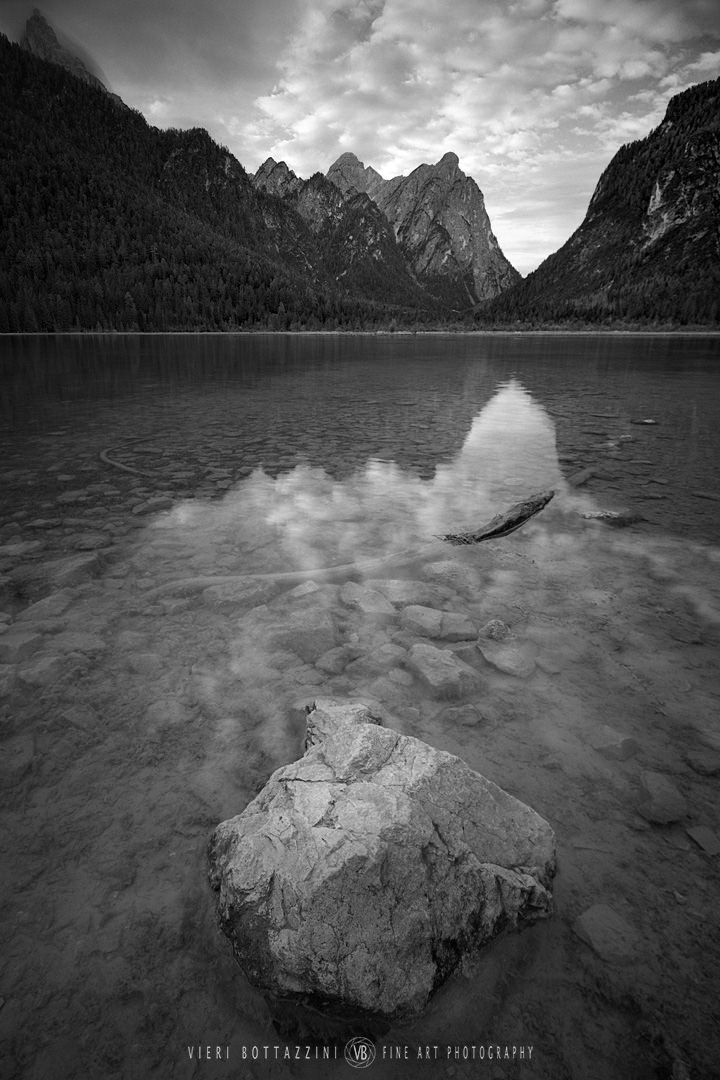
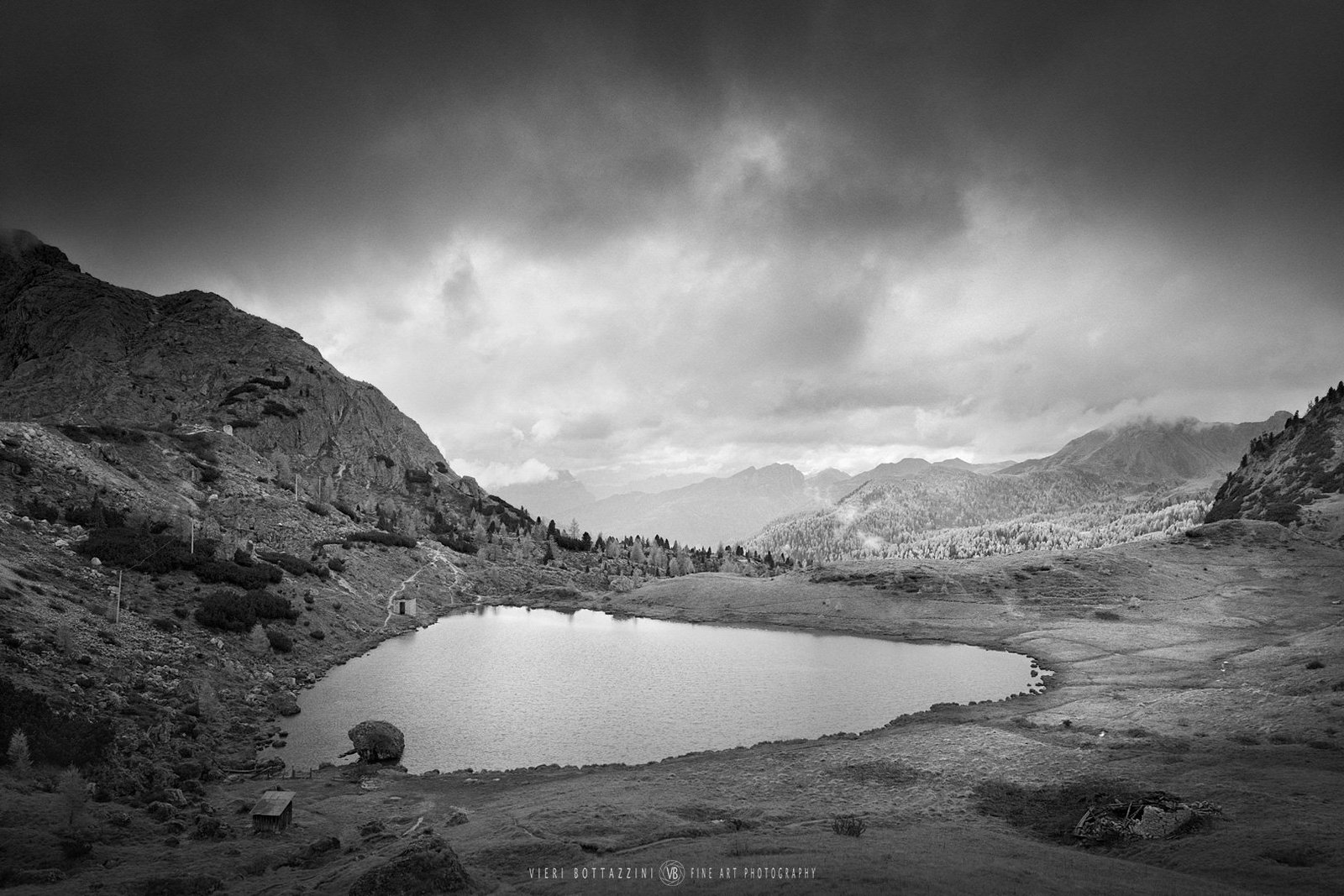
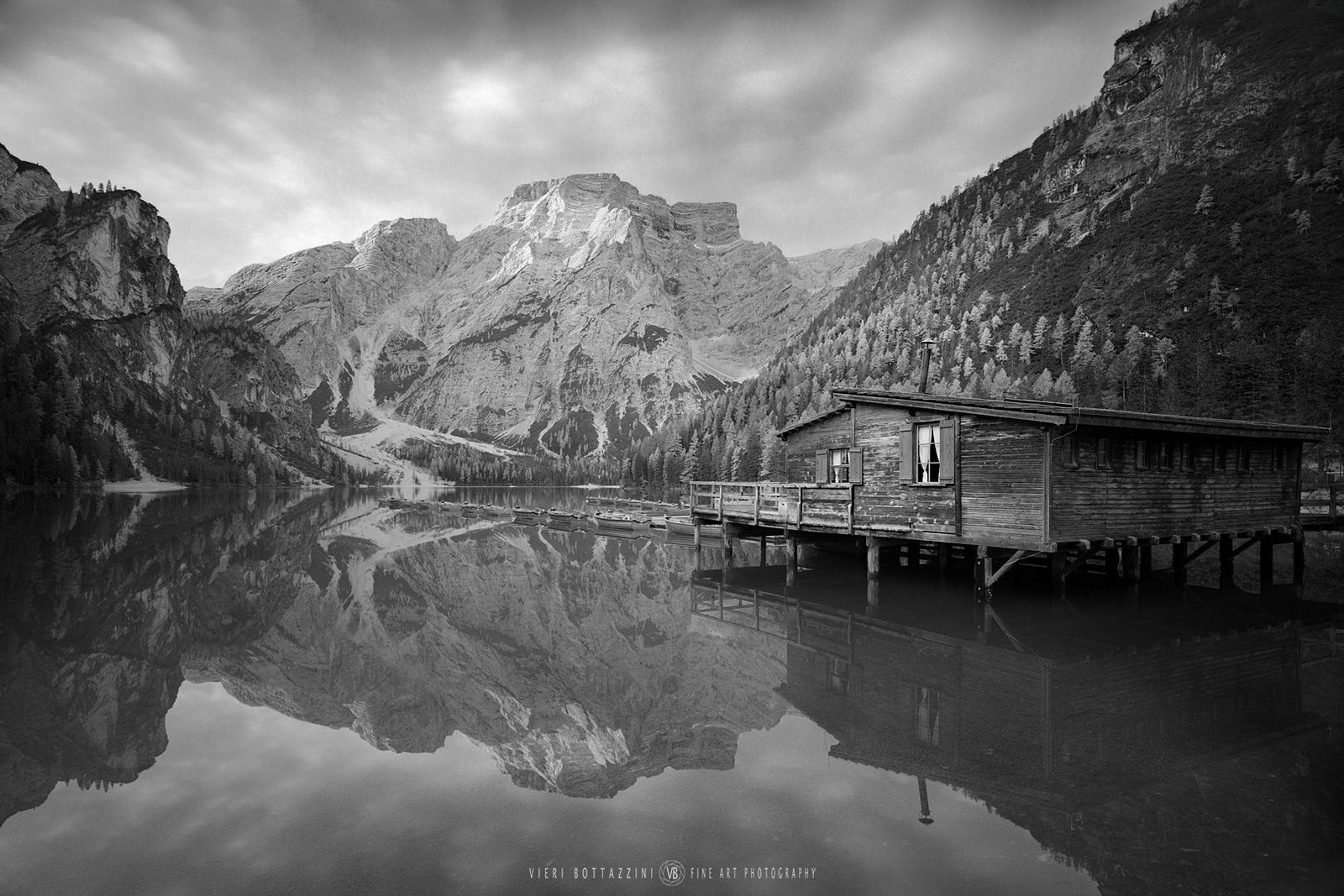
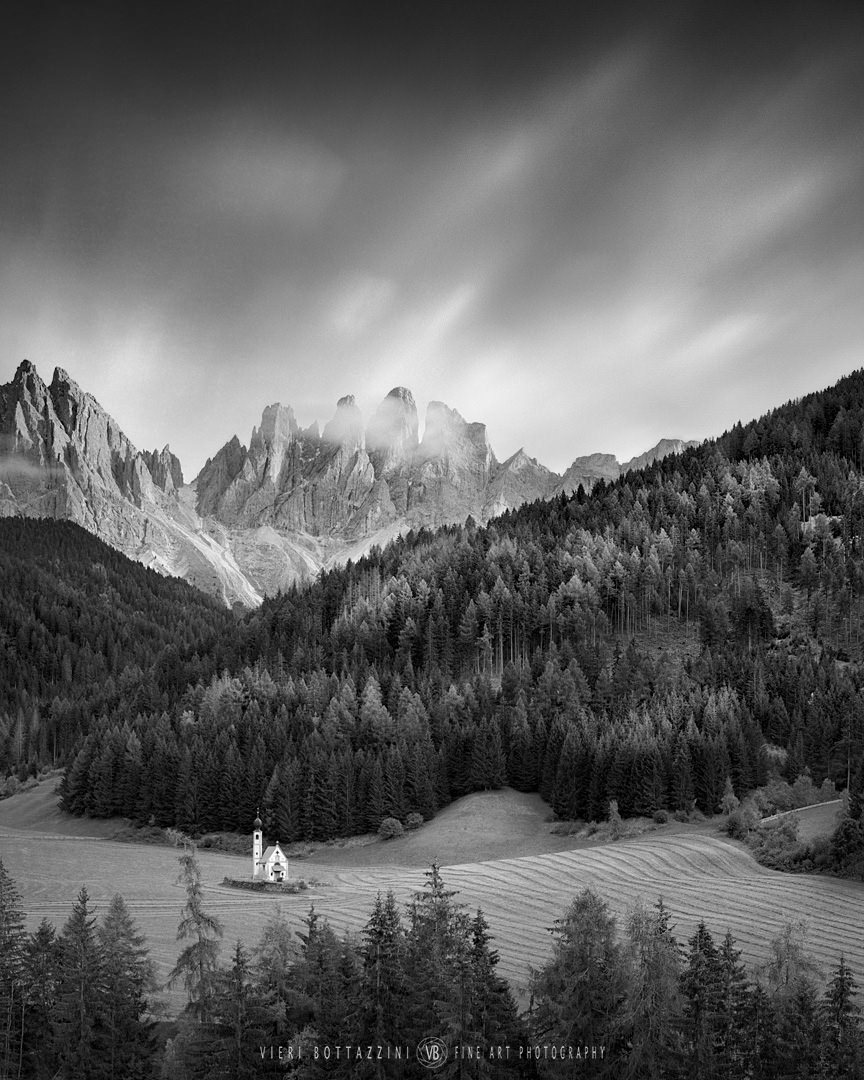
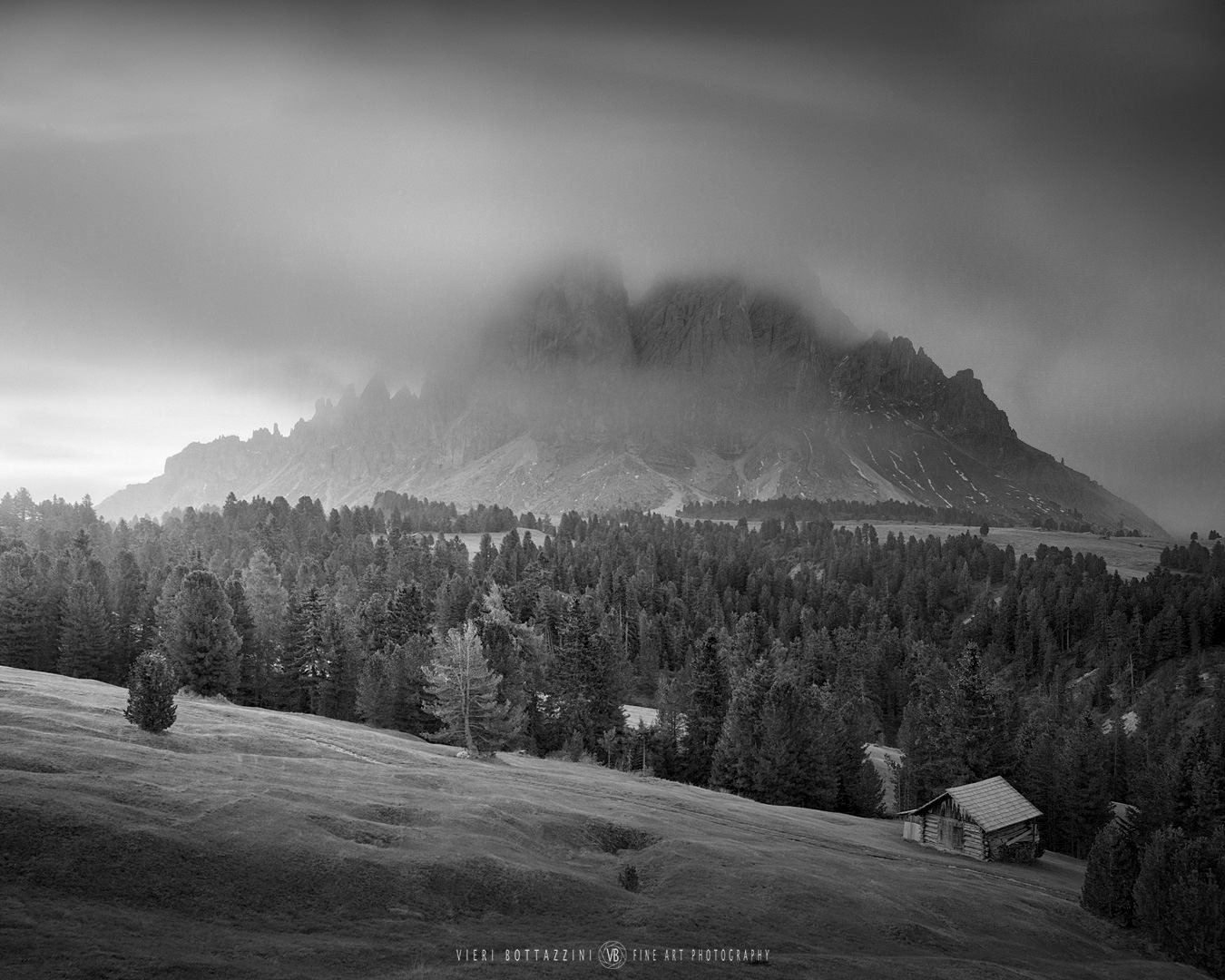
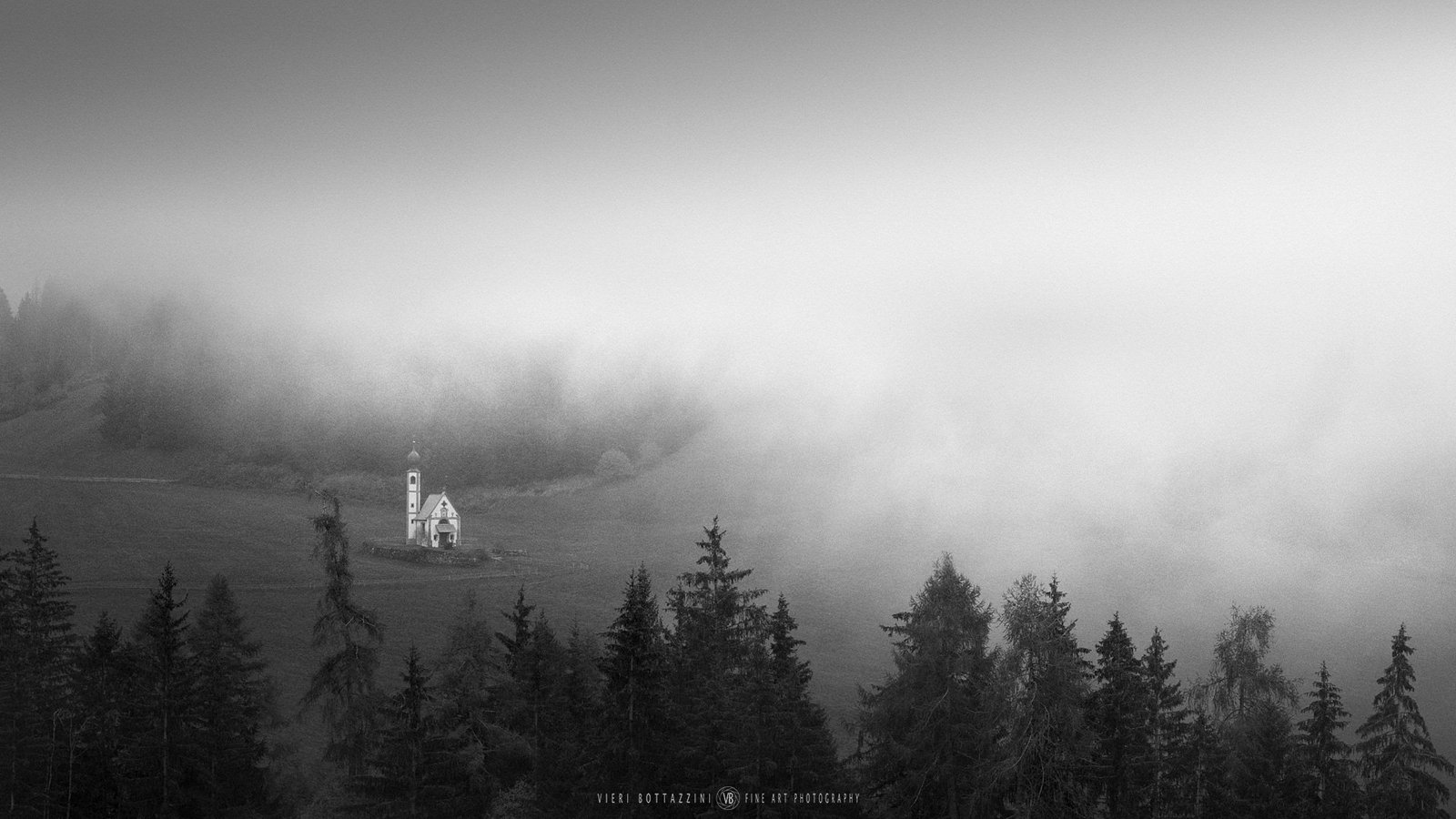
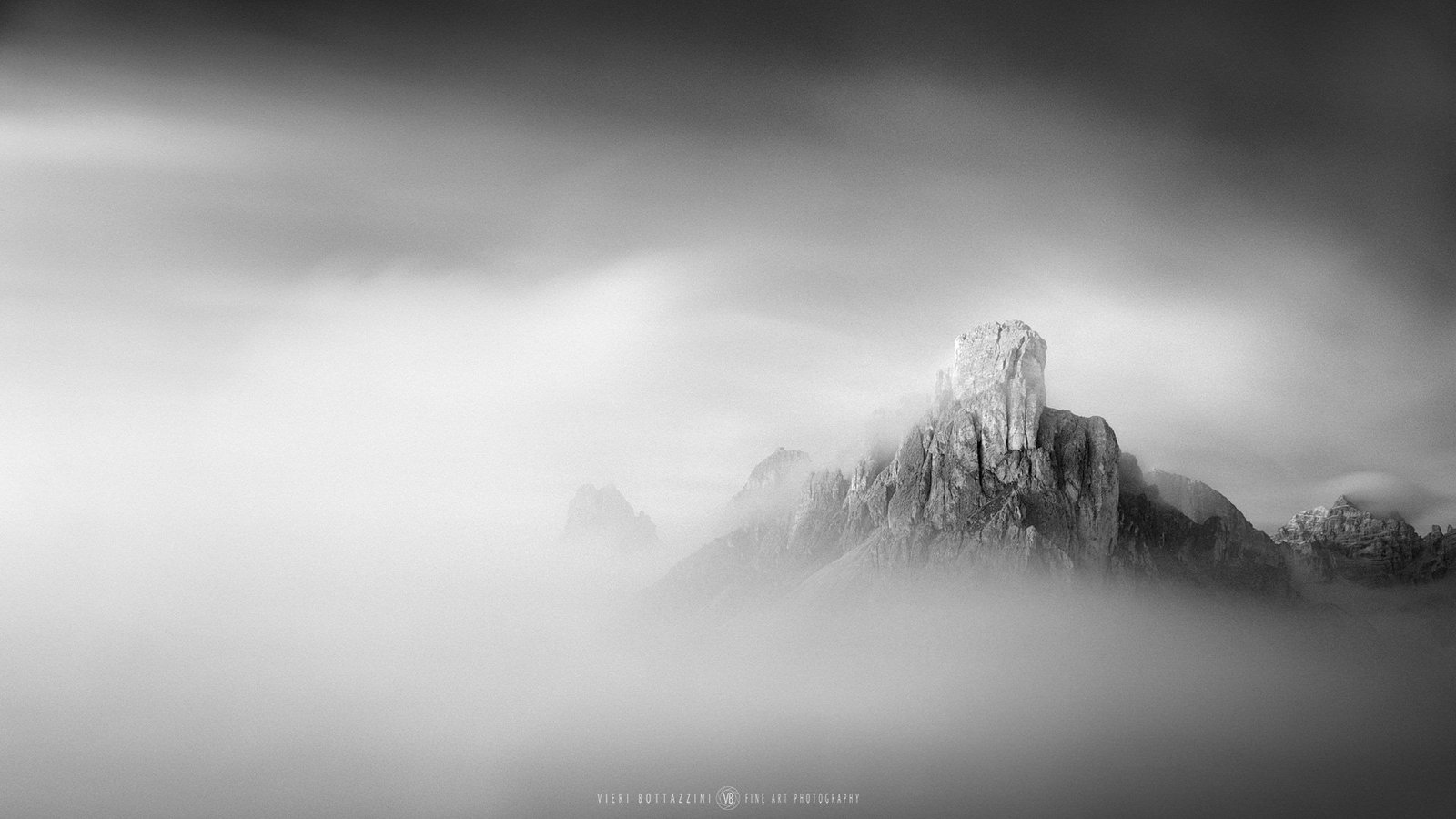
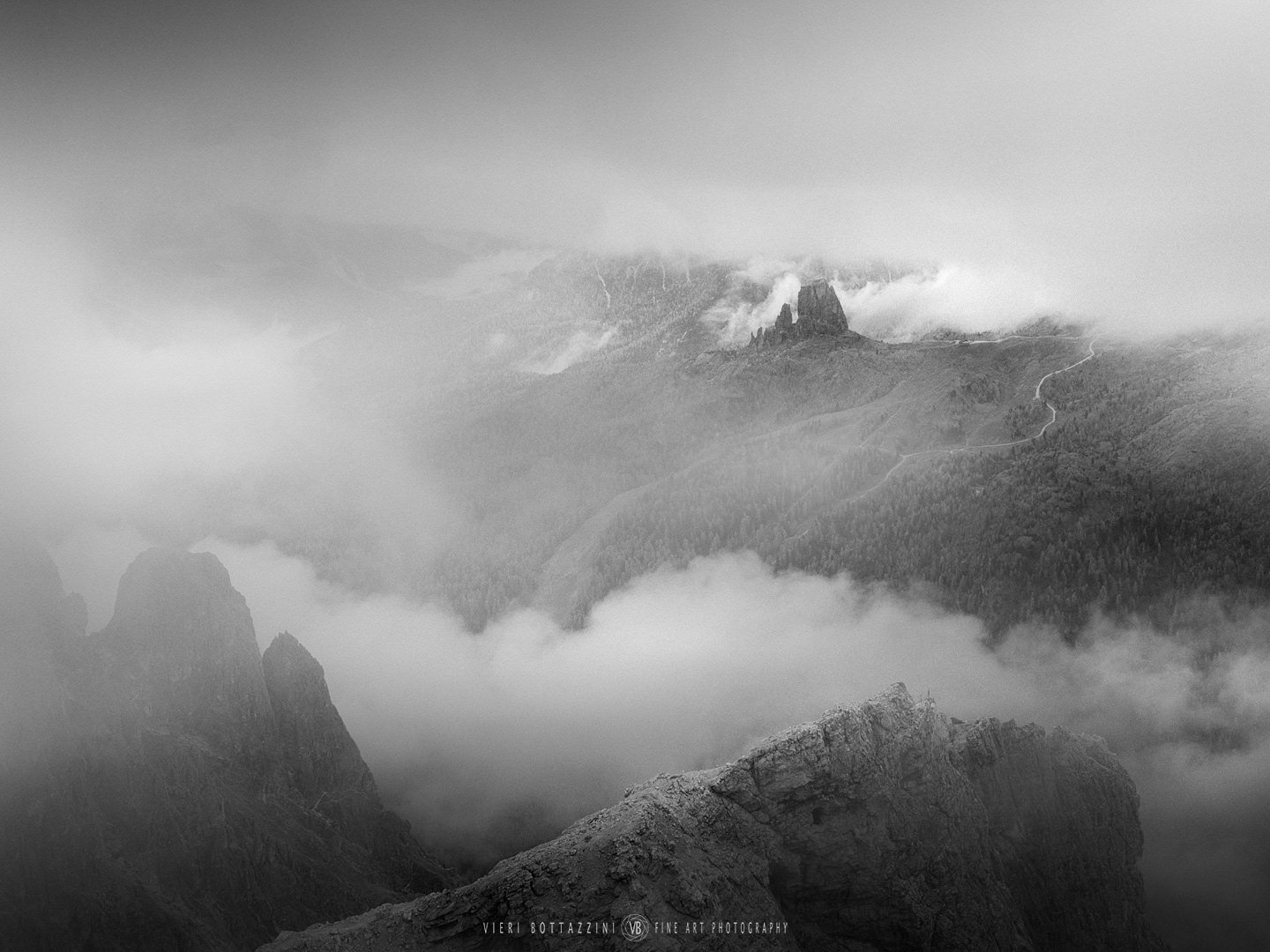
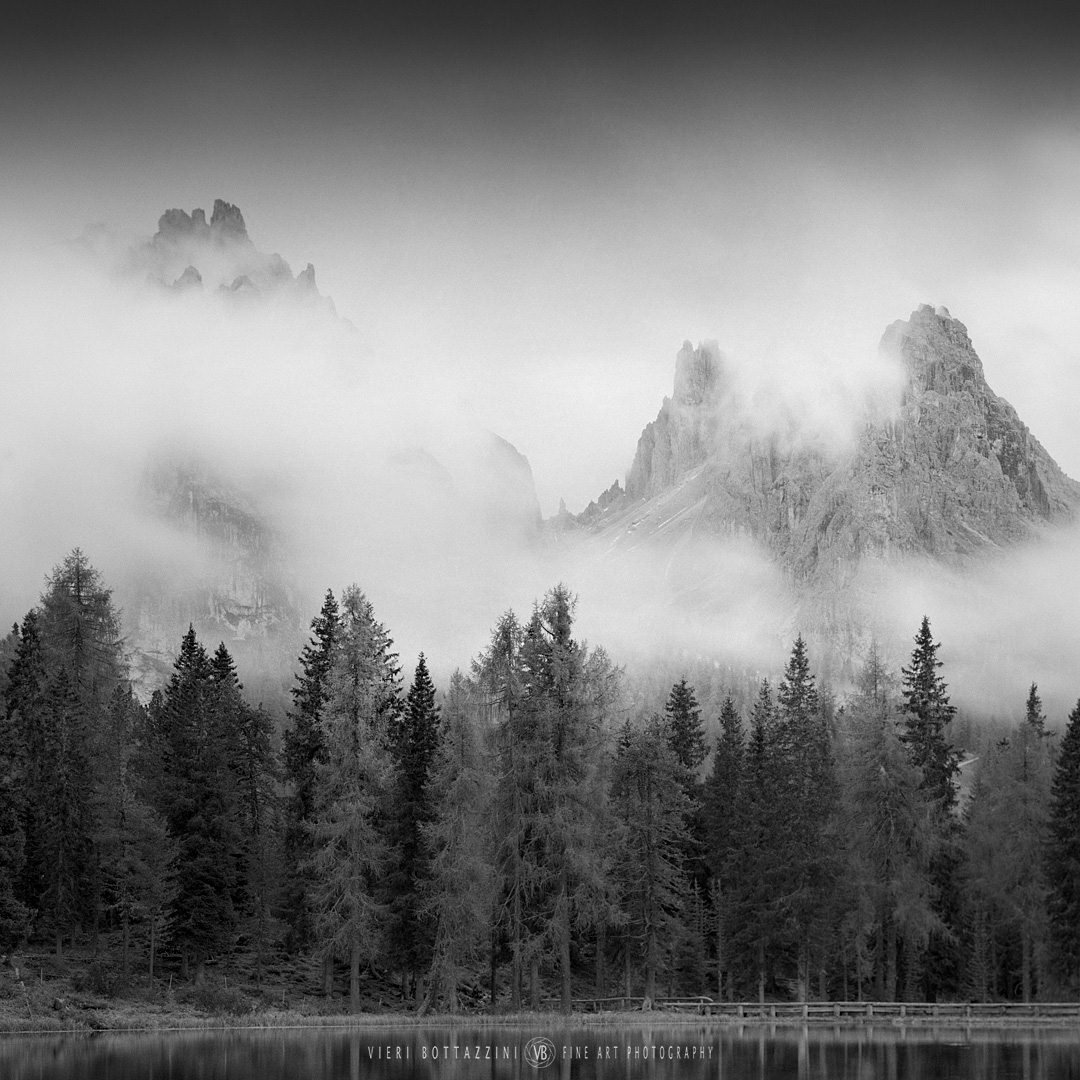
All photographs have been taken on Fomapan 200 Creative, rated at 100 ISO and developed in Pyrocat-HD for 12 minutes and 30 seconds, 10 inversions at start followed by 3 inversions per minute. The film has been pre-washed in water for 5 minutes prior to developing. Negatives have been digitised using an Epson V850 Pro scanner and processed in Photoshop.
Thank you for joining me on this trip to the Dolomites, it has been a pleasure to share this Portfolio with you!
Thank you for reading this post, I hope you enjoyed it! Why don’t you share it with your friends, or drop me a comment to let me know your thoughts about this?
2 thoughts on “THE DOLOMITES 2024: A 4×5 PORTFOLIO”
What are your technical thoughts and feelings when looking comparing medium format digital and 4×5” film? Regards ND
Hello Neil,
thank you for your comment. The question is complex, and deserves more room than a quick reply here. I am currently traveling until the end of July, but as soon as I’ll be back home I’ll write an article about it. Stay tuned!
Best regards,
Vieri